
What Should I Expect During Postpartum Recovery?

Know what’s normal, what needs a call to your OB, and how to support healing in your body, mood, and energy after birth.
At a Glance
- Recovery takes 6 weeks, but some changes last longer — and that’s normal.
- Bleeding, soreness, mood swings, and fatigue are expected in the first days.
- Call your doctor if pain, bleeding, or mental health symptoms escalate.
The First Few Days: Intense but Manageable
Whether you had a vaginal birth or cesarean, the early days involve:
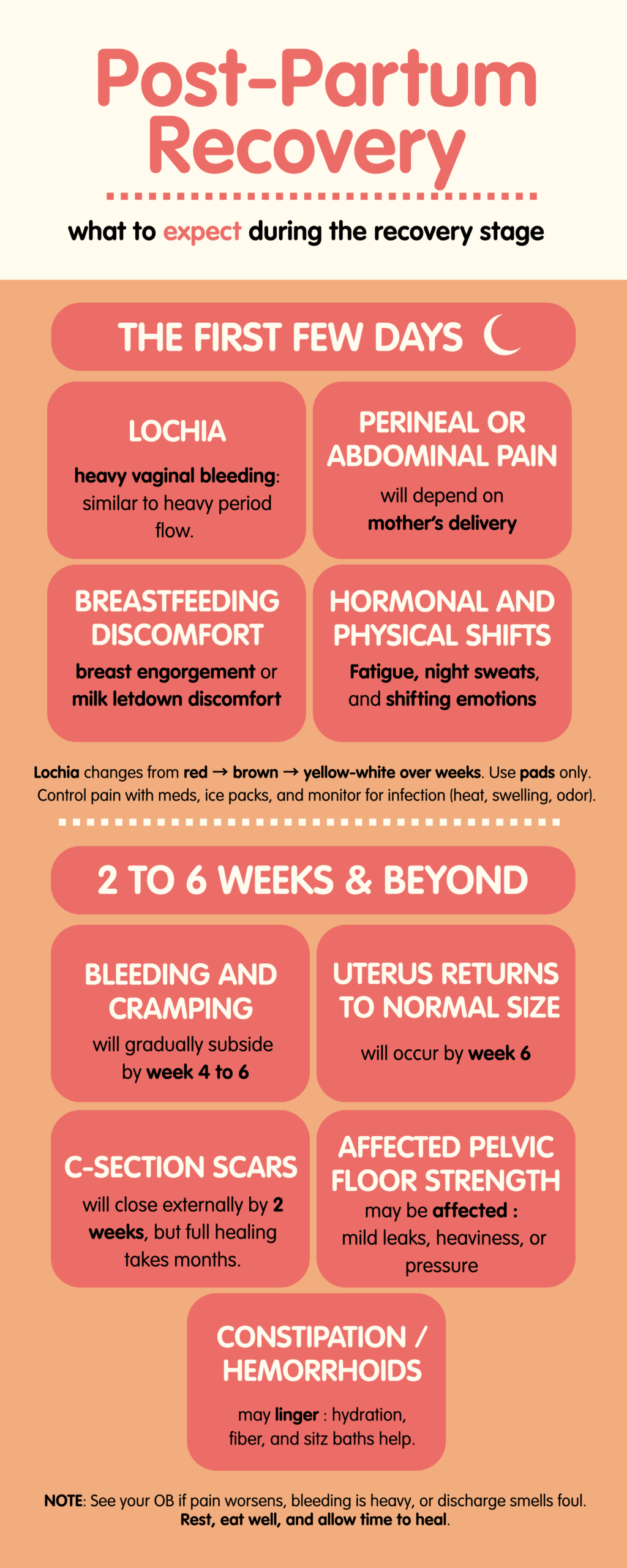
- Heavy vaginal bleeding (lochia) like a heavy period
- Perineal or abdominal pain depending on your delivery
- Breast engorgement or milk letdown discomfort
- Fatigue, night sweats, and shifting emotions
Lochia starts red, then turns brown, then yellow-white over several weeks. Use maternity pads — not tampons — and monitor for clots larger than a coin or foul-smelling discharge.
Pain is normal, but should be controlled with paracetamol, ice packs, or prescribed meds. Watch for worsening swelling, heat, or redness near stitches or your C-section incision.
Physical Recovery: 2 to 6 Weeks and Beyond
- Bleeding and cramping gradually subside by week 4 to 6.
- Uterus returns to normal size by week 6.
- C-section scars close externally by 2 weeks, but full healing takes months.
- Pelvic floor strength may be affected — mild leaks, heaviness, or pressure can be common.
- Constipation or hemorrhoids may linger — hydration, fiber, and sitz baths help.
Don’t rush to “bounce back.” It’s safer to rest, hydrate, and move gently until cleared by your OB. Many women aren’t cleared for full exercise or intercourse until 6 weeks postpartum.
Emotional and Mental Shifts: Common but Often Missed
- Baby blues affect up to 80% of mothers — teary, overwhelmed, irritable, but still functional.
- These feelings peak by day 5 and fade by 2 weeks.
- Postpartum depression involves persistent sadness, disconnection, or anxiety beyond that timeframe.
- Other red flags: feeling like a failure, trouble sleeping even when baby sleeps, or thoughts of harm to self or baby.
If you’re unsure what you’re feeling, don’t wait. Perinatal mental health support is a medical need — not a weakness.
What to Do Next: Guidance for Pregnant Moms
- Monitor bleeding, mood, and energy in your first 2 weeks — report anything that worsens, not just what lasts.
- Rest, eat warm and healing foods, and avoid lifting or straining before your body is ready.
- Call your OB if you notice fever, severe pain, red streaking from your incision, or thoughts of harm.
Note:
This article was medically reviewed and written in collaboration with doctors and medical professionals committed to providing pediatric health education.
References:
World Health Organization (WHO) – Maternal and Perinatal Health
American College of Obstetricians and Gynecologists (ACOG)
Centers for Disease Control and Prevention (CDC – U.S.) – Pregnancy

Marie Victoria S. Cruz-Javier, MD, FPOGS, FPSGE
Obstetrics and Gynecology Minimally Invasive Gynecologic Surgery and Robotic Surgery Aesthetic Gynecology
Disclaimer:
The information in this article is intended for educational purposes only and does not substitute professional medical advice, diagnosis, or treatment. Always consult your physician, pediatrician, or qualified healthcare provider with any questions you may have regarding a medical condition or health objectives.