
How Can I Take Better Care of My Child When We’re Out of the House?
Use pediatric strategies to handle feeding, diapering, naps, and safety while traveling or running errands with toddlers
At a Glance
- Toddlers thrive on routine—even while outside, small adjustments keep them calm and secure
- Hunger, fatigue, and overstimulation are the most common causes of meltdowns
- Planning ahead helps you manage both your child’s needs and your own
Feed, Change, Sleep: What to Watch For
- Feeding: Bring snacks that are easy to eat and not choking hazards. Stick with familiar food when possible. Offer small meals at usual times—even on the go
- Hydration: Active toddlers may not ask for water—offer sips regularly, especially in warm weather or crowded spaces
- Diapering or potty timing: Expect more frequent changes when your child is active. Always pack extra diapers, wipes, a change of clothes, and a wet bag
- Nap windows: Respect their usual nap times. If you’re out, use a baby carrier or stroller with shade to help your child rest even in transit
Managing Overstimulation and Transitions
- Environment cues: Bright lights, loud sounds, or new places can overwhelm toddlers. Sunglasses, hats, or noise-dampening headphones can help
- Transitions: Use simple verbal cues: “In 5 minutes, we’ll leave the play area.” Repetition helps them prepare
- Comfort object: A familiar toy or blanket gives toddlers a sense of home and predictability
- Signs of overload: Fussiness, whining, or resistance may mean your child needs quiet time or a break from stimulation
Safety Outside the House
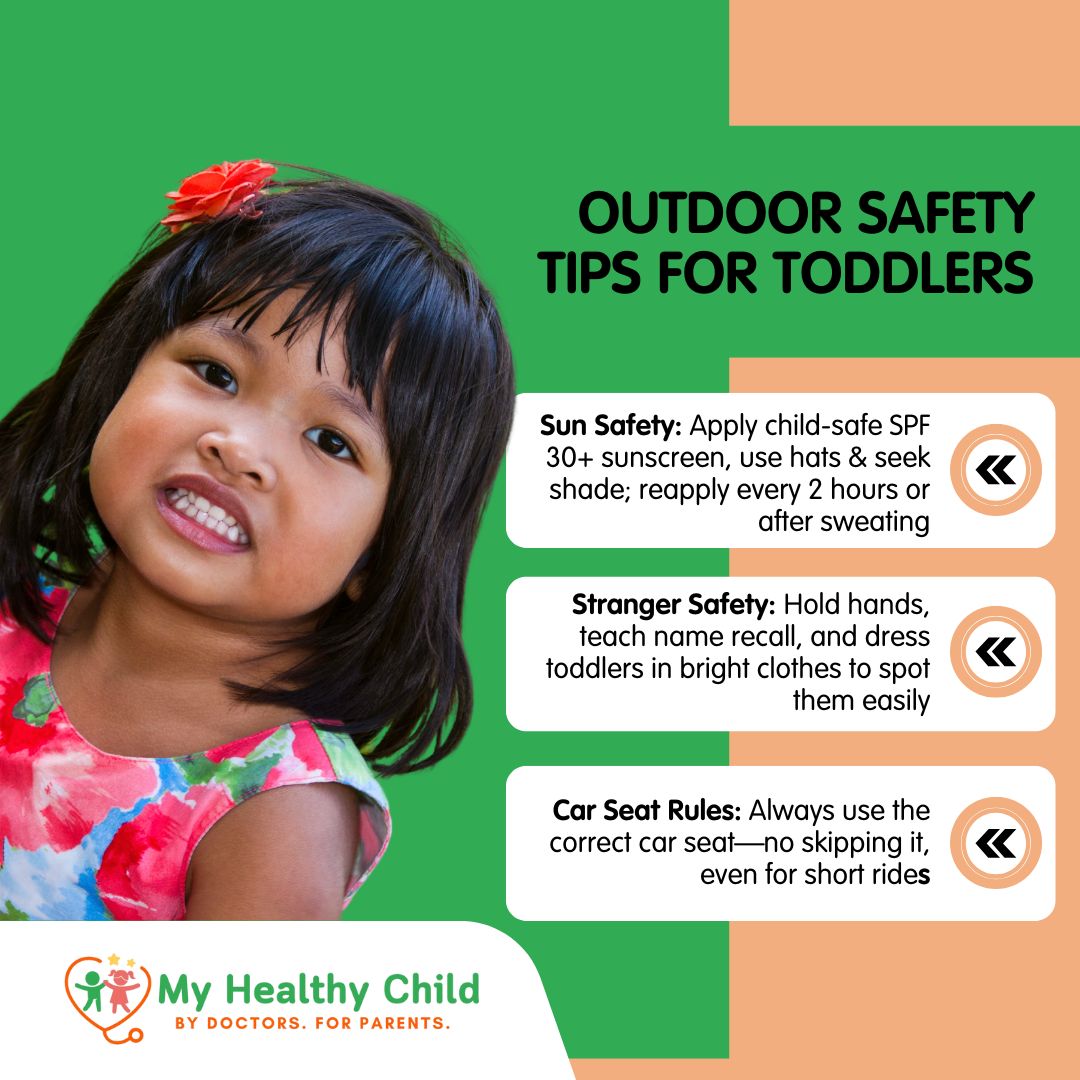
- Sun safety: Use child-safe sunscreen (SPF 30+), wide-brim hats, and shade. Reapply every 2 hours or after sweating
- Stranger safety: Toddlers can wander. Practice hand-holding, teach name recall, and dress them in bright clothing
- Car seat rules: Use age- and size-appropriate car seats, correctly installed. No exceptions for short trips
- Public play areas: Always supervise. Surfaces should be cool, clean, and age-appropriate
What to Do Next: Guidance for Parents
- Prep a toddler go-bag with essentials: food, water, diapers, change of clothes, and comfort items
- Keep routines flexible but familiar—timing meals and naps around your child’s body clock helps prevent meltdowns
- Don’t hesitate to take breaks or head home early if your child shows signs of distress or exhaustion
Note:
This article was medically reviewed and written in collaboration with doctors and medical professionals committed to providing pediatric health education.
References:
Centers for Disease Control and Prevention (CDC) – Early Childhood Development
American Academy of Pediatrics (AAP)
World Health Organization (WHO) – Early Childhood Development

Disclaimer:
The information in this article is intended for educational purposes only and does not substitute professional medical advice, diagnosis, or treatment. Always consult your physician, pediatrician, or qualified healthcare provider with any questions you may have regarding a medical condition or health objectives.