Are Supplements Like Vitamin D or Omega-3 Helpful for My Child?

When pediatricians consider supplements, how to introduce them safely, and what signs to monitor

supplements for children

At a Glance

Why Supplements Come Up

Children with developmental delays often eat a narrow range of foods. Pediatricians may recommend supplements to fill nutrition gaps—especially when:

  • Diet is highly limited (e.g., no meat or veggies)
  • Feeding issues or sensory aversions impact variety
  • Growth curves, energy, or focus are concerning


But supplements aren’t a cure. They support—never replace—food-based nutrition and therapy.
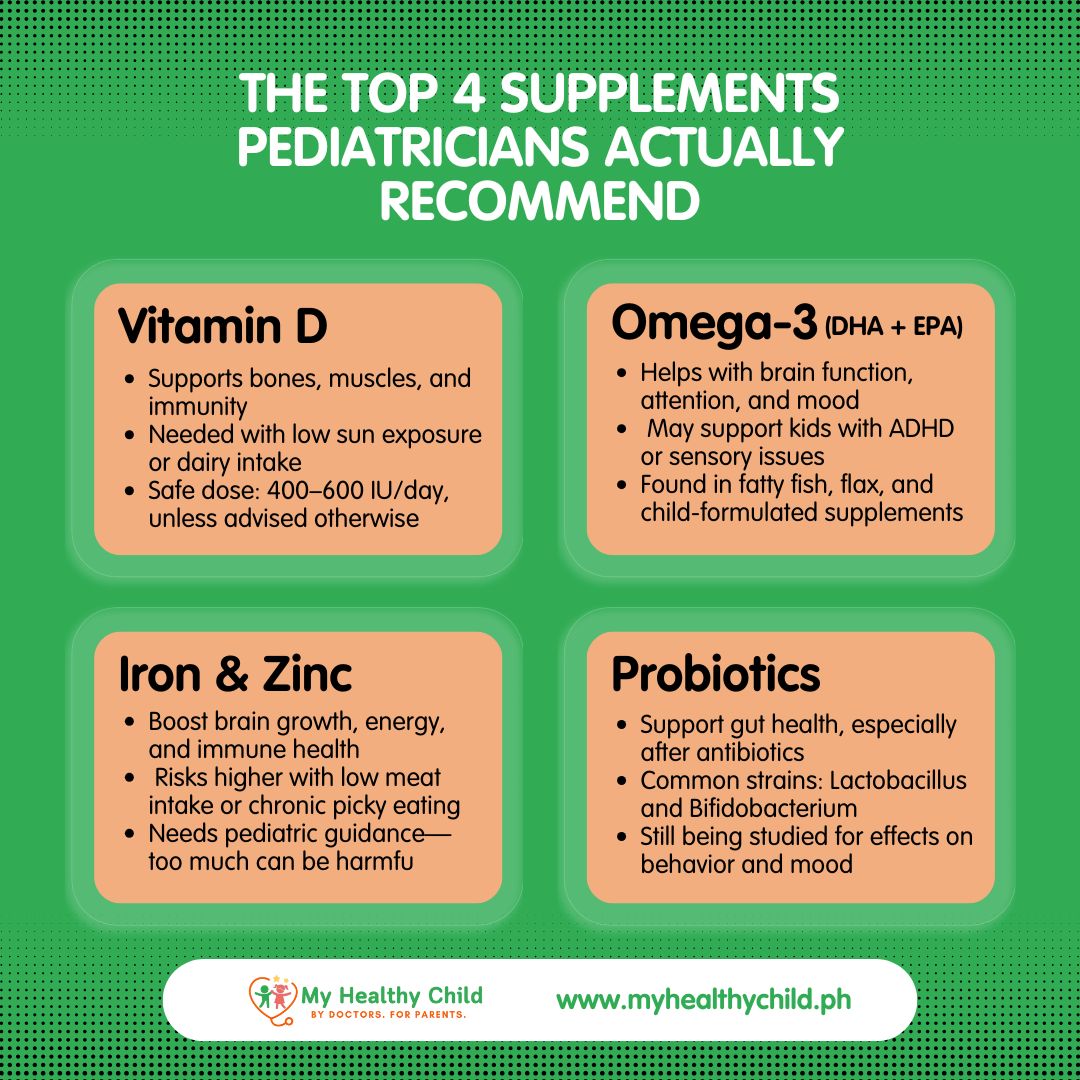
What Supplements Pediatricians Actually Use

Vitamin D
Supports bones, muscles, and immunity.

  • Needed if sun exposure is low or diet lacks dairy
  • Signs of deficiency: fatigue, bone pain, frequent illness
  • Safe dose: 400–600 IU/day unless otherwise advised

Omega-3 (DHA + EPA)
Supports brain, attention, and mood.

  • Sometimes recommended for ADHD or sensory regulation
  • Found in fatty fish, flax, and supplements
  • Use child-formulated versions with low flavoring

Iron and Zinc
Support brain growth, energy, and immunity.

  • Risk rises with poor meat intake or chronic picky eating
  • Signs: pale skin, fatigue, poor appetite
  • Requires pediatric approval—too much can be harmful

Probiotics
Balance gut bacteria and may help with digestion, especially after antibiotics.

  • Strains like Lactobacillus and Bifidobacterium are common
  • Still under study for behavior or mood effects

Use Supplements the Smart Way

  • Introduce one at a time. Monitor for 2–4 weeks.
  • Give with meals to support absorption
  • Track changes in sleep, appetite, mood, or behavior
  • Stop if side effects (e.g., constipation, rash, irritability) show up


Multivitamins may help if the child eats very few foods—but they’re not magic pills. Avoid megadoses.

What to Do Next: Guidance for Parents

  • Check with your pediatrician before starting any supplement—even “natural” ones.
  • Prioritize real food—supplements are a backup, not a replacement.
  • Track effects. If there’s no measurable change, it may not be worth continuing.


Note:
This article was medically reviewed and written in collaboration with doctors and medical professionals committed to providing pediatric developmental health education.


References:

U.S. Centers for Disease Control and Prevention (CDC)

CHADD (Children and Adults with Attention-Deficit/Hyperactivity Disorder)

HealthyChildren.org by the American Academy of Pediatrics

WHO – Motor Development Milestones

Francis Xavier M. Dimalanta, MD, FPPS, FPSDBP

Developmental and Behavioral Pediatrician
Fellow, Philippine Pediatric Society
Fellow, Philippine Society for Developmental and Behavioral Pediatrics
Head, Section of Developmental and Behavioral Pediatrics
Institute of Pediatrics and Child Health
St Luke’s Medical Center - Quezon City and Global City
Medical Director, A Child’s DREAM Foundation, Inc (est. 2003)

Disclaimer:
The information in this article is intended for educational purposes only and does not substitute professional medical advice, diagnosis, or treatment. Always consult your physician, pediatrician, or qualified healthcare provider with any questions you may have regarding a medical condition or health objectives.

Child Height Predictor

error: Content is protected !!