
Does My Child Need a Daily Vitamin?
What nutrients really matter—and when supplements are actually worth it

Walk through any pharmacy and you’ll find shelves full of kid-friendly vitamins—gummies shaped like bears, liquids promising immunity boosts, and boxes that scream “essential!”
But with all the options, one big question remains:
Does my child really need a daily vitamin?
Let’s cut through the confusion and talk about what nutrients matter most, when supplements help, and how to support your child’s health without overloading their body (or your wallet).
First, What Does “Healthy” Nutrition Look Like for Kids?
Kids ages 4 to 12 are in a critical phase of:
- Bone development: Requiring adequate calcium and Vitamin D for optimal mineralization and strength.
- Brain growth: Essential fatty acids and certain micronutrients are vital for cognitive function and neurological development.
- Muscle building: Protein and a spectrum of vitamins are crucial for tissue repair and growth.
- Immune strengthening: A diverse array of vitamins and minerals supports a robust immune response.
- So their bodies need a daily mix of:
- Macronutrients: Carbohydrates (for energy), protein (for building blocks), and fats (for energy, absorption of fat-soluble vitamins, and cellular function).
- Micronutrients: Vitamins (organic compounds essential for metabolic processes) and minerals (inorganic elements vital for various bodily functions).
The good news?
Most children can meet their needs through balanced meals—without needing extra pills or gummies.

Key Nutrients to Watch (With or Without Vitamins)
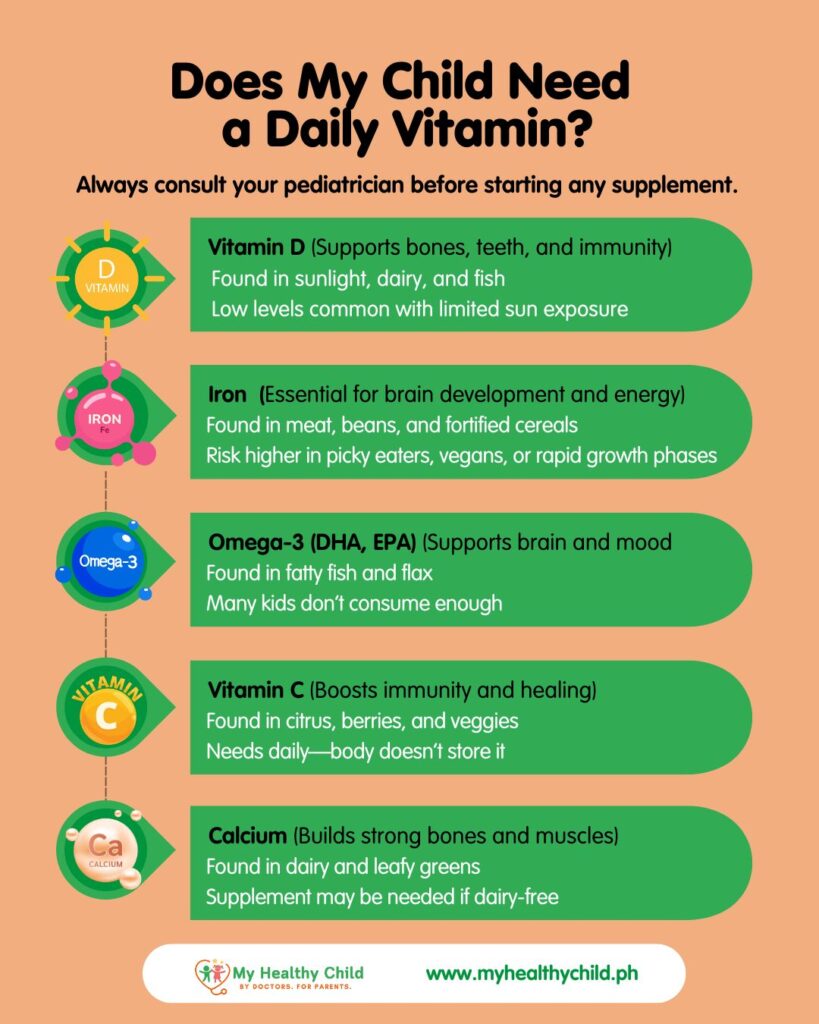
Vitamin D
Supports: Critical for calcium absorption, bone and teeth health, and plays a significant role in immune system regulation.
Naturally: The primary natural source is sunlight exposure (skin synthesis), alongside fortified dairy products, some cereals, and fatty fish (e.g., salmon).
Concern: Many children, especially those living in less sunny climates, with darker skin tones, or who spend most of their time indoors and use high-SPF sunscreen, may have insufficient Vitamin D levels. This can lead to deficiency, potentially impacting bone health and immunity.
Iron
Supports: Essential for oxygen transport in red blood cells (as a component of hemoglobin), crucial for brain development, and preventing iron-deficiency anemia, which can cause fatigue and impaired cognitive function.
Naturally from: Heme iron (highly absorbable) is found in red meat, poultry, and fish. Non heme iron is present in plant-based sources like spinach, beans, lentils, and fortified cereals.
Concern: Kids on vegetarian/vegan diets, very picky eaters, or those experiencing rapid growth spurts might be at higher risk for low iron.
Omega-3 Fatty Acids (DHA, EPA)
Supports: These are essential polyunsaturated fats, not vitamins. They are vital for brain development, cognitive function, visual acuity, and have anti-inflammatory properties that can support overall health and potentially mood regulation.
Naturally from: Primarily found in fatty fish (e.g., salmon, sardines, mackerel) and some plant sources (alpha-linolenic acid – ALA, found in flaxseed, chia seeds, walnuts, which the body can convert to DHA/EPA, though inefficiently).
Concern: Many children don’t consume enough fish, making adequate intake a common challenge.
Vitamin C
Supports: A powerful antioxidant that plays a key role in immune function, collagen synthesis for healthy skin and wound healing, and enhancing non-heme iron absorption.
Naturally from: Abundant in citrus fruits (oranges), strawberries, bell peppers, broccoli, and kiwi.
Concern: While easily met by most diets if sufficient fruits and vegetables are consumed, Vitamin C is water-soluble and not stored in the body in large amounts, requiring daily intake.
Calcium
Supports: The primary mineral for bone growth and density, crucial during childhood and adolescence to establish strong bones for life. It also plays a role in nerve function and muscle contraction.
Naturally from: Dairy products (milk, yogurt, cheese), fortified plant milks (almond, soy, oat), leafy greens (e.g., kale, broccoli), and fortified cereals.
Concern: Children with dairy allergies or those following dairy-free diets may need fortified alternatives or a calcium supplement to ensure adequate intake.
So… Should Your Child Take a Daily Vitamin?
They may benefit if:
- They’re a very picky eater with consistent limited food choices.
- They follow a restrictive diet (e.g., vegetarian, vegan, dairy-free, or multiple food allergies) where obtaining specific nutrients from food sources can be challenging.
- They don’t get much sun exposure, potentially impacting Vitamin D levels.
- They have a diagnosed medical condition affecting nutrient absorption or increasing nutrient needs (e.g., cystic fibrosis, celiac disease).
- They have a diagnosed nutrient deficiency confirmed by blood tests.
- Their pediatrician specifically recommends it based on their individual health assessment.
They may NOT need it if:
- They consistently eat a varied, balanced diet encompassing fruits, vegetables, lean proteins, whole grains, and healthy fats daily.
- They have no underlying medical conditions that impair nutrient absorption or increase metabolic demand.
- They have no specific dietary gaps that cannot be addressed through food.
If You Choose to Give a Vitamin, Here’s What to Know
Go age-appropriate
Look for supplements formulated specifically for your child’s age group, as nutrient needs vary significantly by developmental stage.
Check the label
Avoid megadoses. The Recommended Dietary Allowances (RDAs) are set to meet the needs of most healthy individuals. Excessive intake of certain fat-soluble vitamins (like Vitamin A, D, E, K) or minerals (like iron or zinc) can accumulate in the body and be harmful or even toxic.
Pick a trusted brand
Look for third-party testing or certifications (e.g., USP, NSF International, ConsumerLab.com) to ensure the product contains what it claims and is free from harmful contaminants. Bonus if it’s recommended by your pediatrician.
Watch the sugar
Many “gummy” vitamins are high in added sugar, which can contribute to dental issues and excess calorie intake. Go for low-sugar or sugar-free options when possible.
Store safely
Vitamins can look and taste like candy—keep them strictly out of reach of little hands in a locked cabinet. Accidental overdose is a serious risk.
Consider Probiotics for Gut Health
Probiotics are live beneficial bacteria and yeasts that, when administered in adequate amounts, confer a health benefit on the host. They are supplements, not vitamins, and can be found in fermented foods (like yogurt with live cultures) or in capsule/liquid forms.
- Potential Benefits: Research suggests specific probiotic strains may help with certain digestive issues like antibiotic-associated diarrhea, infectious diarrhea (especially viral gastroenteritis), and sometimes symptoms of irritable bowel syndrome (IBS) in children. They contribute to a healthy gut microbiome, which is increasingly recognized for its role in immunity and overall health.
- Considerations: Not all probiotics are created equal. The benefits are often strain specific. Always consult your pediatrician to determine if a probiotic is appropriate for your child and to identify effective strains for their specific needs.
Always Talk to Your Pediatrician First
In Summary:
Before starting any supplement, even a multivitamin, it’s best to consult your child’s doctor.
They can:
- Review your child’s typical diet, eating habits, and lifestyle.
- Assess any medical history or conditions that might impact nutrient needs or absorption.
- Recommend specific blood tests (if needed) to identify any existing deficiencies.
- Suggest targeted supplements (e.g., just Vitamin D or iron) instead of blanket multivitamins, which might provide unnecessary nutrients.
Sometimes, just one nutrient needs boosting—not the whole alphabet.
Daily vitamins can be helpful, but they’re not always necessary.
The true MVP of your child’s health? A nutrient-rich, colorful, consistent diet—served with love and a side of curiosity.
Think of supplements as support, not a substitute.
And remember: the best “vitamin” is a well-fed, well-supported child—body, brain, and heart.
Stick with MyHealthyChild for nutrition truths, not trends—because raising healthy kids should feel smart, not stressful.
Note:
This article was medically reviewed and written in collaboration with doctors and medical professionals committed to providing pediatric health education.
References:
https://health.clevelandclinic.org/multivitamin-for-kids
https://www.healthychildren.org/English/healthy-living/nutrition/Pages/Where-We Stand-Vitamins.aspx

Disclaimer:
The information in this article is intended for educational purposes only and does not substitute professional medical advice, diagnosis, or treatment. Always consult your physician, pediatrician, or qualified healthcare provider with any questions you may have regarding a medical condition or health objectives.