
What Should I Pack in My Hospital Bag for Delivery?
Know exactly what to bring — for labor, recovery, baby care, and peace of mind — based on real OB and hospital guidance.
At a Glance
- Pack for labor, postpartum recovery, and newborn care — not just clothes.
- Include documents, comfort items, and gear your hospital may not provide.
- Prepare by 35 weeks, earlier for high-risk pregnancies or preterm history.
What You’ll Need for Labor
Labor may last hours — or longer — so pack for comfort and calm. Essentials include:
- Valid ID and hospital documents: prenatal records, PhilHealth, HMO card, birth plan
- Comfortable gown or robe (some women prefer their own over the hospital’s)
- Non-slip socks or slippers
- Hair ties, lip balm, and face towel (dry mouth and sweat are common)
- Relaxation aids: essential oils, calming music, or a stress ball
- Snacks and water bottle for your partner or companion (eating during labor depends on hospital protocol)
You won’t need full meals, but energy-boosting drinks or glucose candy may be allowed.
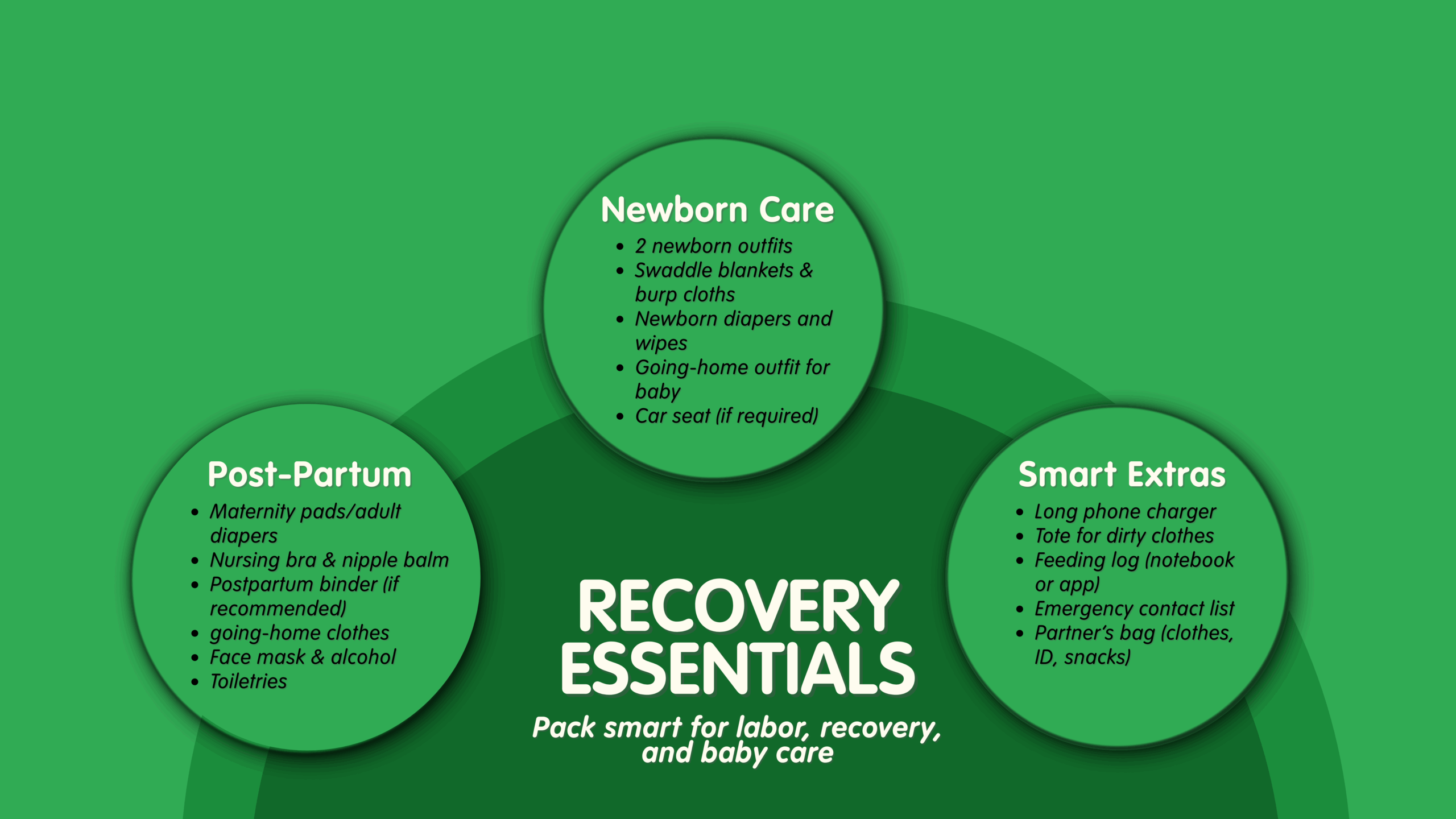
Postpartum Recovery Essentials
The first 24–72 hours after birth involve heavy bleeding, body soreness, and sleep deprivation. Pack for comfort, hygiene, and emotional ease:
- Maternity pads or adult diapers (most hospitals provide some, but not enough)
- Breastfeeding bra and nipple balm
- Postpartum binder if recommended by your OB
- Going-home clothes that are loose, high-waisted, and soft
- Face mask and alcohol — hospitals still observe infection control
- Toiletries: toothbrush, soap, shampoo, towel, tissue, bidet bottle (many moms prefer their own)
Baby Care Items
Hospitals provide basics, but some may ask you to bring baby essentials. Check in advance. Typically needed:
- Two sets of newborn clothes (tie-sides, mittens, booties, bonnet)
- Swaddle blankets and burp cloths
- Newborn diapers and wipes
- Going-home outfit for baby
- Car seat if required for discharge (especially in private hospitals or if traveling by car)
Skip bringing formula unless pre-approved by your OB — breastfeeding is usually encouraged right after birth unless medically contraindicated.
Smart Extras That Help
- Phone charger with long cable
- Small tote for dirty clothes
- Notebook or app to log feedings and baby care
- List of emergency contacts
- A separate bag for the birth partner (change of clothes, ID, snacks)
What to Do Next: Guidance for Pregnant Moms
- Finalize your hospital bag by week 35 — earlier if at risk for preterm labor.
- Ask your hospital which items are already provided, especially postpartum supplies.
- Pack light, but with intention — focus on what keeps you calm, clean, and mobile after birth.
Note:
This article was medically reviewed and written in collaboration with doctors and medical professionals committed to providing pediatric health education.
References:
World Health Organization (WHO) – Maternal and Perinatal Health
American College of Obstetricians and Gynecologists (ACOG)
Centers for Disease Control and Prevention (CDC – U.S.) – Pregnancy

Marie Victoria S. Cruz-Javier, MD, FPOGS, FPSGE
Obstetrics and Gynecology Minimally Invasive Gynecologic Surgery and Robotic Surgery Aesthetic Gynecology
Disclaimer:
The information in this article is intended for educational purposes only and does not substitute professional medical advice, diagnosis, or treatment. Always consult your physician, pediatrician, or qualified healthcare provider with any questions you may have regarding a medical condition or health objectives.