
Is This Just Picky Behavior or a Sensory Issue?
How to recognize when sensory reactions are affecting daily life and when to seek help from a pediatric therapist

At a Glance
- Sensory processing issues go beyond “picky”—they affect comfort and function.
- Reactions to light, sound, texture, or movement may be signs of a sensory challenge.
- Support is available—even without a formal diagnosis.
What Sensory Processing Really Means
Sensory processing is how the brain filters input like sound, light, touch, or movement. Some children respond too strongly; others barely register it.
This isn’t fussiness—it’s a brain-body mismatch. Kids may feel overstimulated, unsafe, or disconnected from their surroundings. That shows up in:
- Meltdowns around clothing, noise, or grooming
- Avoiding messy textures or public spaces
- Craving movement, crashing into things, or chewing objects
These behaviors are often misread as misbehavior—but they’re rooted in how the nervous system processes input.
Signs It’s More Than Just Preference
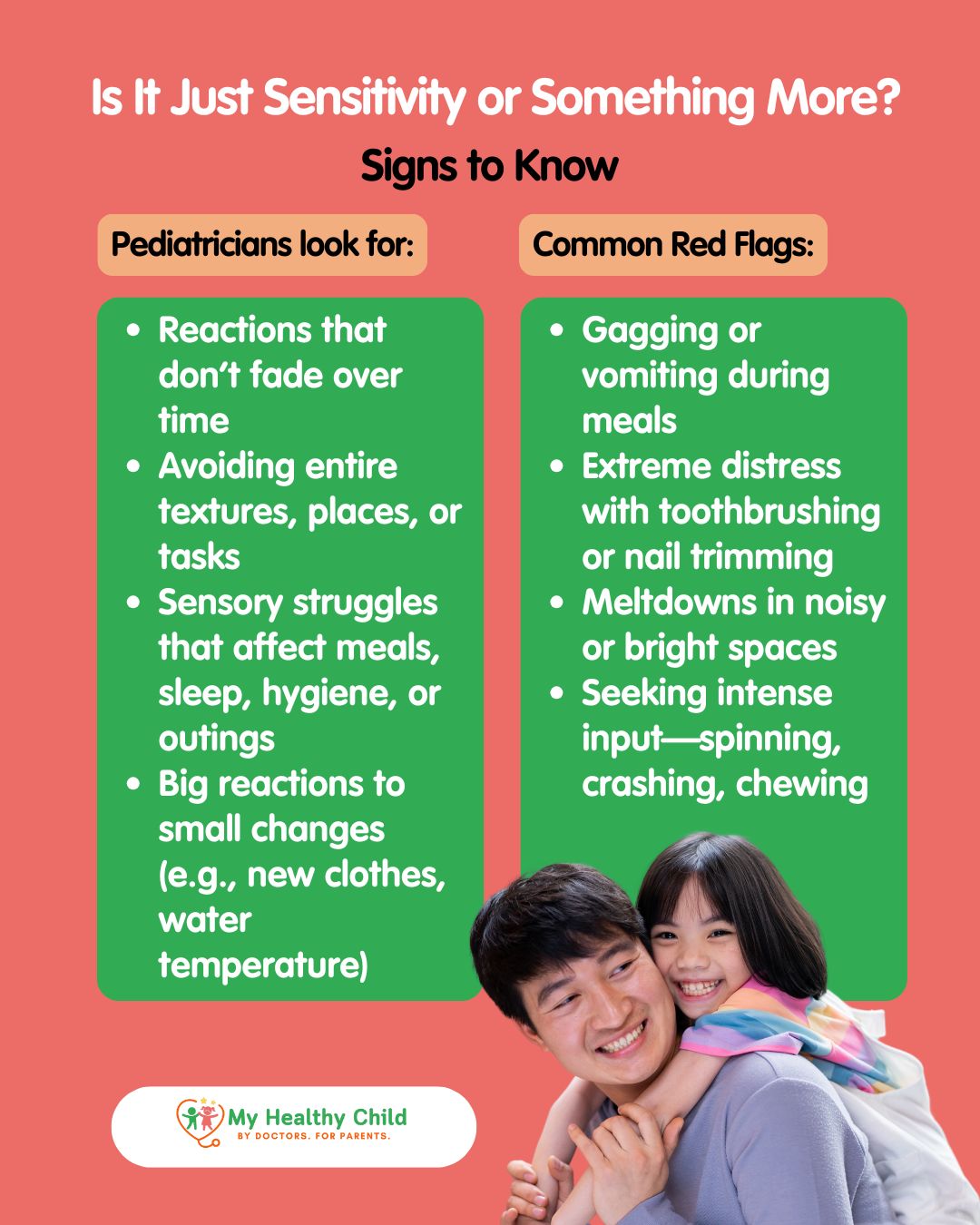
Pediatricians look for:
- Reactions that don’t fade over time
- Avoidance of entire textures, settings, or tasks
- Sensory struggles that disrupt daily routines: meals, sleep, hygiene, or outings
- Strong responses to minor sensory changes (e.g., new clothes, water temperature)
Common red flags include:
- Gagging or vomiting during meals
- Extreme reactions to toothbrushing or nail trimming
- Meltdowns in noisy or bright spaces
- Seeking intense movement (spinning, crashing) to regulate
What Pediatric Therapists Look At
Occupational therapists (OTs) assess:
- How your child responds to different inputs
- Whether reactions interfere with function
- How to build regulation tools through sensory-based play and structured routines
Therapy focuses on making the world feel more manageable—not forcing children to “get used to it.”
What to Do Next: Guidance for Parents
- Track patterns. What sets your child off? What do they avoid—or seek—over and over?
- Ask your pediatrician about OT. You don’t need a diagnosis if daily life is being affected.
- Use sensory-friendly strategies—like visual schedules, ear defenders, or calm-down kits.
Note:
This article was medically reviewed and written in collaboration with doctors and medical professionals committed to providing pediatric developmental health education.
References:
U.S. Centers for Disease Control and Prevention (CDC)
CHADD (Children and Adults with Attention-Deficit/Hyperactivity Disorder)

Francis Xavier M. Dimalanta, MD, FPPS, FPSDBP
Developmental and Behavioral Pediatrician
Fellow, Philippine Pediatric Society
Fellow, Philippine Society for Developmental and Behavioral Pediatrics
Head, Section of Developmental and Behavioral Pediatrics
Institute of Pediatrics and Child Health
St Luke’s Medical Center - Quezon City and Global City
Medical Director, A Child’s DREAM Foundation, Inc (est. 2003)
Disclaimer:
The information in this article is intended for educational purposes only and does not substitute professional medical advice, diagnosis, or treatment. Always consult your physician, pediatrician, or qualified healthcare provider with any questions you may have regarding a medical condition or health objectives.