
What Do Occupational, Physical, and Speech Therapy Actually Help With?
An overview of how each therapy supports daily function, communication, and movement, and how to know it’s working

At a Glance
- Therapies support how your child eats, moves, plays, and connects.
- Occupational Therapy builds everyday function, Physical Therapy strengthens movement, and speech therapy supports communication and feeding.
- Progress looks like more ease, less frustration, and real-world carryover.
Occupational Therapy (OT): Skills for Daily Life
OT helps children gain independence in everyday routines. It targets fine motor skills, sensory processing, and adaptive behavior.
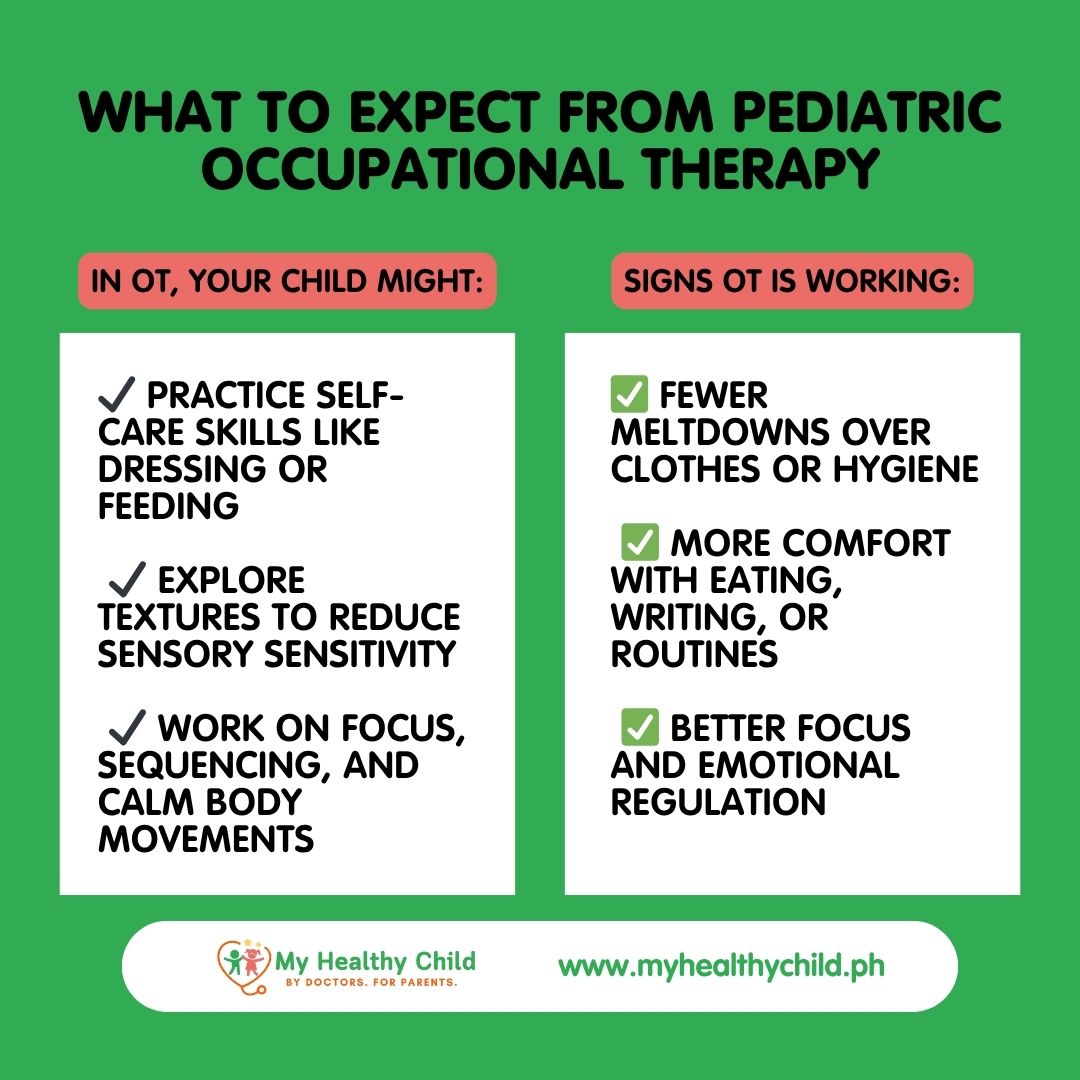
In OT, your child might:
- Practice dressing, cutting, or gripping tools
- Explore textures to reduce sensory avoidance
- Work on sequencing and coordination for tasks
Signs it's helping:
- Fewer meltdowns around clothing or hygiene
- More ease with writing, feeding, or self-care
- Better focus and regulation during routines
Physical Therapy (PT): Building Strength and Stability
PT improves posture, coordination, balance, and gross motor control—especially for children with low tone, delayed walking, or poor balance.
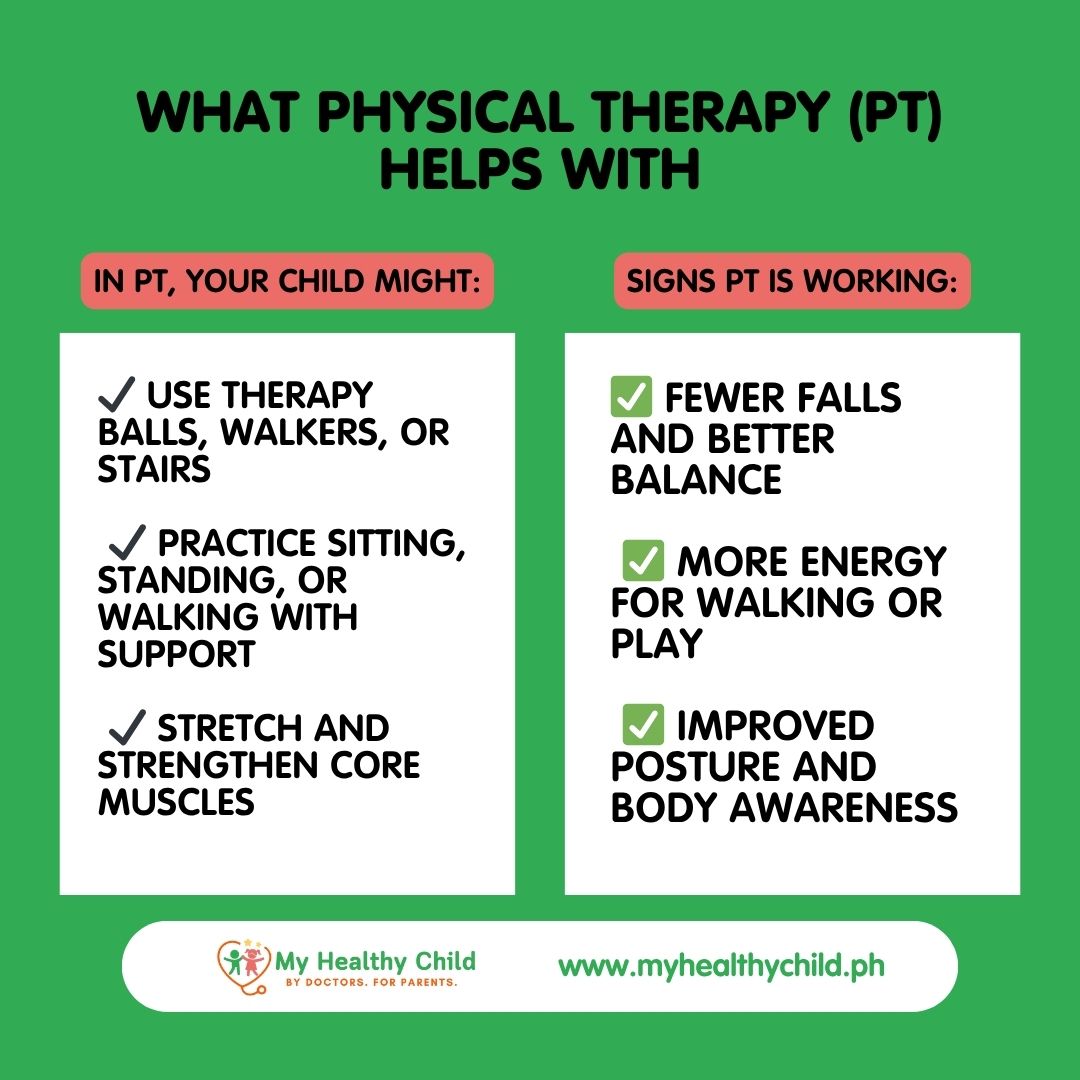
In PT, your child may:
- Use therapy balls, steps, or walkers
- Practice guided sitting, standing, or walking
- Stretch muscles and build core strength
Signs it’s helping:
- Better balance and fewer falls
- More stamina during play or walking
- Improved body awareness and posture
Speech Therapy: Communication and Feeding
Speech-language therapy supports spoken language, social communication, understanding, and oral-motor skills for feeding.
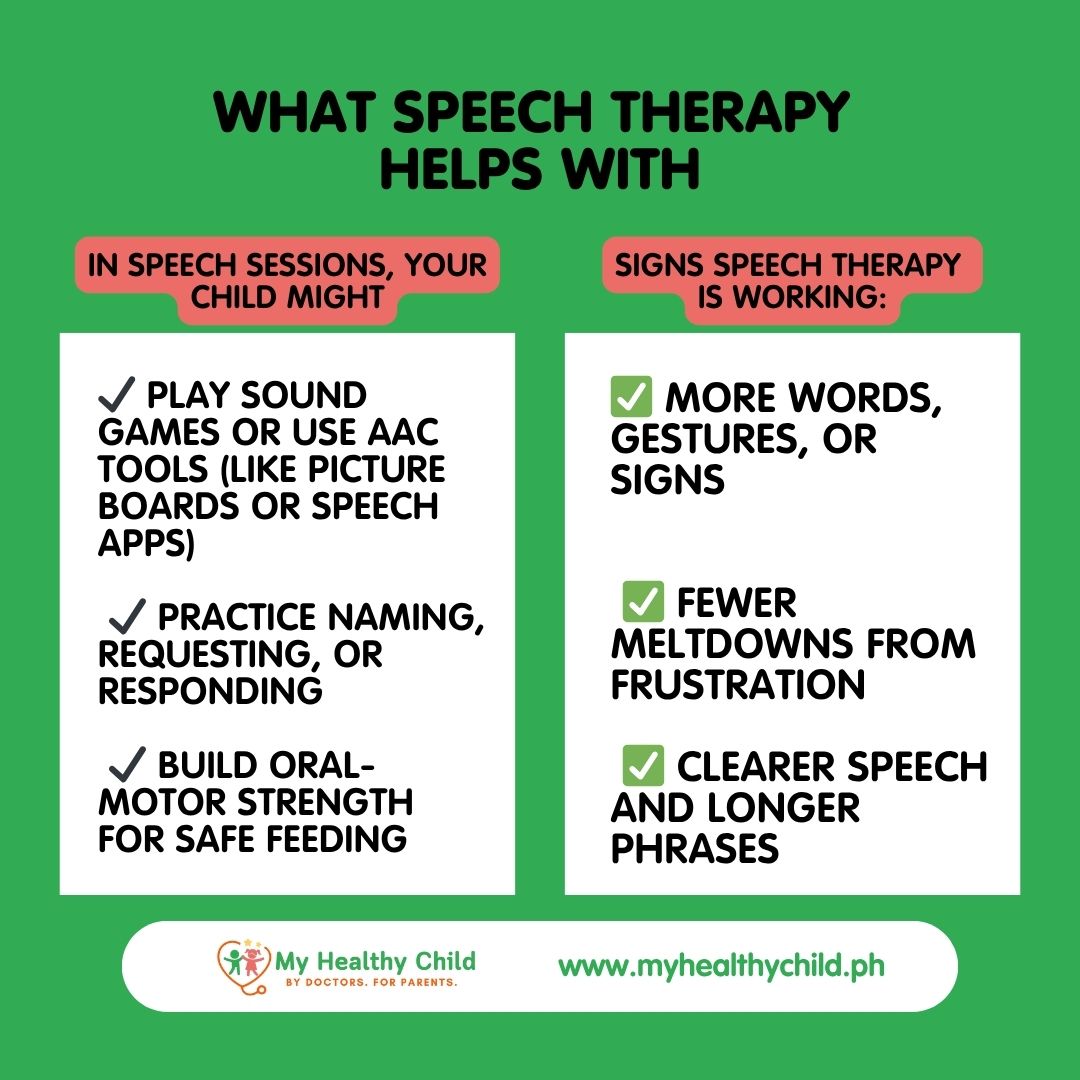
In speech sessions, your child might:
- Play sound games or use Augmentative and Alternative Communication (AAC) tools like picture boards or visual cards, speech-generating devices or similar apps
- Practice turn-taking and naming objects
- Strengthen chewing or swallowing skills
Signs it’s helping:
- More expressive language: words, signs, or gestures
- Fewer communication-related meltdowns
- Clearer sounds or longer phrases over time
What to Do Next: Guidance for Parents
- Ask how therapy goals relate to daily life. This helps you reinforce them at home.
- Track weekly gains. Progress may be slow but should be visible.
- Start even if delays seem mild. Early therapy prevents bigger challenges later.
Note:
This article was medically reviewed and written in collaboration with doctors and medical professionals committed to providing pediatric developmental health education.
References:
U.S. Centers for Disease Control and Prevention (CDC)
CHADD (Children and Adults with Attention-Deficit/Hyperactivity Disorder)

Francis Xavier M. Dimalanta, MD, FPPS, FPSDBP
Developmental and Behavioral Pediatrician
Fellow, Philippine Pediatric Society
Fellow, Philippine Society for Developmental and Behavioral Pediatrics
Head, Section of Developmental and Behavioral Pediatrics
Institute of Pediatrics and Child Health
St Luke’s Medical Center - Quezon City and Global City
Medical Director, A Child’s DREAM Foundation, Inc (est. 2003)
Disclaimer:
The information in this article is intended for educational purposes only and does not substitute professional medical advice, diagnosis, or treatment. Always consult your physician, pediatrician, or qualified healthcare provider with any questions you may have regarding a medical condition or health objectives.