
Can I Help My Picky Eater Eat Better in Just a Few Weeks?
Follow a step-by-step pediatric plan to reduce mealtime stress, expand food variety, and support healthy eating behaviors

At a Glance
- Picky eating peaks between ages 1 and 3—it’s a normal phase, not a permanent problem
- Pressuring, bribing, or negotiating over food often worsens refusal
- A few consistent strategies can gradually expand your toddler’s food variety
Why Picky Eating Happens
- Appetite slows naturally after age 1 as growth rate decreases
- Toddlers seek control: Refusing food is often about independence, not dislike
- Fear of new textures or smells: It’s common for toddlers to reject unfamiliar foods based on sensory input
- Previous pressure: Kids pushed to “take one bite” or “finish their plate” may learn to resist
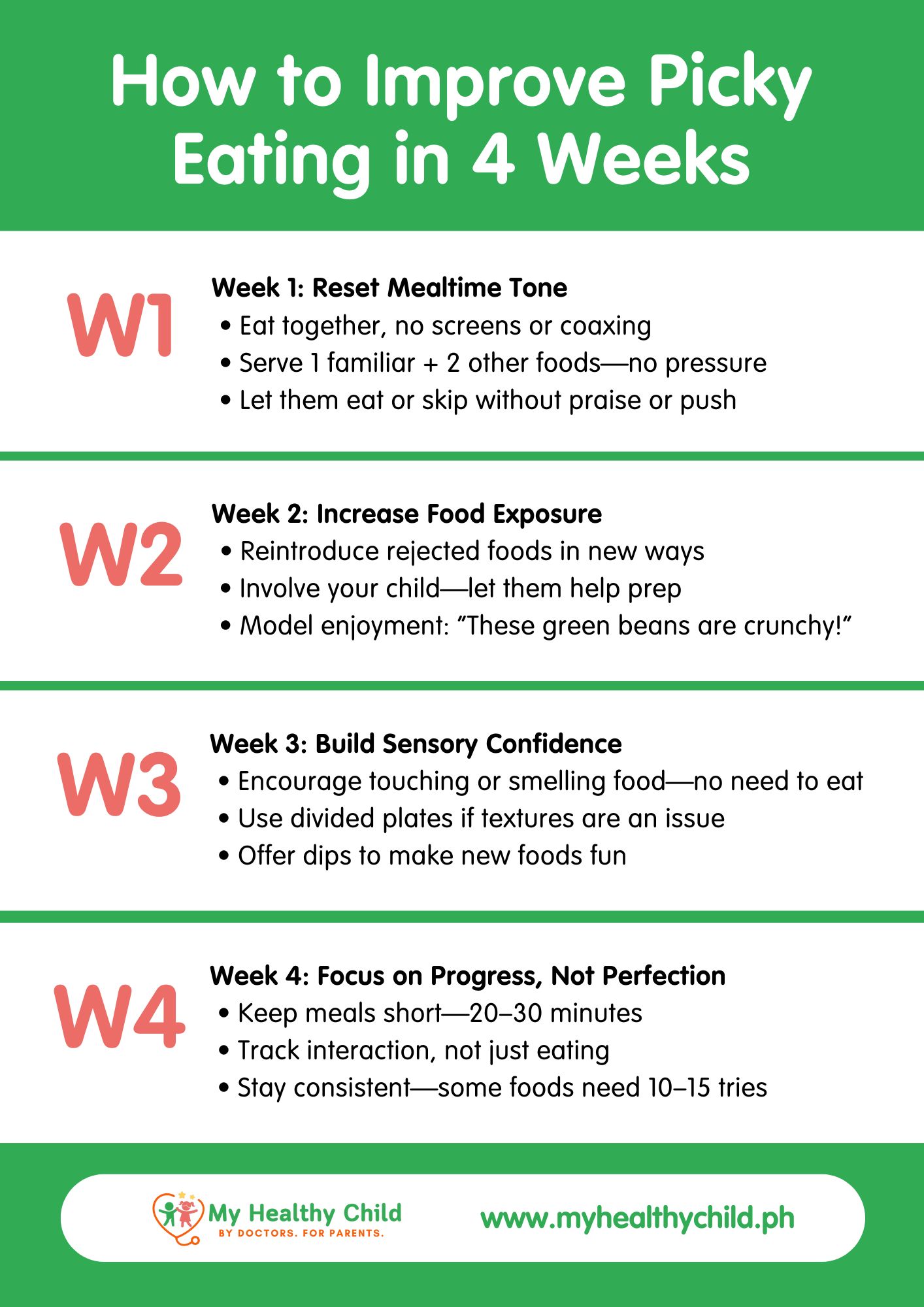
Week-by-Week Strategy That Works
What to Do Next: Guidance for Parents
- Trust your child’s hunger and fullness cues
- Keep a calm, neutral tone around food—even if meals feel repetitive
- Talk to your pediatrician if your child is losing weight, eating fewer than 10 total foods, or has signs of sensory feeding disorder
Note:
This article was medically reviewed and written in collaboration with doctors and medical professionals committed to providing pediatric health education.
References:
Centers for Disease Control and Prevention (CDC) – Early Childhood Development
American Academy of Pediatrics (AAP)
World Health Organization (WHO) – Early Childhood Development

Disclaimer:
The information in this article is intended for educational purposes only and does not substitute professional medical advice, diagnosis, or treatment. Always consult your physician, pediatrician, or qualified healthcare provider with any questions you may have regarding a medical condition or health objectives.