
Why Is Feeding My Toddler So Hard Right Now?
Discover what’s normal in picky eating, how to avoid power struggles, and how to support healthy habits without pressure

At a Glance
- Picky eating is a normal phase during toddlerhood—not a sign of failure or nutritional risk in most cases
- Appetite naturally drops after age one as growth slows
- How you respond to mealtime stress shapes your child’s long-term relationship with food
What’s Normal in Toddler Feeding
- Appetite fluctuations: Toddlers may eat a lot one day, almost nothing the next—it’s developmentally normal
- Food jags: Repeatedly asking for the same food then rejecting it later is common
- Selective eating: Preference for bland, familiar textures peaks between 18 months and 3 years
- Slower growth = less hunger: After infancy, weight gain slows down and so does caloric need
What Not to Do
- Don’t pressure or bribe: “One more bite” or reward-based eating increases anxiety and resistance
- Avoid labeling them “picky”: It reinforces the behavior and turns eating into identity
- Don’t force variety at once: Exposure matters more than quantity—let them see and smell new foods without requiring a bite
What Works Instead
- Stick to structure: Offer 3 meals and 2 snacks at consistent times, without grazing in between
- Serve one familiar food per meal: Alongside new or less preferred items, without forcing a taste
- Let your child decide how much to eat: Your job is to offer the food; their job is to eat (or not)
- Eat together: Toddlers copy what they see. Shared family meals build confidence and interest in food
- Keep meals low-pressure: Avoid screens, distractions, and power struggles at the table
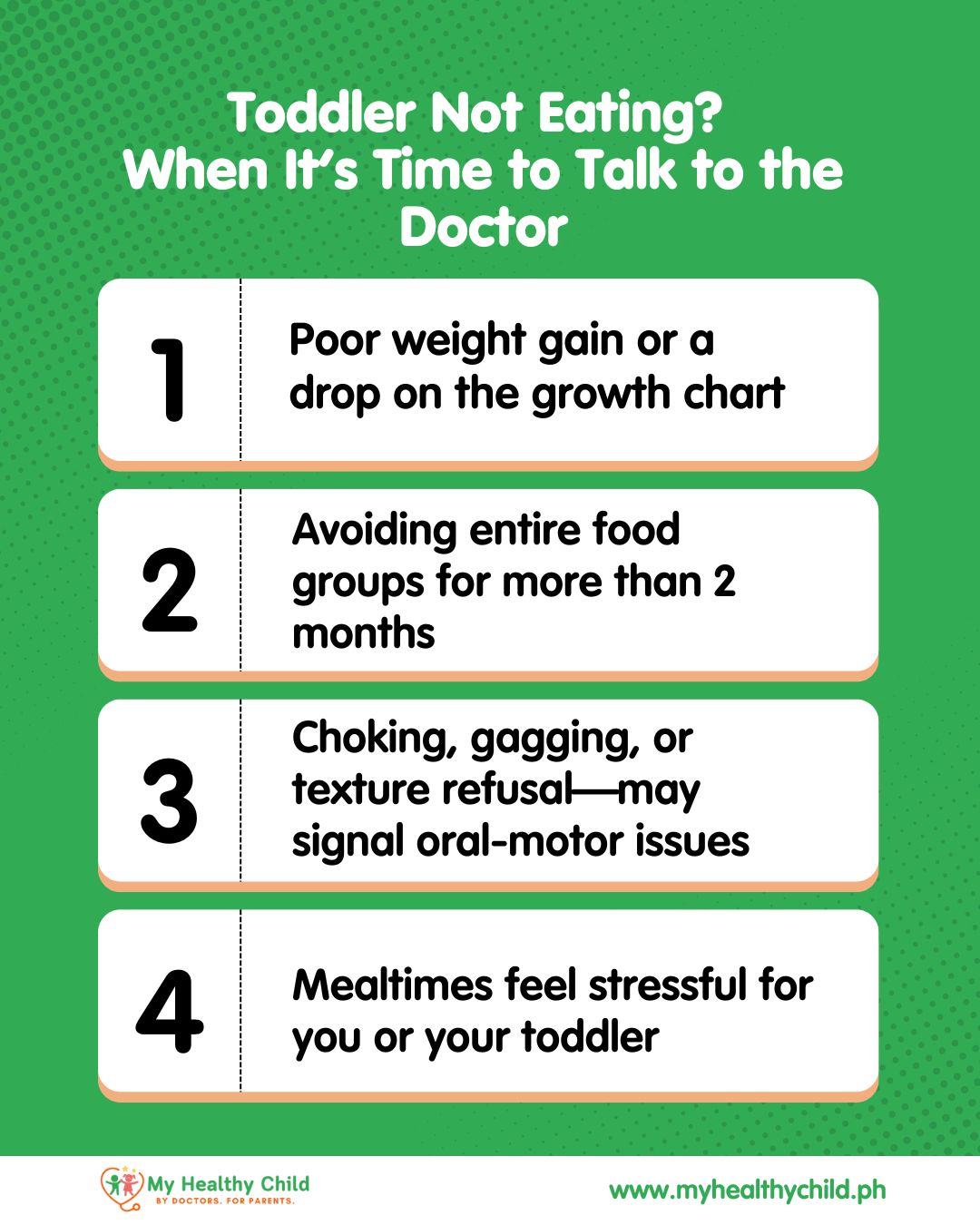
When to Talk to Your Pediatrician
- Poor weight gain or noticeable drop in growth curve
- Refusal to eat entire food groups for over 2 months
- Signs of oral-motor difficulty (e.g., choking, gagging, spitting out textures)
- Feeding issues that create high stress for you or your child
What to Do Next: Guidance for Parents
- Keep offering a variety of healthy options without pressure
- Focus on overall patterns—not every bite or meal
- Seek support if mealtimes are becoming a daily struggle or causing worry
Note:
This article was medically reviewed and written in collaboration with doctors and medical professionals committed to providing pediatric health education.
References:
Centers for Disease Control and Prevention (CDC) – Early Childhood Development
American Academy of Pediatrics (AAP)
World Health Organization (WHO) – Early Childhood Development

RINA REYES, MD DPPS, FPCMNP
Pediatrics and Medical Nutrition
Disclaimer:
The information in this article is intended for educational purposes only and does not substitute professional medical advice, diagnosis, or treatment. Always consult your physician, pediatrician, or qualified healthcare provider with any questions you may have regarding a medical condition or health objectives.