
Which Vaccines Are Safe and Important During Pregnancy?
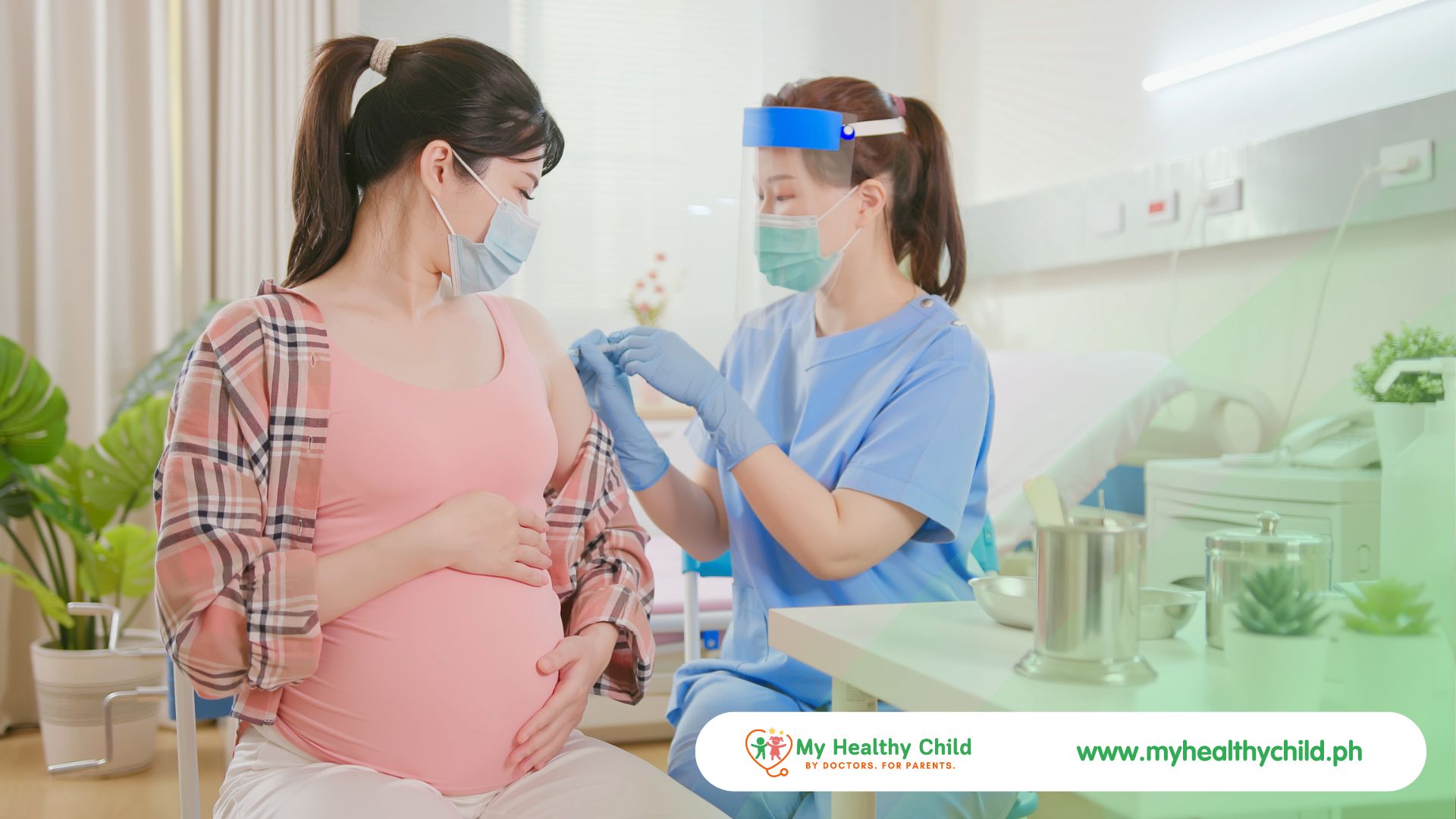
At a Glance
- Certain vaccines are safe, recommended, and essential during pregnancy.
- These shots protect both you and your baby from serious infections.
- Timing matters — and the antibodies you pass on will guard your newborn in their first fragile weeks.
Why Vaccines Before Birth Matter
Vaccines given during pregnancy don’t just protect you — they equip your baby’s immune system with antibodies that cross the placenta and offer early defense after birth. This passive immunity is especially important in the first months of life, when babies are too young to receive their own vaccines.
The two vaccines recommended in every pregnancy are:
- Tdap (tetanus, diphtheria, pertussis) — to protect against whooping cough
- Influenza vaccine — to reduce risks of severe flu and preterm labor
These (Tdap and Influenza vaccines) are backed by the Philippine Pediatric Society (PPS), WHO, and ACOG, and are widely used around the world with a strong safety record.
Recommended Vaccines: What to Know
Tdap Vaccine
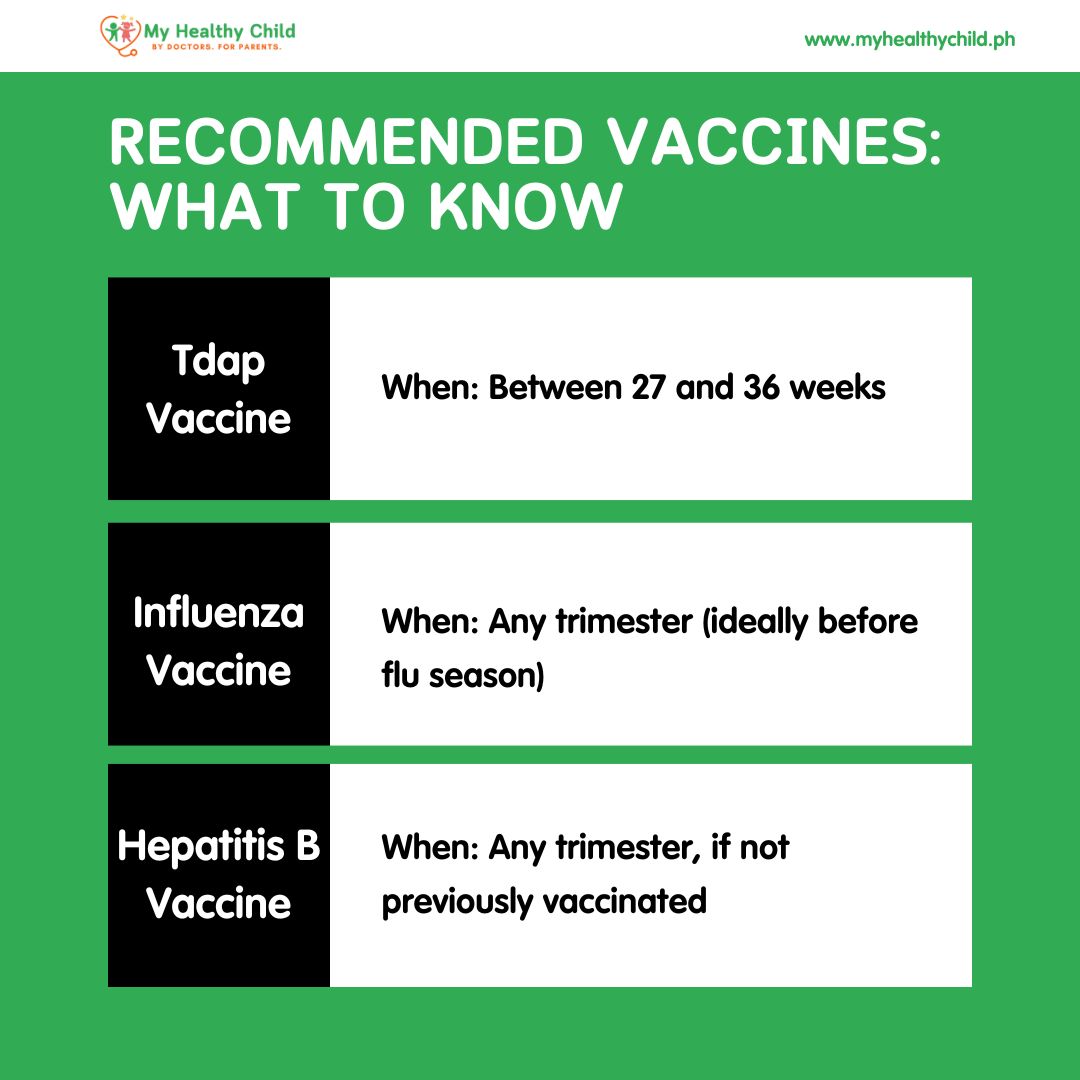
- When: Between 27 and 36 weeks
- Why: Protects baby from pertussis (whooping cough), which can be deadly in early infancy
- How it helps: Maternal antibodies pass through the placenta and guard your baby for their first 2–3 months of life
Even if you had Tdap before, you need a dose in every pregnancy — that’s how maternal antibody transfer works.
Influenza Vaccine
- When: Any trimester (ideally before flu season)
- Why: Pregnancy weakens immune response; flu can lead to hospitalization or early labor
- How it helps: Protects both mother and newborn through antibody transfer
The flu vaccine used in pregnancy is inactivated (non-live), which makes it safe throughout gestation.
Hepatitis B Vaccine
- When: Any trimester, if not previously vaccinated
- Why: Prevents mother-to-child transmission of hepatitis B during delivery
- Who needs it: Especially important for those with high-risk jobs, incomplete vaccine history, or partners with infection
Risk-Based or Travel-Related Vaccines
Some vaccines are only given during pregnancy if specific risks are present:
- Pneumococcal vaccine: for those with chronic metabolic, liver, cardiac, or lung disease, for
immunosuppression, general malignancy, chronic renal disease, or asplenia. - Meningococcal vaccine: for those living in dormitories, or traveling to outbreak areas
- Hepatitis A vaccine: for food service workers or those exposed to unsafe water
Your OB will weigh your individual risk to decide if these are needed.
What to Avoid
Vaccines containing live viruses are not recommended during pregnancy, including:
- Nasal spray flu vaccine
- Live oral polio vaccine (OPV) is not routinely given unless there’s a high risk of exposure.
These may be given before pregnancy or after delivery, but are avoided while pregnant out of caution.
What to Do Next: Guidance for Pregnant Moms
- Ask your OB when to schedule Tdap and flu shots — both protect your baby at birth.
- Check your hepatitis B status — complete the series if needed.
- Avoid travel to areas with live vaccine requirements unless medically cleared.
Note:
This article was medically reviewed and written in collaboration with doctors and medical professionals committed to providing pediatric health education.
References:
World Health Organization (WHO) – Maternal and Perinatal Health
American College of Obstetricians and Gynecologists (ACOG)
Centers for Disease Control and Prevention (CDC – U.S.) – Pregnancy

Marie Victoria S. Cruz-Javier, MD, FPOGS, FPSGE
Obstetrics and Gynecology Minimally Invasive Gynecologic Surgery and Robotic Surgery Aesthetic Gynecology
Disclaimer:
The information in this article is intended for educational purposes only and does not substitute professional medical advice, diagnosis, or treatment. Always consult your physician, pediatrician, or qualified healthcare provider with any questions you may have regarding a medical condition or health objectives.