
Why Is My Newborn Coughing or Sneezing?
Understand what causes colds in newborns, when to worry, and how to protect your baby’s breathing and recovery
At a Glance
- Mild sneezing or coughing is common and often not dangerous
- Watch for signs of labored breathing or feeding trouble
- Any fever over 38°C in a baby under 3 months is an emergency
Why Newborns Get Sick Easily
- Immature immunity: Newborns lack prior exposure to viruses.
- Common culprits: Rhinovirus, RSV, parainfluenza—all spread easily via droplets.
- No strong defenses yet: Even brief contact with a mildly sick person can cause infection.
What’s Normal vs. Concerning
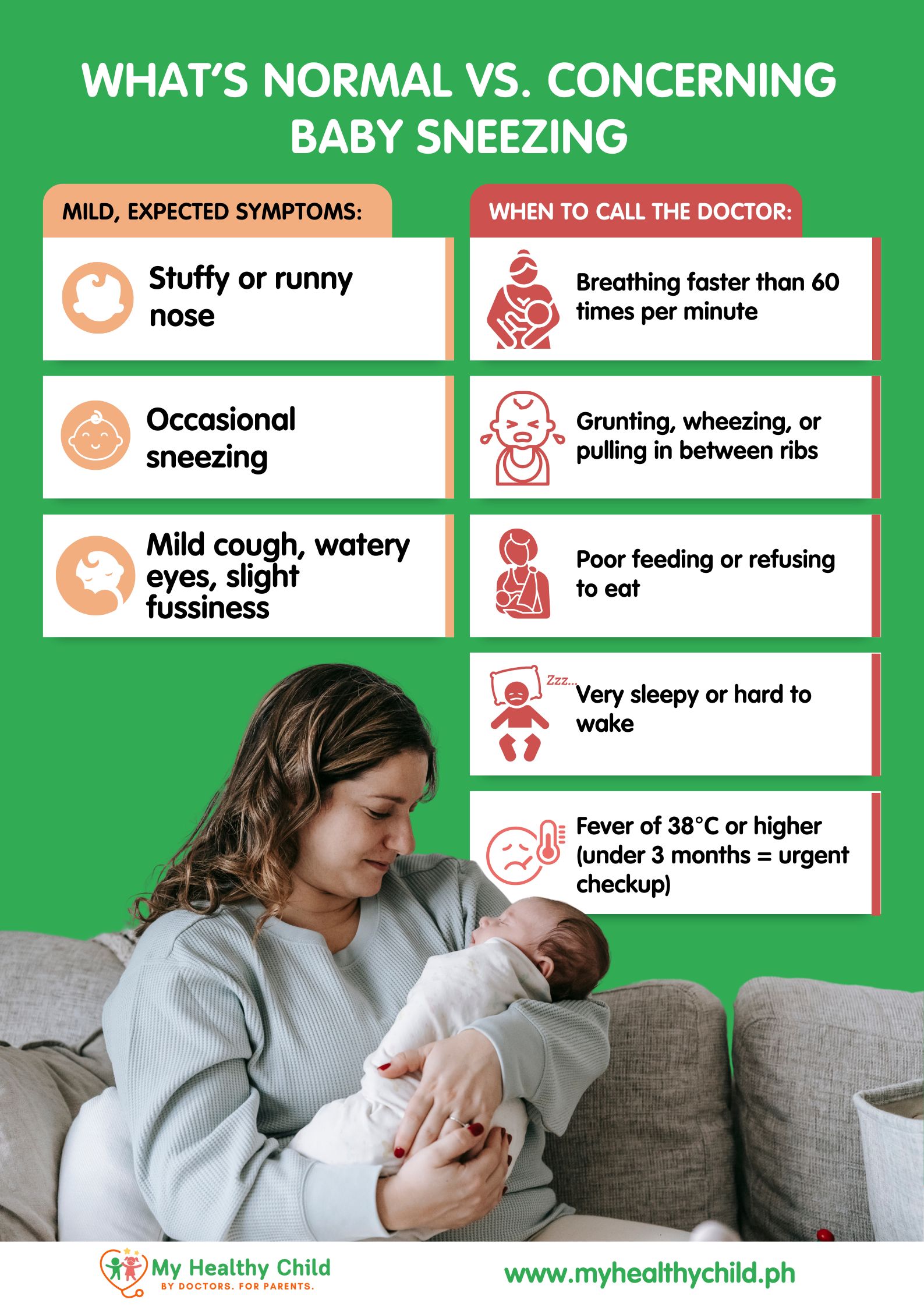
Mild, expected symptoms:
- Stuffy or runny nose
- Occasional sneezing
- Mild cough, watery eyes, slight fussiness
When to call the doctor:
- Breathing faster than 60 times per minute
- Grunting, wheezing, or pulling in between ribs
- Poor feeding or refusing to eat
- Very sleepy or hard to wake
- Fever of 38°C or higher (under 3 months = urgent checkup)
How to Help at Home
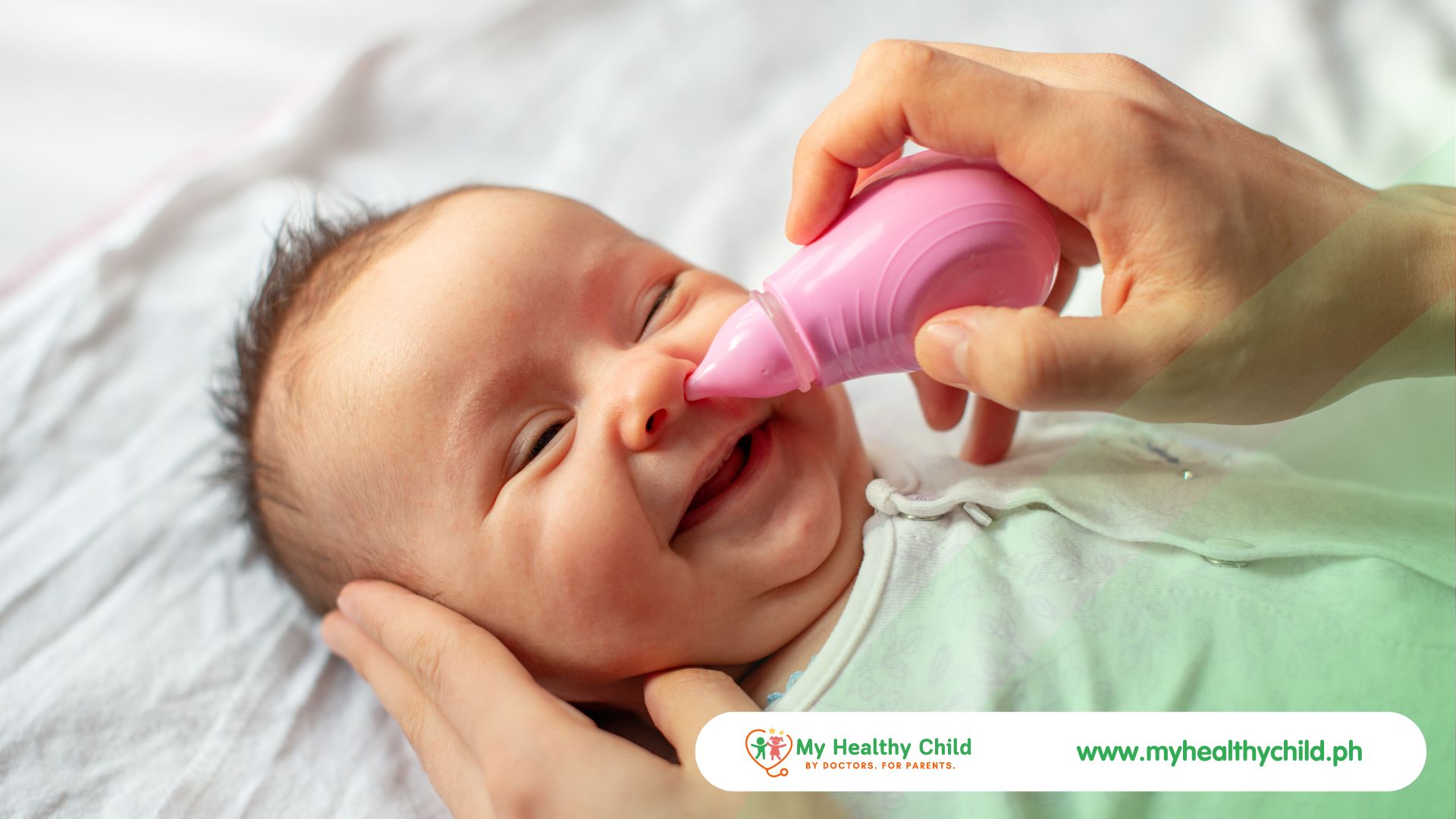
- Clear the nose: Use saline drops before feeding, then suction gently.
- Positioning: Hold upright during feeds to ease breathing.
- Hydration: Breast feed often to avoid dehydration.
- Humidify: Use a cool mist humidifier to reduce dryness and loosen mucus.
- No meds: Avoid over the counter cough or cold medicine unless prescribed.
Red Flag: When Illness Gets Risky
- RSV, flu, or COVID can lead to bronchiolitis or pneumonia in newborns.
- Emergency signs: Blue lips, flaring nostrils, fast shallow breathing, limpness.
- Bring your baby to the ER if any of these symptoms appear.
What to Do Next: Guidance for Parents
- Call your doctor if coughing worsens or baby eats/sleeps poorly
- Avoid crowded indoor areas and ask visitors to stay home if sick
- Keep baby’s nose clear before feeds and monitor breathing closely
Note:
This article was medically reviewed and written in collaboration with doctors and medical professionals committed to providing pediatric health education.
References:
American Academy of Pediatrics (AAP) – Newborn Health and Safety
Centers for Disease Control and Prevention (CDC) – Infant Care

Disclaimer:
The information in this article is intended for educational purposes only and does not substitute professional medical advice, diagnosis, or treatment. Always consult your physician, pediatrician, or qualified healthcare provider with any questions you may have regarding a medical condition or health objectives.