
Why Is Feeding Still a Struggle at This Age?
Understanding picky eating, power struggles, and how to raise a happy, healthy eater— without the stress

You thought picky eating would magically disappear after toddlerhood. But here you are—your 7-year-old still refuses vegetables, won’t try new foods, and negotiates every bite like a seasoned lawyer.
“Why is feeding still this hard?”
“Shouldn’t they have outgrown this by now?”
Take a deep breath, parent. You’re not failing. You’re just human—and so is your child.
Here’s why mealtimes can still feel like a battlefield at this age… and how to shift from struggle to success.
First, What’s Normal?
Many kids aged 4 to 12 still experience:
- Food neophobia (fear of new foods)
- Texture sensitivity
- Preference for familiar tastes (a.k.a. “plain rice forever”)
- Power plays at the table
And get this—picky eating can peak between ages 6 and 8, especially during growth spurts, emotional shifts, or increased independence.
It’s normal. It’s temporary. It’s manageable.
Why Picky Eating Persists
- Control
Kids crave independence—and food is one of the few areas they can control. So “No” to broccoli might just mean “I want a choice.”
- Sensory sensitivity
Some kids genuinely struggle with certain textures, smells, or temperatures.
- Anxiety and routine
New foods = uncertainty. Kids love predictability—even in meals.
- Parental pressure
The more we push… the more they push back. (It’s not you—it’s biology.)
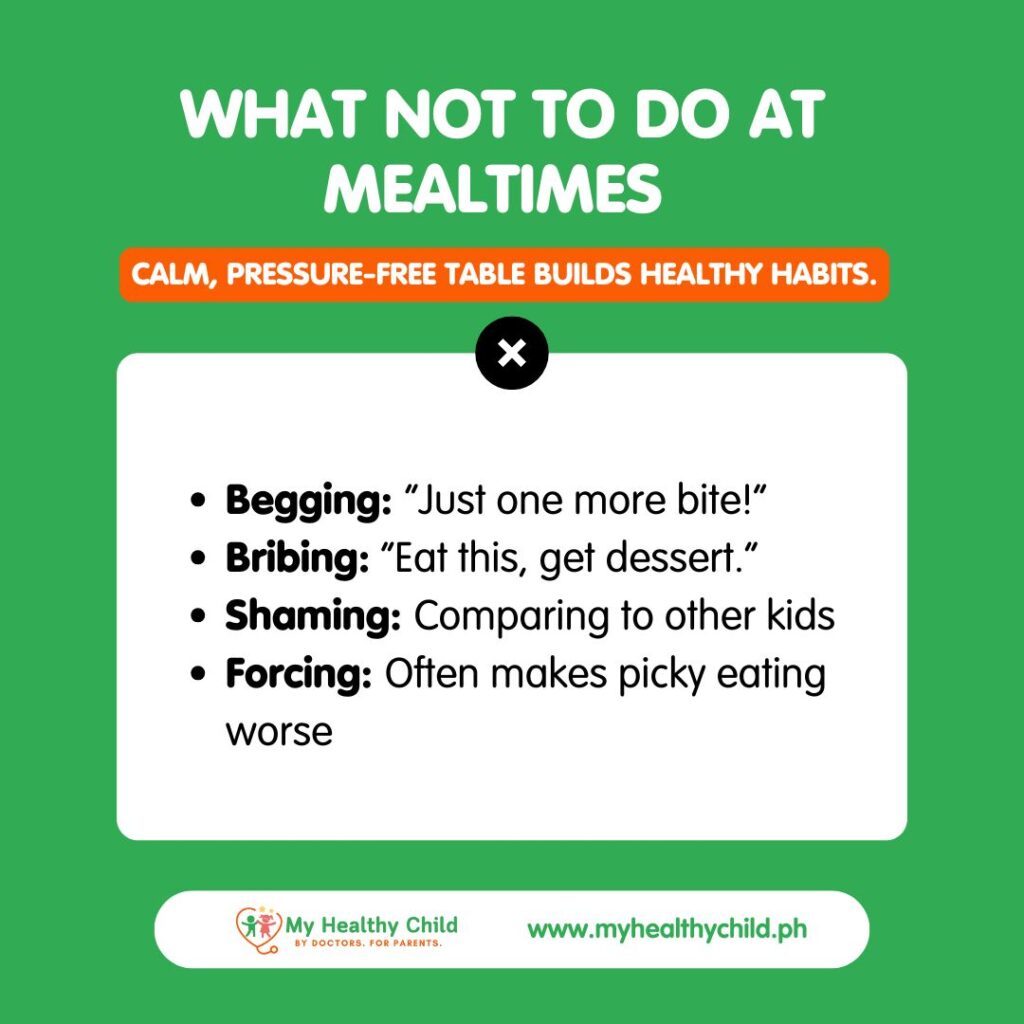
What Actually Works (And What Doesn’t)
What doesn’t work:
- Begging: “Just one more bite!”
- Bribing: “Finish your veggies and you’ll get ice cream.”
- Shaming: “Why can’t you be like your cousin who eats everything?”
- Forcing: (This backfires hard—kids may eat less overall.)
What does work:
- Set the routine
- Regular meals and snack times
- One family meal, no separate “kid food”
- No pressure to eat, just encouragement to try
- Make it fun & visual
- Cut foods into shapes
- Offer colorful plates (“eat the rainbow!”)
- Try taste tests with scorecards or food bingo
- Model the behavior
- Eat what you want your child to eat
- Show enthusiasm: “Mmm, these carrots are sweet today!”
- Involve them
- Grocery store scavenger hunts
- Let them wash, mix, or serve
- Give small food choices: “Apples or bananas with lunch?”
- Respect their appetite
- Don’t force a clean plate
- Allow “no thank you” bites
- Trust that their hunger will self-regulate over time
How to Gently Expand Their Diet
- Introduce one new food at a time—served alongside favorites
- Offer it multiple times (it can take 10–15 tries to accept a new food!)
- Serve foods in different forms: raw carrots vs. steamed vs. in soup
- Use dips and sauces to increase acceptance (yes, ketchup counts)
Remember: exposure without pressure is the goal.
When to Seek Support
Feeding struggles are common, but if your child:
- Eats fewer than 15–20 total foods
- Gags or vomits frequently during meals
- Avoids entire food groups
- Is underweight or falling off growth charts
- Experiences high anxiety around meals
… then it’s time to speak with a pediatrician or feeding therapist.
You’re not alone—and early support makes a huge difference.
In Summary:
Feeding your child doesn’t have to be a fight.
Picky eating is a phase—one that most kids outgrow with time, patience, and positive food experiences.
Your job isn’t to force every bite… it’s to create an environment where healthy eating feels safe, fun, and stress-free.
So ditch the power struggles. Focus on connection over perfection. And keep showing up— one bite at a time.
Keep following MyHealthyChild for judgment-free guidance on raising confident, curious, and healthy little eaters.
Note:
This article was medically reviewed and written in collaboration with doctors and medical professionals committed to providing pediatric health education.
References:
https://www.nationwidechildrens.org/conditions/pediatric-feeding-disorder

Disclaimer:
The information in this article is intended for educational purposes only and does not substitute professional medical advice, diagnosis, or treatment. Always consult your physician, pediatrician, or qualified healthcare provider with any questions you may have regarding a medical condition or health objectives.