
Why Does My Teen Always Seem Tired?
Understanding What’s Normal, What’s Not, and How You Can Help

If your teenager constantly seems exhausted, drags themselves out of bed in the morning, or could nap at the drop of a hat—you’re not imagining things. Many parents feel like their teen is always tired, and the truth is, that’s not far off the mark.
But while some fatigue is part of growing up, it’s also worth asking:
Why is this happening so often? And how do you know when it’s more than just “teen stuff”?
Let’s break it down—because tired teens need more than just another energy drink. ⏰
Teenagers Need More Sleep Than You Think
Teenagers are growing fast—not just physically, but emotionally, socially, and mentally. That’s why they actually need more sleep than adults.
According to the American Academy of Sleep Medicine, teens between 13 and 18 years old need 8 to 10 hours of sleep every night for optimal health. Yet most teens get less than 7 hours, especially on school nights.
Why the gap?
- Biological changes during puberty delay melatonin release, meaning teens don’t feel sleepy until later at night.
- Early school start times don’t align with their natural sleep cycle.
- Homework, social life, and screen time eat into rest hours.
This leads to chronic sleep deprivation, also known as sleep debt—and it adds up fast.
Lack of sleep impacts memory, mood, focus, immunity, and even metabolism.
Other Common Causes of Teen Fatigue
Sleep is a big piece of the puzzle—but not the only one. Teens are under more pressure than ever, and their energy can be drained from multiple angles:
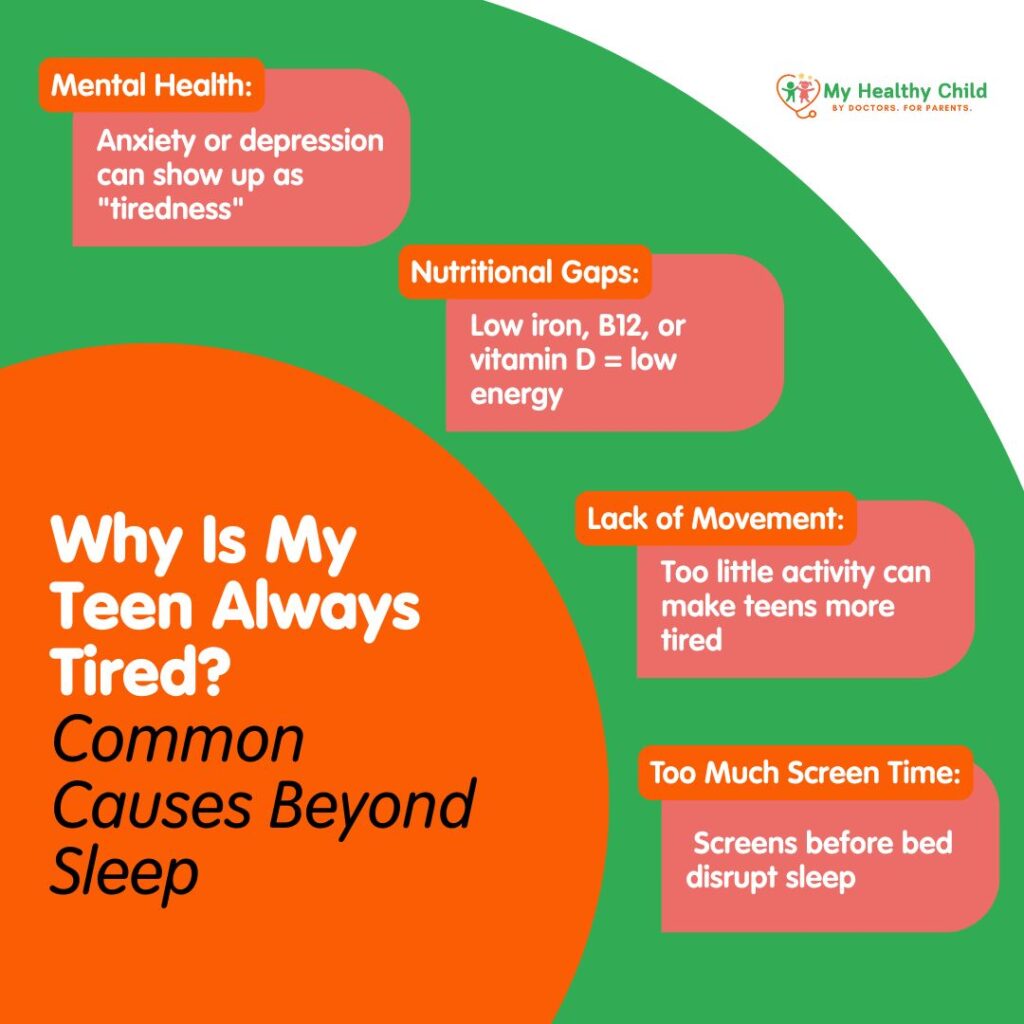
- Mental Health Challenges
Anxiety, depression, and stress are major contributors to tiredness. Teens may not always say “I’m anxious”—they might just say “I’m tired.” Emotional exhaustion is real.
Watch for: Irritability, withdrawal, lack of interest in hobbies, or sudden changes in behavior.
- Nutritional Gaps
Teens love snacks—but not always the right ones. Diets low in iron, vitamin D, or B12 can cause fatigue. Skipping meals, overdoing sugar, or not getting enough calories also plays a role.
Watch for: Pale skin, dizziness, low appetite, or brittle nails.
- Lack of Movement
It sounds strange, but not being active can make you feel even more tired. Regular movement helps regulate energy and improve sleep quality.
Encourage: Sports, walks, dance, or any form of physical activity they enjoy—even gaming breaks with a quick stretch.
- Too Much Screen Time
Excessive use of phones, tablets, or computers (especially before bed) affects melatonin levels and disrupts sleep patterns.
Try: A no-screen rule 30–60 minutes before bedtime and blue-light filters in the evening.
When Fatigue Might Signal Something More
Most of the time, your teen is tired because life is busy and their sleep routine is off. But in some cases, persistent fatigue may be a red flag for something deeper.
Call your pediatrician if your teen is:
- Sleeping over 10–12 hours and still tired
- Missing school or activities due to exhaustion
- Having trouble focusing or remembering
- Losing or gaining weight unintentionally
- Showing signs of depression or anxiety
- Complaining of joint pain, frequent headaches, or weakness
Potential medical causes include:
- Anemia
- Hypothyroidism
- Chronic fatigue syndrome
- Mononucleosis (mono)
- Diabetes
- Sleep apnea
It’s always better to check and rule out conditions than to wait and worry.
What Can You Do as a Parent?
You don’t need to solve everything—but you can set the stage for better energy and wellness.
- Help Them Protect Their Sleep
- Keep sleep and wake times consistent—even on weekends.
- Make their bedroom a true rest zone: cool, dark, and device-free.
- Encourage wind-down routines like reading or listening to calm music.
- Encourage Smart Eating Habits
- Prioritize whole foods over ultra-processed snacks.
- Offer iron-rich foods (like leafy greens, meat, beans) and B12 sources (like eggs, dairy, and fish).
- Limit caffeine—especially after 3 p.m.
- Talk Without Pressure
Say something like:
“I’ve noticed you’ve been really tired lately. How are you feeling these days?”
Let them know you’re not judging—just caring. Teens are more likely to open up when they don’t feel interrogated.
- Get Support When Needed
Don’t hesitate to involve a doctor, therapist, or nutritionist. Sometimes the best thing you can do is say, “Let’s figure this out together.”
In Summary:
Teens are tired—often for good reasons. Their brains and bodies are changing, they’re balancing more than ever, and the world around them can feel overwhelming.
But that doesn’t mean we ignore it. Fatigue can be a signpost—whether it’s for better sleep habits or deeper conversations about mental and physical health.
Be the parent who listens, nudges, and advocates. Because behind every tired teen is a story— and your support could be the reset they need.
Note:
This article was medically reviewed and written in collaboration with doctors and medical professionals committed to providing pediatric health education.
References:
https://www.cdc.gov/sleep/features/sleep-monitoring.html
https://www.healthychildren.org/English/ages-stages/teen/nutrition/Pages/default.aspx

Disclaimer:
The information in this article is intended for educational purposes only and does not substitute professional medical advice, diagnosis, or treatment. Always consult your physician, pediatrician, or qualified healthcare provider with any questions you may have regarding a medical condition or health objectives.