
Why Does My Child Keep Getting Nosebleeds?
Everyday causes, calming management tips, and when to call the doc

Nothing sends a parent into instant panic mode like a sudden gush of blood from their child’s nose—especially if it happens often. But take a deep breath.
Nosebleeds in kids are usually more dramatic than dangerous.
So, why does it keep happening? Is it normal? Let’s walk you through it in plain English—no stress, no WebMD spirals.
First Things First: Nosebleeds in Kids Are Common
If your child is between the ages of 3 and 10, you’re not imagining it—nosebleeds are a common part of childhood. The blood vessels in their nose are still developing and very close to the surface, making them easy to break.
Sometimes it’s caused by something as simple as dry air. Other times, it’s because your little one keeps picking their nose like it’s a hobby (you know the one).
What’s Causing the Bleeding? (Probably One of These)
- Dry Air
Dry indoor heat or sudden changes in temperature can dry out the nasal lining, making it prone to cracking and bleeding.
Tip: Use a cool mist humidifier in your child’s room and keep them hydrated.
- Nose Picking or Rubbing
Little fingers love to explore—and unfortunately, the nose is a favorite destination.
Tip: Trim nails and remind gently (but often!) not to dig for “nose treasures.”
- Frequent Colds or Allergies
Coughing, sneezing, blowing, or wiping too hard during colds or allergy flare-ups can irritate the delicate nasal lining.
Tip: Use saline sprays and teach gentle blowing (pretend they’re blowing bubbles!).
- Minor Injuries
One bump during playtime or sports can cause a nosebleed, especially if they’ve already had one recently.
Tip: No rough play right after a nosebleed—let the area heal first.
- Warm Weather or Exercise
Heat and physical activity increase blood flow, which can sometimes trigger bleeding, especially if their nose is already dry or irritated.
Tip: Keep your child cool and offer water breaks often.
How to Stop a Nosebleed (Without Panicking)
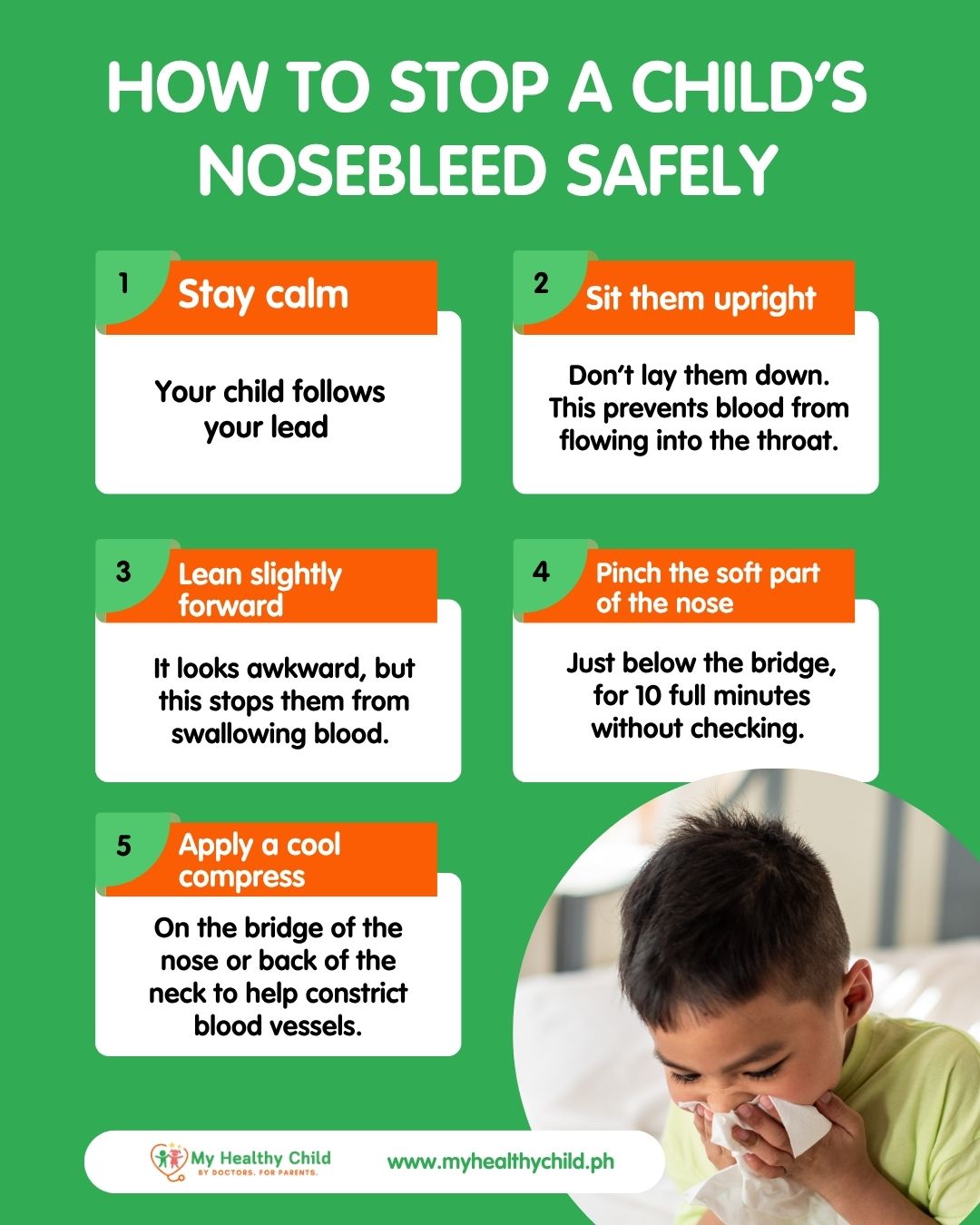
Important: Don’t tilt their head back (old myth). It can cause blood to run into their throat, leading to coughing or vomiting.
When Should I Worry?
Most nosebleeds are harmless—but not all. Call your doctor or seek help if:
- The bleeding lasts more than 20 minutes, even with pressure
- Your child is bleeding from both nostrils at the same time
- Nosebleeds happen daily or very frequently
- There are other signs of bleeding or bruising elsewhere on the body They’ve had a recent injury to the head or face
- You suspect something was put in the nose (hello, Lego block)
These could point to an underlying condition or need more care.
Can We Prevent Nosebleeds? Yes—Here’s How
Let’s make bleeding noses a rare event:
- Use a humidifier in dry rooms
- Apply petroleum jelly inside nostrils if dry (check with your doc)
- Teach gentle nose-blowing
- Limit nose picking (easier said than done, we know)
- Protect during sports with proper gear
Manage allergies and colds with guidance from your pediatrician
In Summary:
Nosebleeds in kids? Super common.
Super scary-looking? Sure.
But usually harmless? Absolutely.
With a few simple tricks, calm responses, and a watchful eye for the rare red flags, you’ll handle nosebleeds like a pro.
And hey—if you’ve been cleaning drops off the couch again this week… you’re doing great.
Follow MyHealthyChild for more real talk on parenting, health, and everything in between—because healthy kids start with informed parents.
Note:
This article was medically reviewed and written in collaboration with doctors and medical professionals committed to providing pediatric health education.
References:
https://kidshealth.org/en/parents/nose-bleed.html
https://www.chop.edu/conditions-diseases/nosebleeds-epistaxis

Disclaimer:
The information in this article is intended for educational purposes only and does not substitute professional medical advice, diagnosis, or treatment. Always consult your physician, pediatrician, or qualified healthcare provider with any questions you may have regarding a medical condition or health objectives.