
Why Am I Worried About My Teen’s Eating Habits?
Understanding What’s Normal, What’s Not, and How to Spot Early Red Flags

Teenagers and food—it can be a wild ride. One week they’re devouring everything in sight. The next, they’re skipping meals, counting calories, or obsessing over protein. So how do you know what’s just a phase… and what could be a red flag?
Let’s break it down clearly, calmly, and compassionately—because your instincts matter, and your teen’s well-being does too.
First, Let’s Talk About “Normal” Teenage Eating
Adolescence is a time of massive change. Your teen’s body is growing fast, and their brain is rewiring in powerful ways. Their appetite may swing like a pendulum—and that’s actually okay.
What’s considered typical:
- Increased hunger during growth spurts
- Cravings for energy-dense foods (think: carbs, fats, snacks)
- Skipping breakfast but still eating well overall
- Eating more on some days, less on others
- Experimenting with diets, trends, or plant-based eating
So yes, weird food behavior doesn’t always mean trouble. Teens are figuring out how to fuel themselves while juggling emotions, social pressures, school, and independence.
But… sometimes, those eating shifts are not just part of growing up.
Early Signs of Disordered Eating
Eating disorders don’t always look like dramatic weight loss or refusal to eat. The early signs can be subtle—and easy to miss.
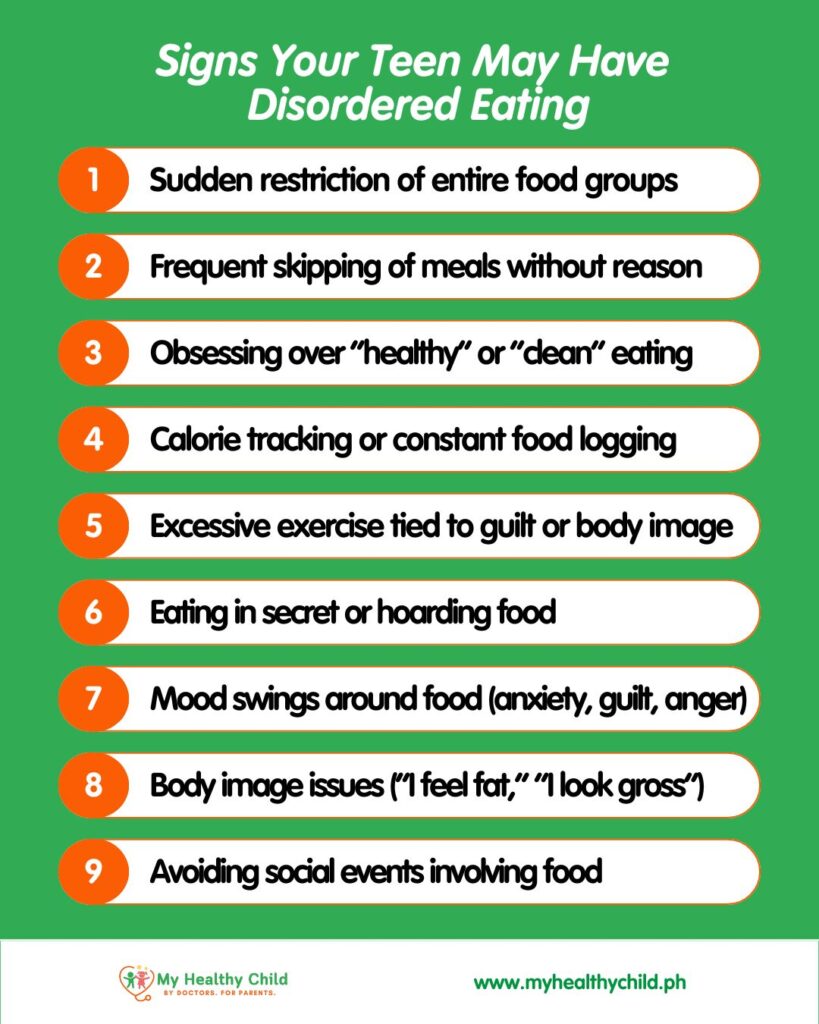
Here are some behaviors that may signal something deeper:
- Sudden restriction of entire food groups (e.g. carbs, fats)
- Frequent skipping of meals without reason
- Obsessing over “healthy” or “clean” eating
- Calorie tracking or constant food logging
- Excessive exercise tied to guilt or body image
- Eating in secret or hoarding food
- Mood swings around food (anxiety, guilt, anger)
- Body image issues (“I feel fat,” “I look gross”)
- Avoiding social events involving food
Your child doesn’t have to “look sick” to be struggling. Eating disorders can affect all body types—and early intervention matters.
What’s Behind These Shifts?
Teen years are emotionally intense. A lot of eating issues don’t start with food at all—they start with feelings.
Your teen might be using food to:
- Cope with stress, anxiety, or depression
- Feel in control when everything else feels chaotic
- Fit in with peers, influencers, or societal beauty standards
- Numb emotions or distract from hard things
Add in the pressure of social media, body filters, and viral diet trends—and it’s easy to see how teens can fall into harmful patterns quickly.
What You Can Do as a Parent
First off—don’t panic. But don’t ignore your gut either. You know your child best.
Here’s how to gently step in:
- Start conversations without judgment. “Hey, I’ve noticed you’ve been skipping meals more lately. Is everything okay?”
- Avoid body talk—positive or negative. Focus on how they feel rather than how they look.
- Model balanced eating. Eat together when possible. Show variety, flexibility, and enjoyment around meals.
- Watch for emotional shifts. Changes in eating often track with changes in mood, sleep, and social behavior.
- Don’t play food police. Teens need autonomy—but they also need to know you’re watching out for them with love, not control.
- Seek help early. A pediatrician, school counselor, or therapist can help assess whether it’s time for more support.
When to Call a Professional
Call your doctor or seek professional help if you notice:
- Noticeable weight changes (up or down)
- Extreme preoccupation with food, weight, or body
- Signs of purging (vomiting, laxatives, excessive workouts)
- Withdrawal from family or friends
- Refusal to eat certain foods or entire meals regularly
✨ The earlier you get help, the better the outcome.
In Summary:
It’s normal to worry about your teen’s eating habits—because you care.
Most food phases pass. But when eating becomes a way to cope, control, or disappear emotionally, it’s time to look deeper.
The goal? A teen who eats to fuel their body and honor their feelings. That starts with open dialogue, consistent support, and the right kind of professional care when needed.
You’ve got this—and they’ve got you.
Note:
This article was medically reviewed and written in collaboration with doctors and medical professionals committed to providing pediatric health education.
References:
https://www.nationaleatingdisorders.org/warning-signs-and-symptoms

Disclaimer:
The information in this article is intended for educational purposes only and does not substitute professional medical advice, diagnosis, or treatment. Always consult your physician, pediatrician, or qualified healthcare provider with any questions you may have regarding a medical condition or health objectives.