
When Should I Start Solid Foods and What Should I Try First?
Learn the signs of readiness, how to start safely, and what helps your baby enjoy their first bites
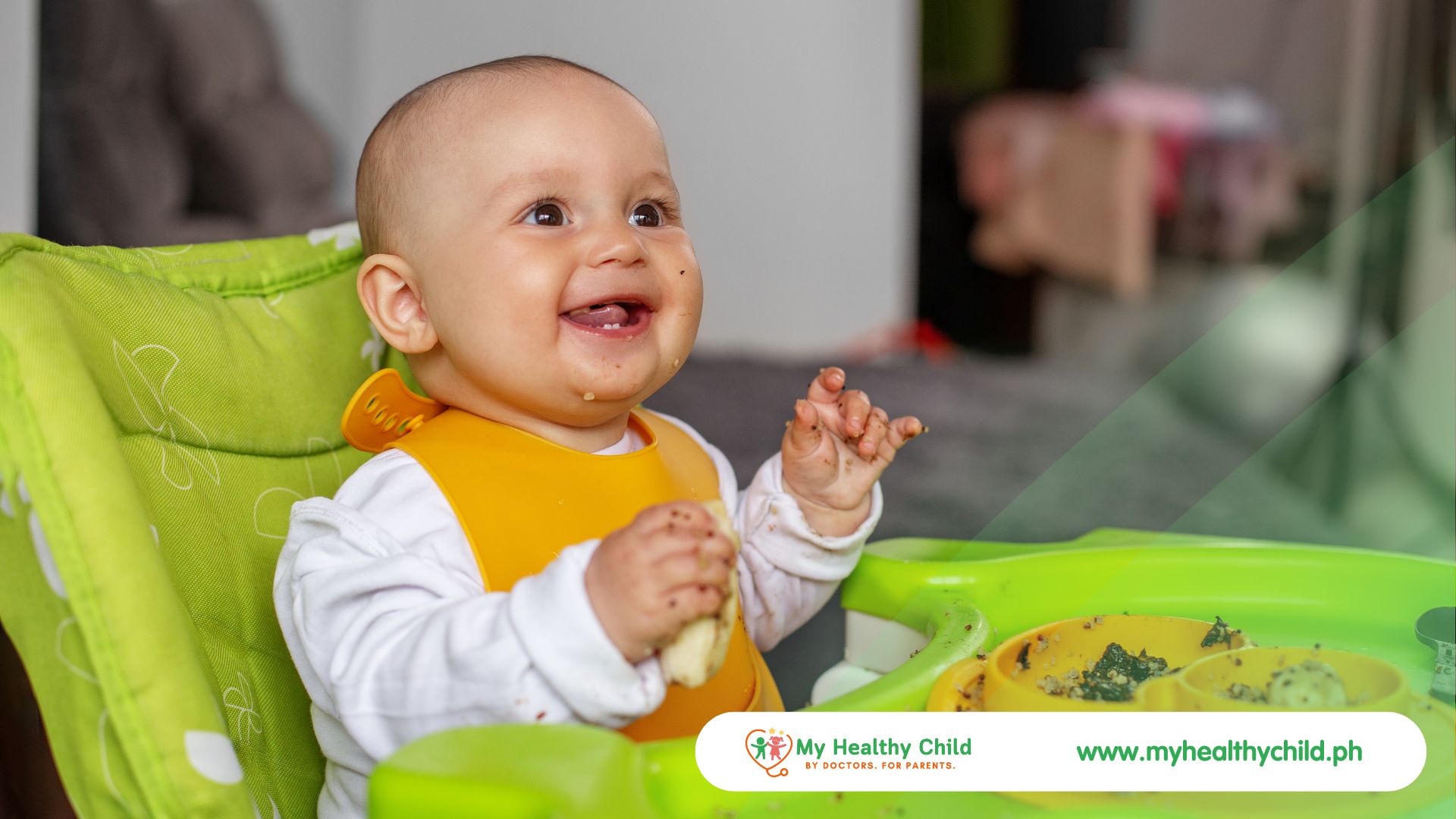
At a Glance
- Most babies are ready for solids around 6 months, not before 4 months
- Look for head control, sitting with support, and interest in food
- Start with iron-rich, single-ingredient foods—go slow and responsive
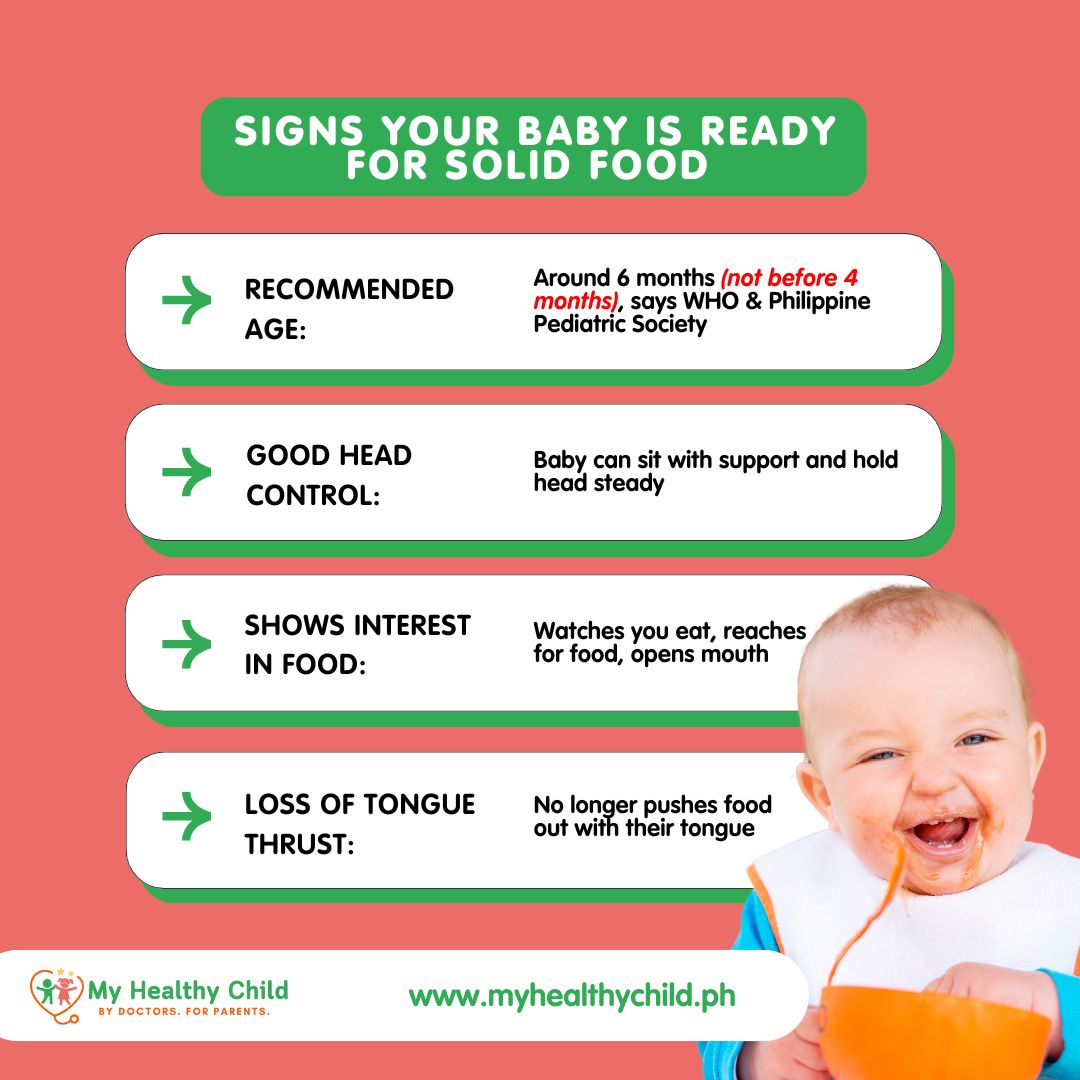
Signs Your Baby is Ready
- Age: WHO and the Philippine Pediatric Society recommend introducing solids at 6 months, but not before 4 months
- Head and neck control: Baby can sit with support and hold head steady
- Interest in food: Reaches for food, opens mouth, watches you eat
- Loss of tongue thrust: Baby no longer automatically pushes solids out with tongue
What to Try First
- Iron-rich foods: Babies’ iron stores begin to drop at 6 months
- Fortified baby cereals (e.g. rice, oatmeal)
- Pureed meats (chicken, beef, liver)
- Mashed legumes (munggo, lentils)
- Local vegetables: Kalabasa (squash), kamote (sweet potato), carrots—steamed and mashed
- Fruits (after vegetables): Saging (banana), avocado, papaya
- Offer one new food every 3 days to monitor for reactions
Feeding Tips That Build Long-Term Eating Habits
- Go slow and responsive: Let baby lead—watch for hunger and fullness cues
- No pressure to finish: Mealtime is about exposure, not intake
- Texture matters: Start smooth, then gradually introduce more textured foods
- Avoid added sugar or salt: Baby kidneys and taste preferences are still developing
- Breastmilk first: Solids may complement, but not replace, breastmilk in the first year
What to Avoid
- Before 12 months: No honey (botulism risk), no choking hazards (nuts, popcorn, hard chunks)
- Allergy fear vs. exposure: Introduce allergenic foods (egg, peanut, fish) early but safely—consult your doctor if baby has eczema or family allergy history
What to Do Next: Guidance for Parents
- Start solids when baby shows multiple readiness signs—age alone isn’t enough
- Begin with iron-rich and local foods, introduced slowly and patiently
- Call your doctor if baby struggles with swallowing, refuses all textures, or has allergic reactions
Note:
This article was medically reviewed and written in collaboration with doctors and medical professionals committed to providing pediatric health education.
References:
American Academy of Pediatrics (AAP) – Newborn Health and Safety
Centers for Disease Control and Prevention (CDC) – Infant Care

Disclaimer:
The information in this article is intended for educational purposes only and does not substitute professional medical advice, diagnosis, or treatment. Always consult your physician, pediatrician, or qualified healthcare provider with any questions you may have regarding a medical condition or health objectives.