
What’s Normal in My Baby’s Poop and When Should I Worry?
Decode colors, textures, and timing so you know when it’s okay, and when it’s time to call your pediatrician

At a Glance
- Meconium (Days 1–2): Thick, black, tar-like. This is baby’s first stool and should clear by Day 3.
- Transitional (Days 3–5): Greenish-brown to yellow as milk intake increases.
- Breastfed stool: Yellow, loose, and seedy. May occur 3–8 times daily or after every feed.
- Formula-fed stool: Tan, brown, or green with pasty texture. Often less frequent (1–4 times/day).
- Stool frequency varies: Some babies stool several times a day; others once every few days after 1 month—both can be normal if baby feeds well and gains weight.
What’s Normal in the First Weeks
- Meconium (Days 1–2): Thick, black, tar-like. This is baby’s first stool and should clear by Day 3.
- Transitional (Days 3–5): Greenish-brown to yellow as milk intake increases.
- Breastfed stool: Yellow, loose, and seedy. May occur 3–8 times daily or after every feed.
- Formula-fed stool: Tan, brown, or green with pasty texture. Often less frequent (1–4 times/day).
- Stool frequency varies: Some babies stool several times a day; others once every few days after 1 month—both can be normal if baby feeds well and gains weight.
When Poop Signals a Problem
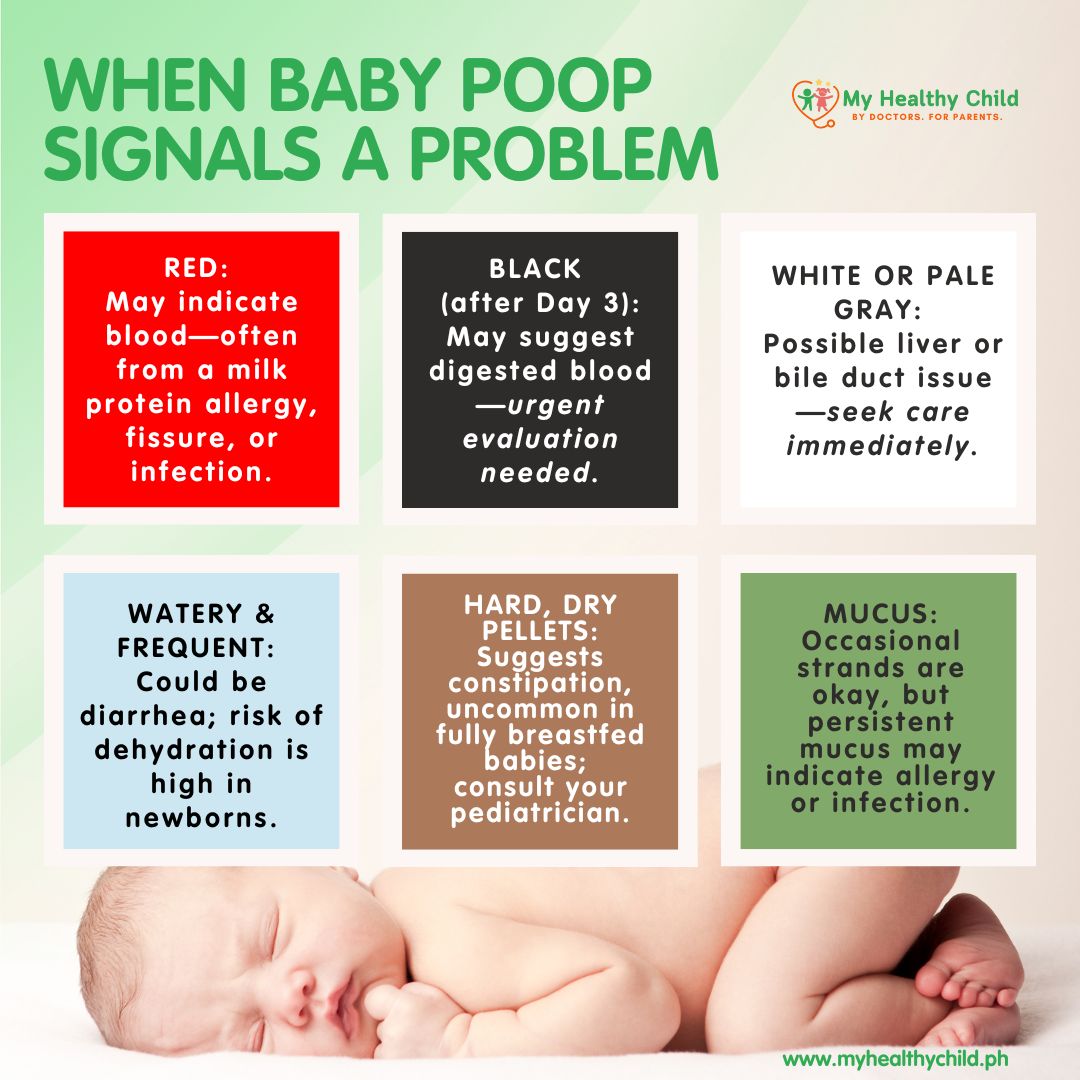
- Red: May indicate blood—often from a milk protein allergy, fissure, or infection.
- Black (after Day 3): May suggest digested blood—urgent evaluation needed.
- White or pale gray: Possible liver or bile duct issue—seek care immediately.
- Watery & frequent: Could be diarrhea; risk of dehydration is high in newborns.
- Hard, dry pellets: Suggests constipation, uncommon in fully breastfed babies; consult your pediatrician.
- Mucus: Occasional strands are okay, but persistent mucus may indicate allergy or infection.
What to Look for Alongside Stool Changes
- Feeding problems: Poor latch or low milk transfer may reduce stool output.
- Dehydration signs: Fewer than 6 wet diapers/day by Day 5, dry mouth, or sunken soft spot.
- Weight trends: Low or stagnant weight gain alongside stool concerns warrants prompt medical input.
- Foul odor or sudden changes: Especially if paired with fussiness, fever, or vomiting—have your baby seen.
What to Do Next: Guidance for Parents
- Expect color and texture to evolve quickly in the first two weeks
- Track frequency, color, and any sudden shifts in smell or consistency
- Call your doctor if you see red, white, or black poop (after Day 3), or if stool issues come with poor feeding or low diaper output
Note:
This article was medically reviewed and written in collaboration with doctors and medical professionals committed to providing pediatric health education.
References:
American Academy of Pediatrics (AAP) – Newborn Health and Safety
Centers for Disease Control and Prevention (CDC) – Infant Care

Disclaimer:
The information in this article is intended for educational purposes only and does not substitute professional medical advice, diagnosis, or treatment. Always consult your physician, pediatrician, or qualified healthcare provider with any questions you may have regarding a medical condition or health objectives.