
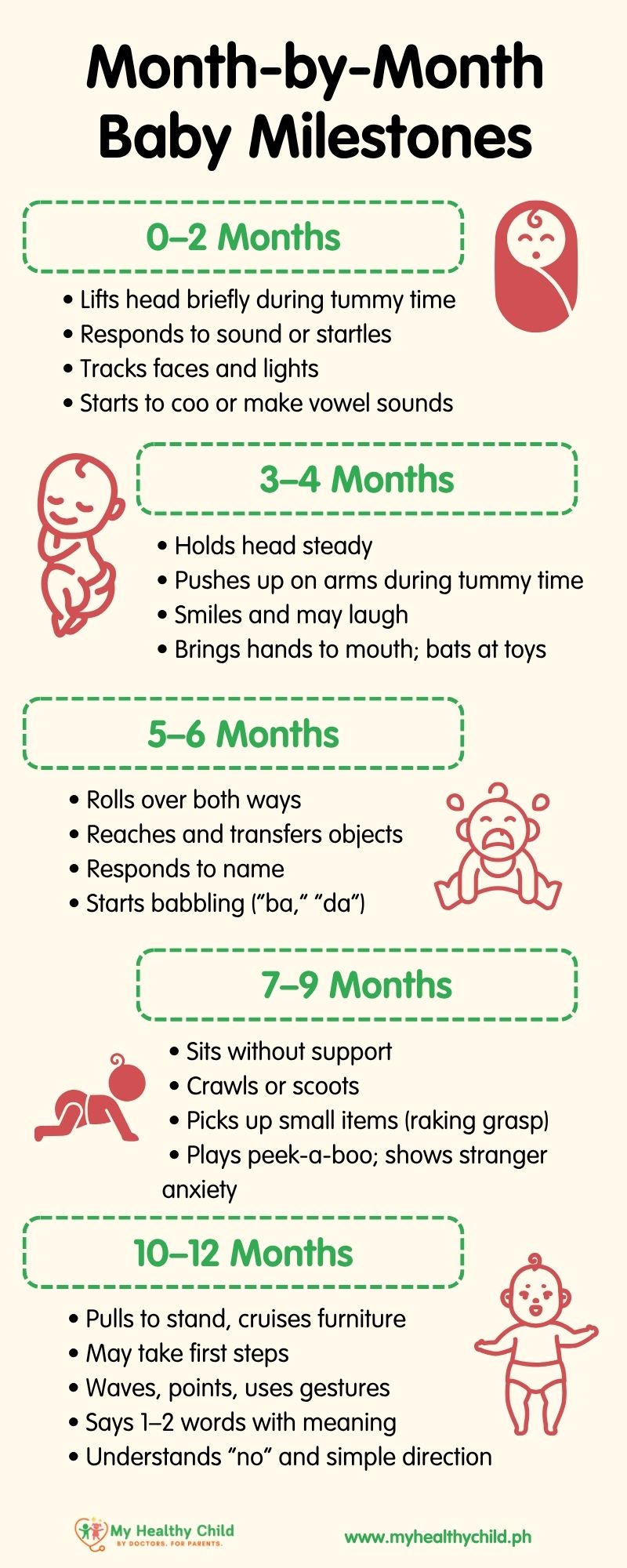
What Milestones Should I Expect in My Baby’s First Year?
A month-by-month guide to how babies grow, move, and connect in their first twelve months

At a Glance
- Milestones vary, but babies follow predictable patterns in movement, language, and social cues
- Early delays may resolve on their own—but patterns matter more than isolated moments
- Always track development across motor, language, and social skills—not just physical growth
When to Be Concerned
- By 2 months: No eye contact or response to sound
- By 4 months: Poor head control, no social smile
- By 6 months: Not rolling or showing interest in surroundings
- By 9 months: Not sitting, no babbling
- By 12 months: No words, doesn’t point or wave, not standing with support
Development isn’t linear—babies progress at different rates. But delays in multiple areas or regression (losing a skill previously gained) should prompt evaluation.
What to Do Next: Guidance for Parents
- Track not just when skills appear, but how they build over time
- Don’t rush milestones—support them with play, tummy time, and interaction
- If you’re concerned, don’t wait—early intervention makes a measurable difference
Note:
This article was medically reviewed and written in collaboration with doctors and medical professionals committed to providing pediatric health education.
References:
American Academy of Pediatrics (AAP) – Newborn Health and Safety
Centers for Disease Control and Prevention (CDC) – Infant Care

Dean Angelo Dimaano, MD, DPPS, DPSNBM
Pediatrics and Neonatology
MJ Santos Hospital, Butuan City
MAB Rm 301
Mondays thru Saturdays
9:30am —onward
09951300090
Disclaimer:
The information in this article is intended for educational purposes only and does not substitute professional medical advice, diagnosis, or treatment. Always consult your physician, pediatrician, or qualified healthcare provider with any questions you may have regarding a medical condition or health objectives.