
What If My Child Still Isn’t Talking?
A parent’s guide to spotting early signs of delay in speech, movement, or thinking and knowing when to ask for help

At a Glance
- Delays in speech, movement, or play can signal broader developmental concerns.
- Watch for missed or lost milestones across communication, motor, and social skills.
- Early action leads to better outcomes—even without a diagnosis.
When to Worry About Speech and Language
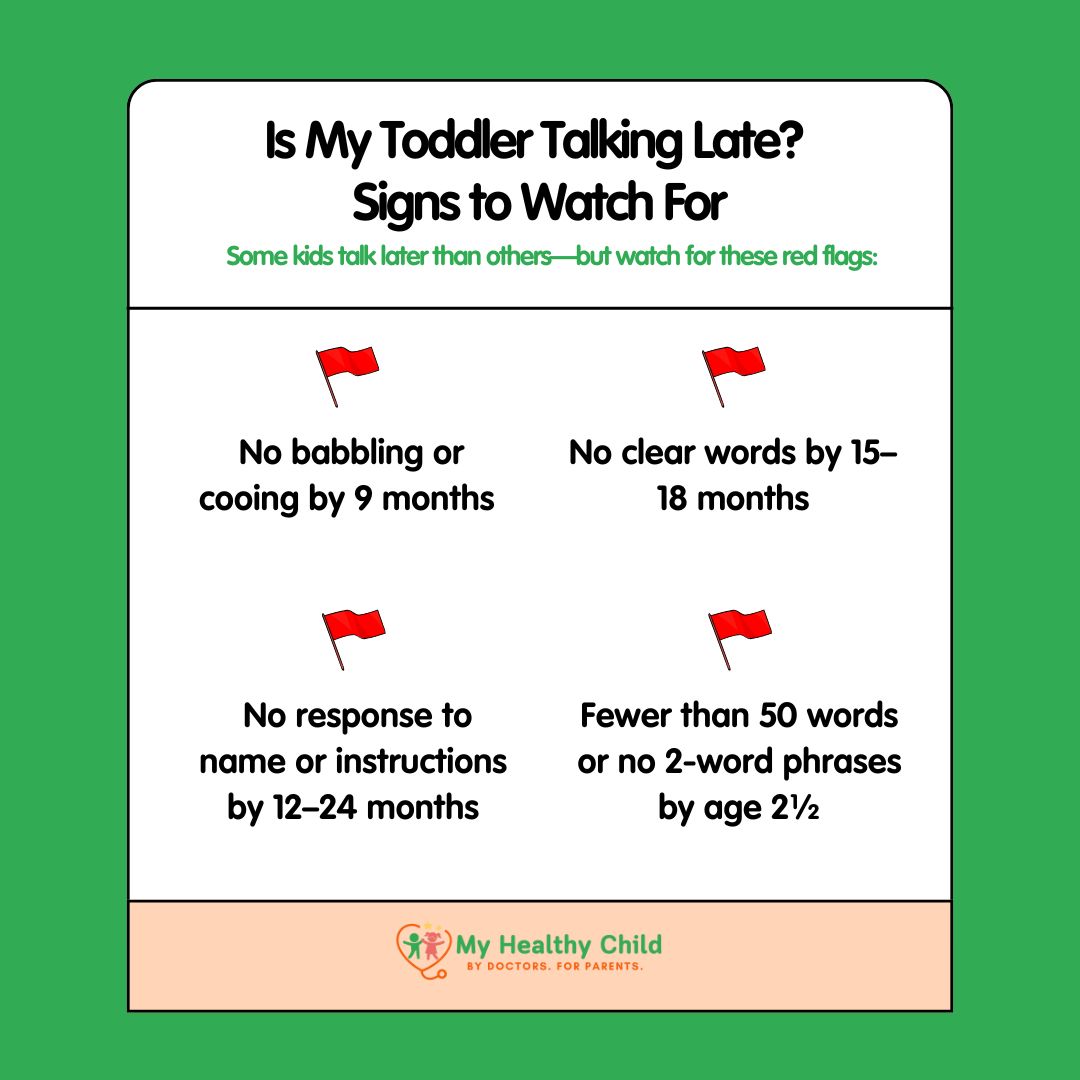
Many children talk later than expected—but some delays point to underlying concerns. Red flags include:
- No babbling or cooing by 9 months
- No clear words by 15 to 18 months
- No response to name or simple instructions by 12 to 24 months
- Fewer than 50 words or no two-word phrases by age 2½
Hearing loss, low verbal interaction, or neurodevelopmental conditions like autism can all play a role. Pediatricians often begin with a hearing screen, followed by referral to a speech-language pathologist (SLP).
Movement and Motor Skills: What Missed Milestones Might Mean
Motor delays can also signal broader issues. Pediatricians assess both gross and fine motor skills:
- No rolling by 6 months, no sitting by 9 months
- No crawling or standing by 12 months
- Not walking by 18 months, or only toe-walking
Concerns like low muscle tone, cerebral palsy, or global developmental delay may be considered. Early physical therapy or neurology consults help clarify next steps.
Social and Play Skills: Windows Into Brain Development
Play isn’t just play—it reflects how your child processes the world. Developmental red flags include:
- No pretend play by age 2
- No imitation of adult behavior by 18 months
- No pointing or interest-sharing gestures by 15 months
These signs may indicate autism spectrum traits or cognitive delay. Screening tools like the M-CHAT or Ages & Stages Questionnaire (ASQ) help identify what kind of support might help most.
What to Do Next: Guidance for Parents
- Speak up early. Trust your instincts—concerns don’t need to be confirmed before you act.
- Track patterns. Delays across more than one area—or skills that regress—warrant closer look.
- Start now. You don’t need a diagnosis to begin therapy. Early support builds long-term gains.
Note:
This article was medically reviewed and written in collaboration with doctors and medical professionals committed to providing pediatric developmental health education.
References:
U.S. Centers for Disease Control and Prevention (CDC)
CHADD (Children and Adults with Attention-Deficit/Hyperactivity Disorder)

Francis Xavier M. Dimalanta, MD, FPPS, FPSDBP
Developmental and Behavioral Pediatrician
Fellow, Philippine Pediatric Society
Fellow, Philippine Society for Developmental and Behavioral Pediatrics
Head, Section of Developmental and Behavioral Pediatrics
Institute of Pediatrics and Child Health
St Luke’s Medical Center - Quezon City and Global City
Medical Director, A Child’s DREAM Foundation, Inc (est. 2003)
Disclaimer:
The information in this article is intended for educational purposes only and does not substitute professional medical advice, diagnosis, or treatment. Always consult your physician, pediatrician, or qualified healthcare provider with any questions you may have regarding a medical condition or health objectives.