
What Do Tools Like the M-CHAT Actually Tell Me?
Understanding how screening tools work, what flagged results mean, and when to take the next step

At a Glance
- Screening tools flag early differences—they don’t diagnose.
- A “positive” result means: take a closer look, not panic.
- Pediatricians use screeners to guide—not replace—your instincts.
What Screening Tools Actually Do
Developmental screeners are short, structured tools used during well-child visits to spot early delays in communication, play, motor skills, or behavior. They’re not meant to label your child—they guide whether we should monitor, observe, or act.
A flagged score means we need more information—not that something is “wrong.”
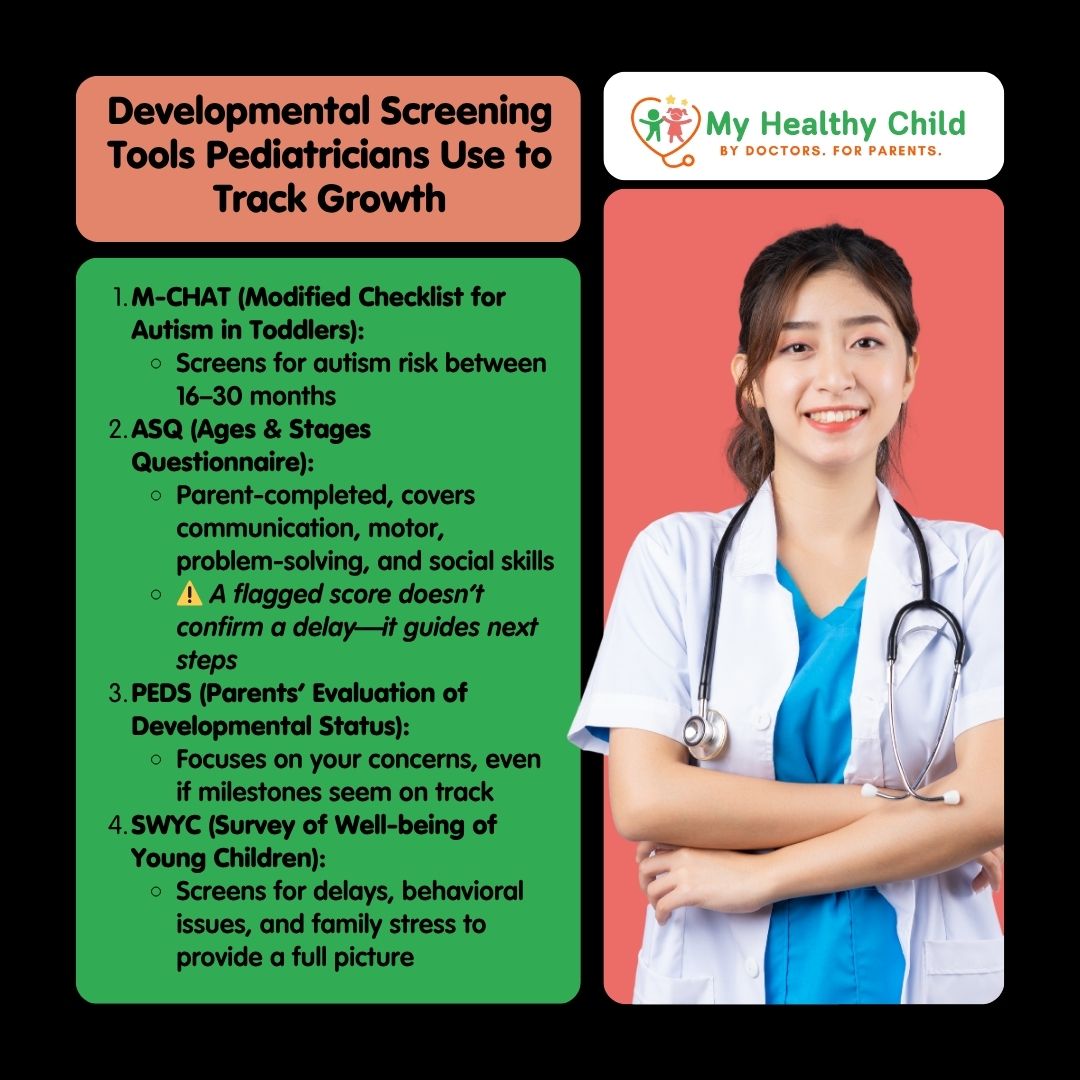
M-CHAT: Spotting Early Signs of Autism
The Modified Checklist for Autism in Toddlers (M-CHAT) is used between 16 and 30 months to flag early social and communication differences.
Questions include:
- “Does your child point to show interest?”
- “Does your child respond to their name?”
If your child scores in the “at risk” range, your doctor may:
- Repeat the screen later
- Refer for more evaluation
- Suggest early intervention to support development while waiting for a diagnosis
Other Tools Pediatricians Use
- ASQ (Ages & Stages Questionnaire)
Covers 5 domains: communication, gross/fine motor, problem-solving, and social skills. It’s age-adjusted and filled out by parents.
A flagged score doesn’t confirm a delay—it helps guide next steps like home strategies or therapy referral. - PEDS (Parents’ Evaluation of Developmental Status)
Centers on your concerns. Even if milestones look okay, your observations help direct care. - SWYC (Survey of Well-being of Young Children)
Screens for delays, behavior, and family stress. It provides a fuller picture of what may affect your child’s development.
When Scores Are Flagged
A flag means: let’s pay attention. Next steps may include:
- Developmental observation or repeat screening
- Pediatric referral to early intervention or therapy
- Parent-guided tracking at home
We don’t wait for a formal diagnosis to support growth—early help improves outcomes.
What to Do Next: Guidance for Parents
- Speak up early. Trust your instincts—concerns don’t need to be confirmed before you act.
- Track patterns. Delays across more than one area—or skills that regress—warrant closer look.
- Start now. You don’t need a diagnosis to begin therapy. Early support builds long-term gains.
Note:
This article was medically reviewed and written in collaboration with doctors and medical professionals committed to providing pediatric developmental health education.
References:
U.S. Centers for Disease Control and Prevention (CDC)
CHADD (Children and Adults with Attention-Deficit/Hyperactivity Disorder)

Francis Xavier M. Dimalanta, MD, FPPS, FPSDBP
Developmental and Behavioral Pediatrician
Fellow, Philippine Pediatric Society
Fellow, Philippine Society for Developmental and Behavioral Pediatrics
Head, Section of Developmental and Behavioral Pediatrics
Institute of Pediatrics and Child Health
St Luke’s Medical Center - Quezon City and Global City
Medical Director, A Child’s DREAM Foundation, Inc (est. 2003)
Disclaimer:
The information in this article is intended for educational purposes only and does not substitute professional medical advice, diagnosis, or treatment. Always consult your physician, pediatrician, or qualified healthcare provider with any questions you may have regarding a medical condition or health objectives.