
What Can I Do to Calm My Fussy Baby?
Soothing techniques that support regulation and comfort during crying spells, growth spurts, and unsettled nights

At a Glance
- Crying builds from Week 2 and peaks around Week 6—it’s normal, not a sign of failure
- Soothing works best when started early, before crying escalates
- Fussiness may increase during growth spurts, overstimulation, or fatigue
Understanding the Crying Curve
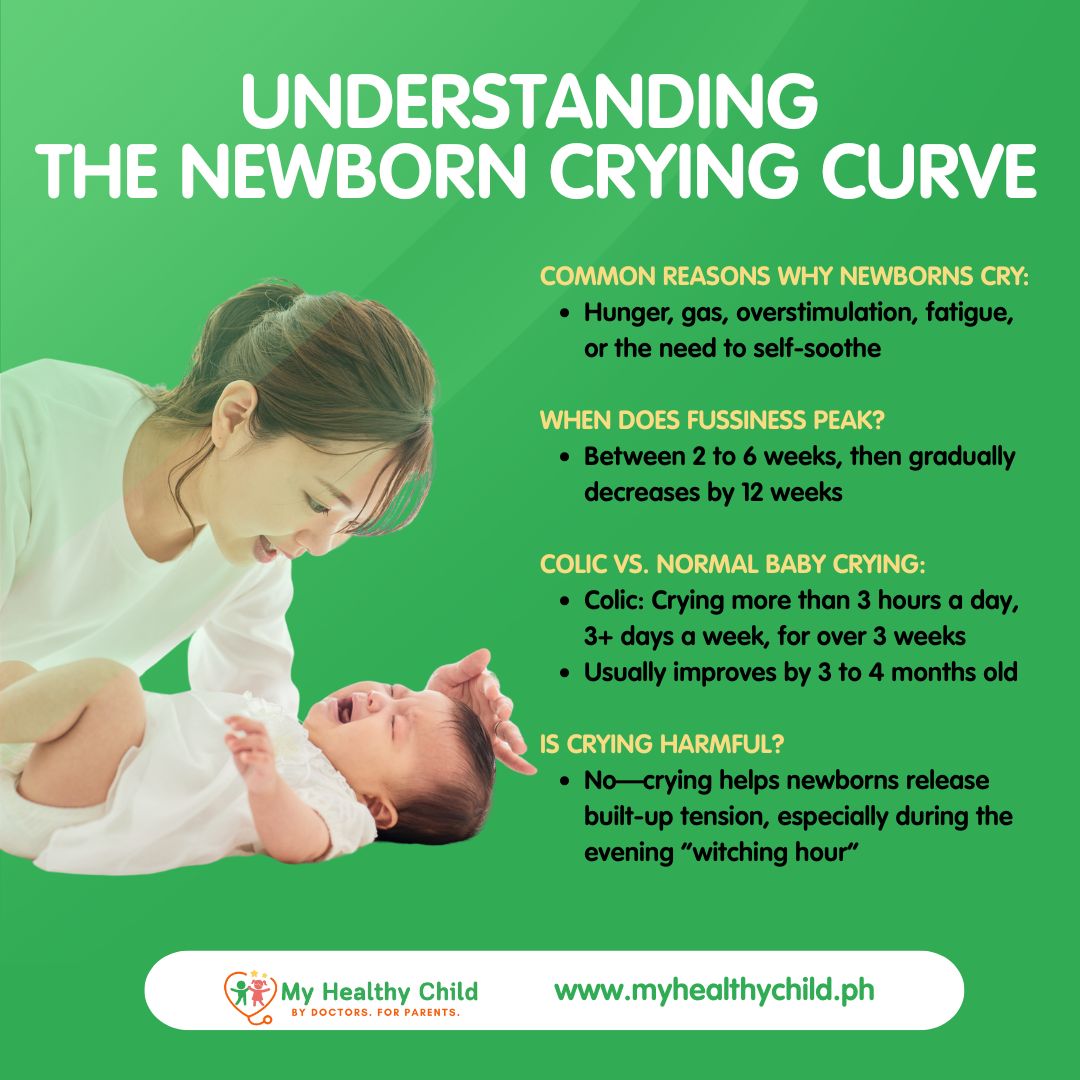
- Why babies cry: Hunger, overstimulation, gas, fatigue, or the need to self-regulate
- Peak fussiness: Crying increases at 2–6 weeks and gradually declines by 12 weeks
- Colic vs. normal fussiness: Colic is defined as crying >3 hours/day, >3 days/week for over 3 weeks. It usually resolves by 3–4 months
- Crying is not harmful: It’s how babies discharge tension, especially in the evening (commonly known as “witching hour”)
What Calms Babies
- Movement: Rocking, swaying, stroller walks, or babywearing can help reset a fussy baby
- White noise: Sounds mimicking the womb—fans, soft shushing, or white noise machines—can soothe without overstimulation
- Sucking: Pacifiers or non-nutritive breastfeeding support self-soothing
- Swaddling: Helps limit startle reflex (stop once baby starts rolling)
- Positioning: Holding baby upright or on their side (while awake) can ease digestive discomfort
When Fussiness Isn’t Just Fussiness
- Feeding issues: Poor latch, underfeeding, or reflux may cause persistent crying
- Medical red flags: High-pitched or inconsolable crying, poor feeding, fever, vomiting, or changes in alertness—call your doctor
- Growth spurts: Babies often feed more and cry more around Week 3, 6, and 12
- Overstimulation: Bright lights, loud noise, or constant handling may overwhelm a baby—watch for turning away, arching back, or frantic crying
What to Do Next: Guidance for Parents
- Respond early to tired or hungry cues—don’t wait for full-blown crying
- If crying lasts despite soothing, take breaks and ask for help—your calm helps your baby’s regulation
- Call your pediatrician if crying seems abnormal, constant, or paired with other concerning signs
Note:
This article was medically reviewed and written in collaboration with doctors and medical professionals committed to providing pediatric health education.
References:
American Academy of Pediatrics (AAP) – Newborn Health and Safety
Centers for Disease Control and Prevention (CDC) – Infant Care

Dean Angelo Dimaano, MD, DPPS, DPSNBM
Pediatrics and Neonatology
MJ Santos Hospital, Butuan City
MAB Rm 301
Mondays thru Saturdays
9:30am —onward
09951300090
Disclaimer:
The information in this article is intended for educational purposes only and does not substitute professional medical advice, diagnosis, or treatment. Always consult your physician, pediatrician, or qualified healthcare provider with any questions you may have regarding a medical condition or health objectives.