
Understanding Dengue Platelet Count: What Parents Should Monitor
Dengue fever continues to be one of the most pressing pediatric health threats during the rainy season. For many Filipino families, just hearing the word “dengue” brings anxiety—and with good reason. One of the most critical aspects of dengue management is monitoring your child’s dengue platelet count, a vital marker of disease progression and severity. But what exactly does it mean? When should you worry? And how can you support your child’s recovery?
This article breaks it all down for you—without the medical jargon. Whether your child is at home resting or in the hospital, here’s what every parent should know about dengue, platelet count, and the road to recovery.
What Is Dengue and Why Is Platelet Count Important?
Dengue is a mosquito-borne viral infection that causes flu-like symptoms such as high fever, fatigue, muscle pain, vomiting, and rashes. It’s especially dangerous for children, whose smaller bodies can quickly become overwhelmed by the infection’s rapid course.
A dengue platelet count refers to the number of platelets—a type of blood cell responsible for clotting—in your child’s blood. Normally, platelet counts range from 150,000 to 450,000 per microliter of blood. In dengue, this number can drop significantly, leading to complications like internal bleeding, bruising, and even shock.
Doctors carefully track this number to decide whether hospitalization is needed or if your child can be safely monitored at home.
What Causes Platelets to Drop During Dengue?
Dengue affects the bone marrow where platelets are made. The virus suppresses platelet production while simultaneously increasing platelet destruction. As a result, children with dengue can experience a sharp drop in their dengue platelet count, especially between days 3 to 7 of illness—also known as the “critical phase.”
The biggest concern during this time is Dengue Hemorrhagic Fever (DHF), which involves bleeding, blood plasma leakage, and dangerously low platelet levels. That’s why early diagnosis, regular monitoring, and hydration are key to preventing complications.
Key Symptoms to Watch Alongside Platelet Count
Your child’s dengue platelet count should never be assessed in isolation. It must be viewed in the context of other symptoms, including:
- Dengue rashes: Pink or red blotchy rashes often appear on the skin around days 4 to 6 and may be a sign of blood vessel involvement.
- Persistent vomiting or abdominal pain: These symptoms indicate fluid imbalance or possible internal bleeding.
- Fatigue or drowsiness: If your child becomes unusually weak or hard to wake, immediate medical attention is needed.
- Nosebleeds or gum bleeding: These signs often reflect severely low platelet levels and require urgent care.
If you notice any of these along with a low dengue platelet count, don’t wait—consult a pediatrician right away.
Dengue Platelet Count: When to Worry
Platelet Count (per µL) | Severity Level | What To Do |
150,000 – 100,000 | Mild | Monitor daily; push fluids |
100,000 – 50,000 | Moderate | Increase fluid intake; daily CBC tests recommended |
50,000 – 20,000 | Severe | Hospital observation strongly advised |
Below 20,000 | Critical | Emergency care needed; risk of spontaneous bleeding |
If platelet levels fall below 50,000, hospitalization is typically recommended. Most pediatricians will also monitor hematocrit levels, a sign of blood plasma leakage, in conjunction with platelet levels to determine risk.
Can Exercise Affect Dengue Recovery?
Yes—but timing is everything. During acute illness and low dengue platelet count, children should absolutely rest. Physical activity can increase the risk of bleeding and worsen symptoms.
However, as recovery begins and platelet levels start to normalize, gentle exercise for kids—such as light walking, stretching, or play—can support circulation and boost overall strength. Avoid intense activities until your doctor gives the go-ahead.
Supporting Platelet Recovery Through Food and Fluids
There’s no magic food that instantly raises platelets, but nutrition plays a key role in recovery. Proper hydration and immune-supporting meals help the body restore normal blood cell production.
Food | Benefit |
Papaya leaf extract | Traditionally used to support platelet production (ask your doctor before use) |
Citrus fruits | High in Vitamin C, supports immune function |
Iron-rich foods | Helps restore red blood cells (e.g., liver, spinach) |
Zinc-rich options | Found in pumpkin seeds and eggs; supports cell repair |
Water and broth | Critical for hydration, especially during the critical phase |
In children, food for dengue patient (child) must also account for appetite changes. Small, frequent, easily digestible meals are often best. Avoid oily, spicy, and processed foods during this time.
The Connection Between Dengue, Weather, and Your Child’s Health
During the rainy season, stagnant water becomes a breeding ground for dengue-carrying mosquitoes. It’s also a time when children are more prone to viral infections, rashes, and fever-like symptoms. Combined with a weakened immune system post-dengue, the rainy months pose an added layer of vulnerability.
If your child recently recovered from dengue, stay extra vigilant during the rainy season by using mosquito nets, repellents, and avoiding mosquito-prone areas.
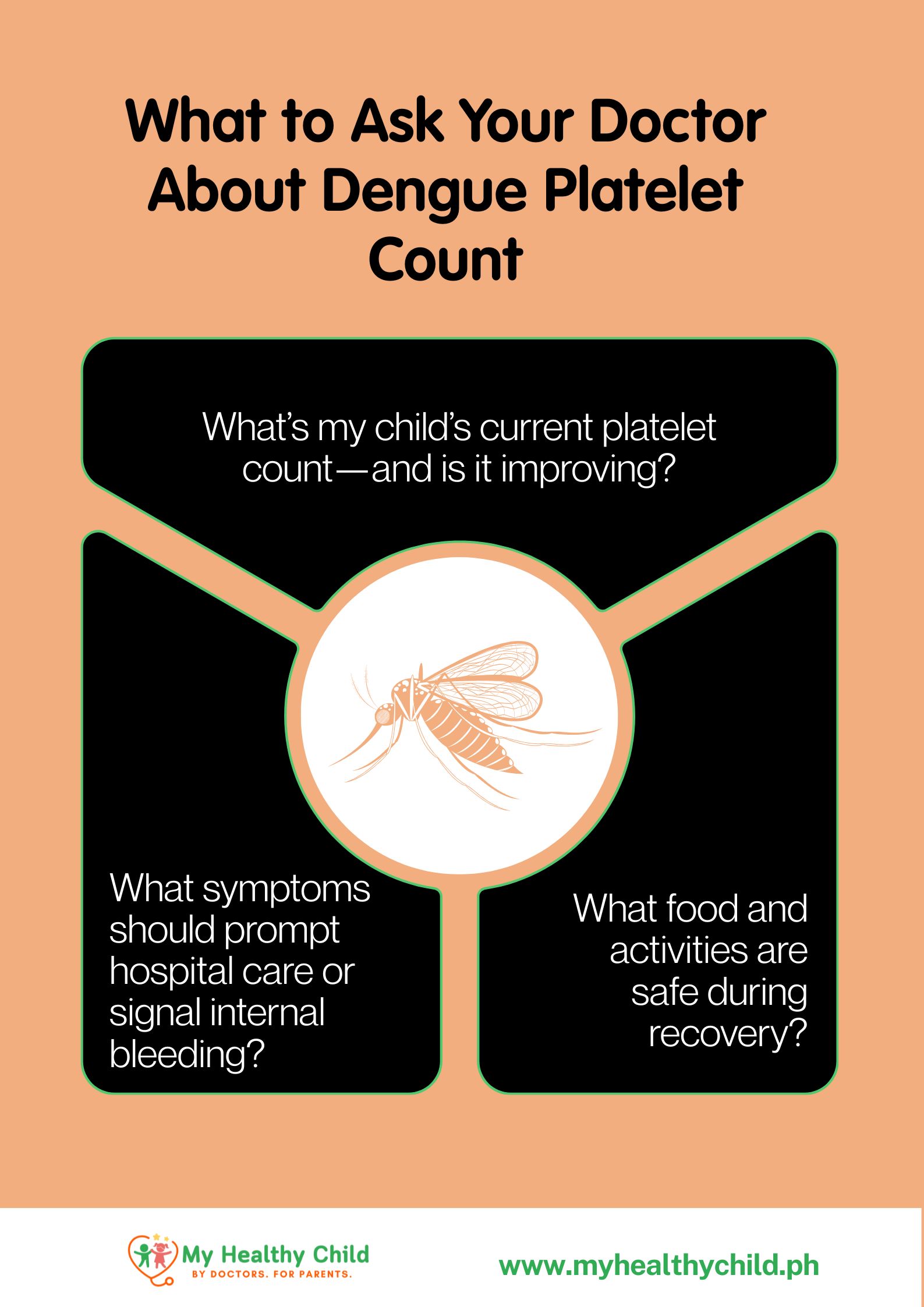
What to Ask Your Doctor About Dengue Platelet Count
During your clinic or hospital visits, don’t be afraid to ask these:
- What is my child’s current dengue platelet count, and how fast is it dropping or rising?
- At what point should we consider hospitalization?
- What are the signs of internal bleeding we need to watch at home?
- What kind of exercise for kids is safe during recovery?
- What’s the recommended food for dengue patient (child) at this stage?
Clear communication with your pediatrician ensures safer monitoring and faster recovery for your child.
Beyond Numbers: The Human Side of Dengue Care
As a parent, it’s hard not to panic when you see platelet numbers falling. But remember: numbers are just part of the story. Staying calm, informed, and proactive makes a world of difference in your child’s care.
Dengue recovery takes more than medicine—it takes your time, love, patience, and vigilance.
From Concern to Confidence: The MyHealthyChild Way
At MyHealthyChild, we know what it feels like to worry over every fever, every rash, every test result. That’s why we’re here—to break down complex health topics into practical, trusted guidance. Whether it’s understanding your child’s dengue platelet count, decoding food choices, or figuring out when to visit the doctor—we’ve got your back.
Let’s raise healthy, resilient kids—one informed step at a time.
Disclaimer:
The information in this article is intended for educational purposes only and does not substitute professional medical advice, diagnosis, or treatment. Always consult your physician, pediatrician, or qualified healthcare provider with any questions you may have regarding a medical condition or health objectives.