
Should My Teen Be Taking Vitamins or Supplements?
When Pills Help, When They Don’t, and Why Food Comes First
Walk down any pharmacy aisle, and you’ll see shelves of multivitamins marketed for teens— gummies, capsules, powders, and boosters promising energy, immunity, clear skin, and more.
But do teens really need supplements? Or is it just clever marketing?
Let’s dive into what science says about teen nutrition, when supplements are useful, and why whole foods still win the long game.
First, Know This: Real Food Beats Pills
Most teens can meet their daily nutritional needs through a well-balanced diet. Nutrients from whole foods are absorbed better, offer a wider range of benefits, and support gut health in ways that supplements just can’t match.
That said… life happens. Teens skip breakfast. Picky eaters go through food phases. Some have special diets. And yes—some nutrients are genuinely hard to get in enough amounts.
So there are situations where supplements can help fill the gap. The key? Knowing when—and how—to use them wisely.
When Supplements Might Be Helpful
Supplements are not a shortcut—but they can be a safety net.
Your teen might benefit from a daily multivitamin or targeted nutrient if they:
- Follow a vegan or vegetarian diet (may lack B12, iron, omega-3s)
- Have very restricted eating or disordered eating patterns
- Avoid entire food groups (e.g. dairy, gluten, grains)
- Have certain medical conditions or are on medications that impact nutrient absorption
- Are very active in sports or growth spurts that require extra support
Important: Always talk to your pediatrician or a registered dietitian before starting any supplement. Some vitamins (like iron or vitamin A) can be harmful in high doses.
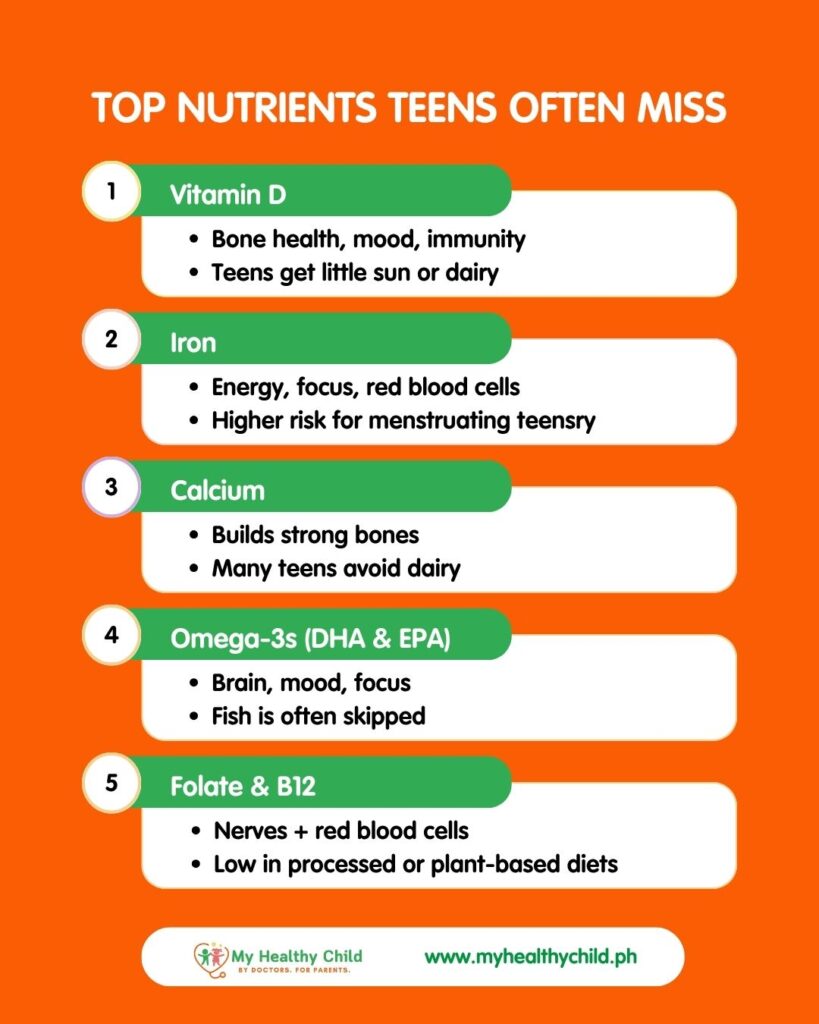
The Most Common Nutrients Teens Miss
Here’s where many teens fall short—according to national dietary data:
- Vitamin D
- Supports: Bone strength, immunity, mood
- Food sources: Fortified milk, salmon, egg yolks
- Teen struggles: Not enough sun exposure or dairy
- Supplement dose: Often 600–1000 IU/day—but check with your doctor
- Iron
- Supports: Energy, focus, red blood cells
- Food sources: Meat, beans, leafy greens, fortified cereal
- Teen struggles: Menstruating teens are at higher risk of deficiency
- Calcium
- Supports: Bone development
- Food sources: Dairy, tofu, sardines, fortified juice
- Teen struggles: Many skip dairy or dislike it
- Omega-3s (EPA & DHA)
- Supports: Brain development, focus, mood regulation
- Food sources: Fatty fish, flaxseed, walnuts
- Teen struggles: Fish isn’t exactly teen-friendly fare
- Folate & B12
- Supports: Nerve health, red blood cell formation
- Teen struggles: Lacking in vegetarian diets or processed-food diets
When Supplements Aren’t Worth It
Not all pills on the shelf are helpful. Some are just hype. Others may even do more harm than good.
Skip supplements that:
- Promise quick muscle gain or weight loss
- Contain mega-doses (way over 100% daily value)
- Include unregulated herbs, stimulants, or unknown blends
- Have no third-party testing (look for NSF or USP certified)
More doesn’t always mean better—especially with fat-soluble vitamins that build up in the body.
Gummies, Powders, or Pills?
Here’s how to pick:
- Gummies – Easy to take, but often high in sugar and low in nutrients.
- Capsules or tablets – More complete, but not for every teen.
- Powders – Great for smoothies or shakes, especially protein or greens blends, if real food is limited.
Check for age-specific formulas and transparent labels.
Food First: The Better Long-Term Solution
While supplements help in gaps, they’re no match for:
- A hearty breakfast (think: eggs, oats, fruit)
- Colorful lunches and snacks (veggies, grains, proteins)
- Smart hydration (skip sugary drinks)
- Family meals that create routine and connection
Building a “nutrition mindset” helps teens carry healthy habits into adulthood—not just swallow a pill and hope for the best.
In Summary:
Most teens don’t need a cabinet full of vitamins—they need a kitchen full of options.
But if life, stress, or limited diets are creating real gaps, the right supplement (with your doctor’s okay) can help support your teen’s growth, energy, and health.
✨ The rule of thumb? Food first. Supplements second. Health always.
Note:
This article was medically reviewed and written in collaboration with doctors and medical professionals committed to providing pediatric health education.
References:
https://www.healthychildren.org/English/healthy-living/nutrition/Pages/Vitamins.aspx https://ods.od.nih.gov/factsheets/list-all/

Disclaimer:
The information in this article is intended for educational purposes only and does not substitute professional medical advice, diagnosis, or treatment. Always consult your physician, pediatrician, or qualified healthcare provider with any questions you may have regarding a medical condition or health objectives.