
Should I Try a Special Diet for My Child with ADHD or Autism?
What to know about food sensitivities, nutrition risks, and which changes may actually support your child’s well-being

At a Glance
- Diet changes may support digestion, sleep, or focus—but won’t replace therapy.
- Restrictive diets can cause nutrient gaps if not guided by a professional.
- Start with a clear concern, track impact, and protect overall nutrition.
Why Families Consider Special Diets
Parents often turn to diet when behavior, focus, or digestion feel out of sync. Popular choices include:
- Gluten-free/casein-free diets (often explored for autism)
- Additive- or dye-free diets (sometimes linked to ADHD)
- Texture-based limitations (common in sensory processing challenges)
Pediatricians evaluate whether there’s a specific reason to try a dietary change—not just trends. Food allergies, GI discomfort, or feeding struggles may justify a carefully guided trial.
What Science Actually Supports
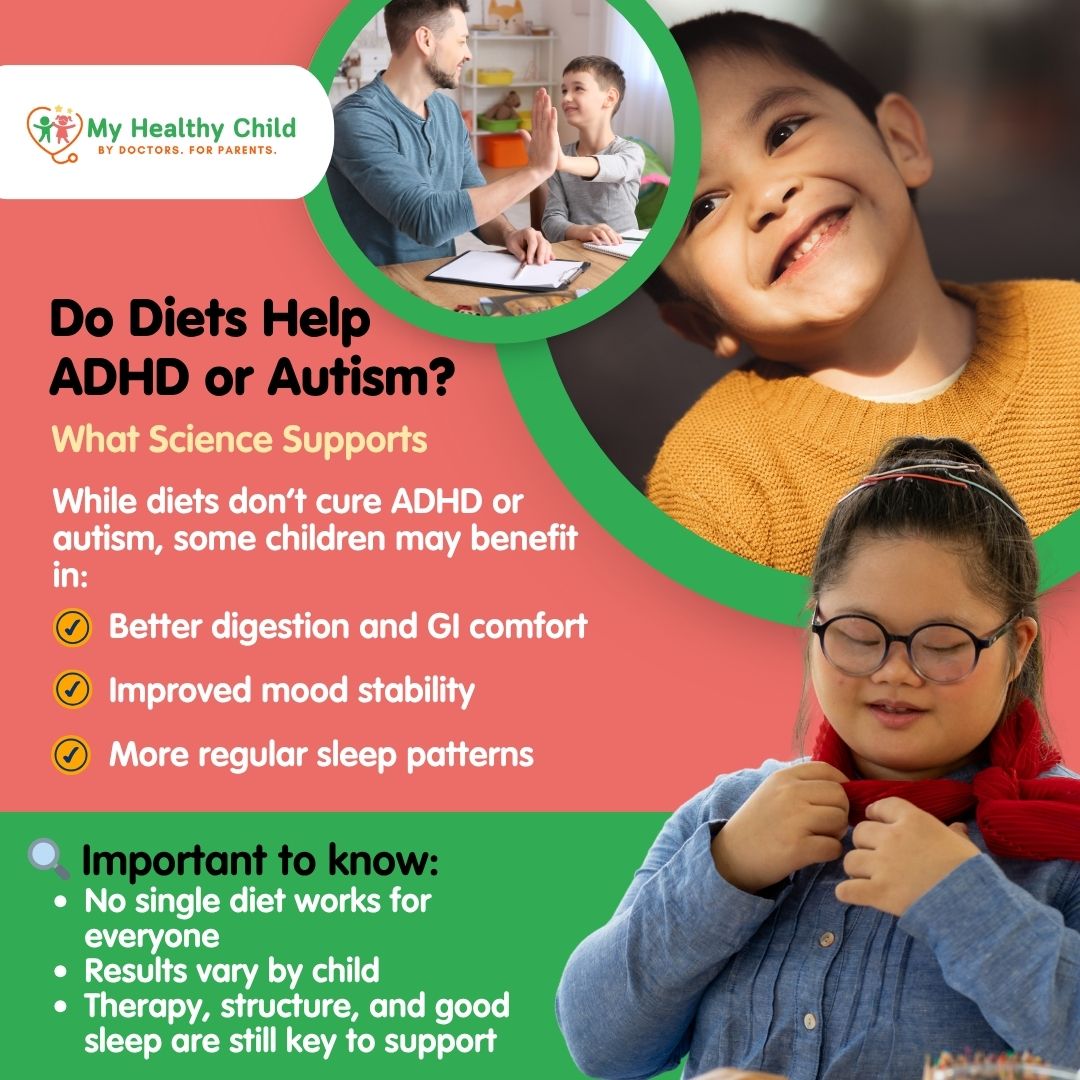
There’s limited evidence that diets improve core symptoms of ADHD or autism—but some children show benefits in:
- GI comfort and digestion
- Mood stability
- Sleep regulation
That said, know that:
- No single diet works for all
- Results are highly individual
- Supportive care (therapy, structure, sleep, etc.) remains essential
Risks of Restrictive Diets
Children with neurodevelopmental delays often eat fewer foods to begin with. Removing whole food groups can create:
- Iron, zinc, or vitamin D deficiencies
- Low protein or fat intake
- Poor weight gain or fatigue
- More stress around meals
Unless medically necessary, cutting entire groups (like dairy or gluten) may do more harm than good.
How to Try a Diet Change Safely
If a diet shift is recommended:
- Focus on one concern at a time (e.g., bloating, sleep)
- Remove just one food category—not multiple at once
- Log behavior, digestion, and sleep for 2–4 weeks
- Work with a pediatrician or dietitian to monitor growth and intake
Avoid “all-in” changes based on online advice. Each child’s needs are different—and should be medically supervised.
What to Do Next: Guidance for Parents
- Ask your doctor if there’s a clinical reason for a diet change—not just anecdotal stories.
- Protect your child’s nutrition. Involve a dietitian if you plan to remove major food groups.
- Recheck impact regularly. If no measurable change, it may not be worth continuing.
Note:
This article was medically reviewed and written in collaboration with doctors and medical professionals committed to providing pediatric developmental health education.
References:
U.S. Centers for Disease Control and Prevention (CDC)
CHADD (Children and Adults with Attention-Deficit/Hyperactivity Disorder)

Francis Xavier M. Dimalanta, MD, FPPS, FPSDBP
Developmental and Behavioral Pediatrician
Fellow, Philippine Pediatric Society
Fellow, Philippine Society for Developmental and Behavioral Pediatrics
Head, Section of Developmental and Behavioral Pediatrics
Institute of Pediatrics and Child Health
St Luke’s Medical Center - Quezon City and Global City
Medical Director, A Child’s DREAM Foundation, Inc (est. 2003)
Disclaimer:
The information in this article is intended for educational purposes only and does not substitute professional medical advice, diagnosis, or treatment. Always consult your physician, pediatrician, or qualified healthcare provider with any questions you may have regarding a medical condition or health objectives.