
Is My Child’s Posture Something to Keep an Eye On?
Why slouching isn’t just a “bad habit”—and how to support your child’s growing body

Slouching over a tablet. Sitting crooked during homework. Dragging a backpack that looks heavier than your kid.
It’s easy to brush off posture issues as “they’ll grow out of it,” but here’s the truth:
Your child’s posture today can shape their health for life.
And no, it doesn’t mean you need to bark “sit up straight” every five minutes (though we totally get the urge).
Let’s dive into what posture really means for kids, what’s normal, what’s not—and what you can actually do about it.
What Is Posture, Really?
Posture is how we hold our body—whether standing, sitting, or moving. Good posture means bones, muscles, and joints are all aligned to reduce strain and allow efficient movement.
For kids, posture plays a huge role in:
- Spinal health
- Core strength
- Balance and coordination
- Breathing and even digestion
- Focus and learning (yep, posture affects this too!)
So yes, it is something to keep an eye on—especially as they grow fast and sit a lot.
Signs Your Child Might Have Posture Issues
Here’s what to casually observe during daily life:
Common red flags:
- Slouching shoulders or forward head (especially when using gadgets)
- Uneven shoulder or hip height
- A noticeable curve in the spine
- Fatigue or back pain after sitting/standing for a while
- Preferring to lean when standing
- Walking with feet turned in or out unusually
Pro tip: Don’t panic over occasional slouching—it happens! We’re looking for consistent patterns, not isolated moments.
Why Poor Posture Happens in Kids
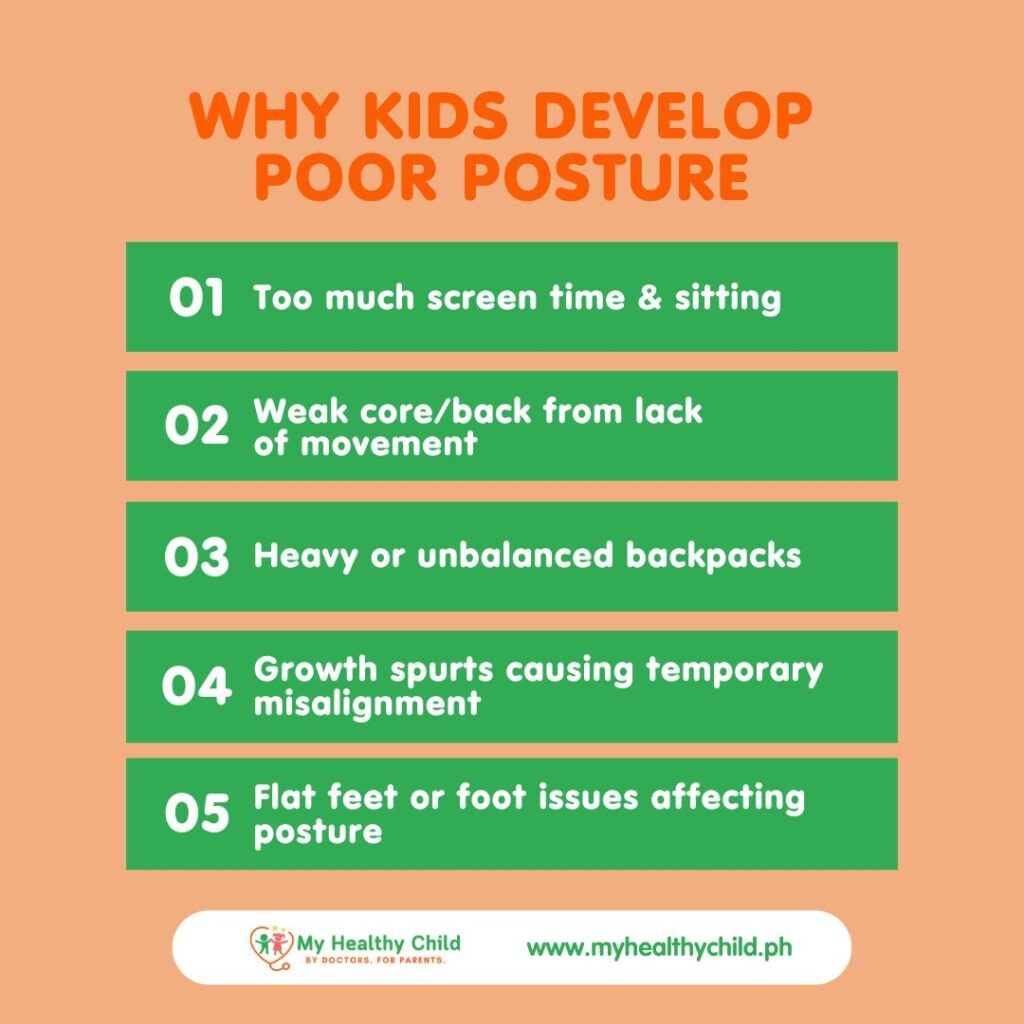
- Screen time & sedentary lifestyle – Hours hunched over screens lead to forward-head posture and rounded shoulders.
- Weak core and back muscles – Many kids today sit more than they move. Less play = weaker posture support.
- Heavy or badly worn backpacks – A poorly balanced bag pulls the body forward, especially if it’s overloaded.
- Growth spurts – Sudden height changes can lead to awkward posture as the body catches up.
- Flat feet or foot misalignment – Yes—posture problems can start from the feet up.
What You Can Do at Home (No Gym Required)
You don’t need a physiotherapy degree to support better posture. Just a few daily tweaks make a big difference:
Fix the Workstation
- Chair and desk should match your child’s height
- Feet flat on the floor or footrest
- Screen at eye level
- Back supported by the chair
Check That Backpack
- Use both straps
- Bag should sit high and not sag below the waist
- Keep it light—no more than 10–15% of body weight
- Declutter weekly!
Strengthen Core Muscles (Make It Fun!)
- Animal walks (bear crawls, crab walks)
- Yoga poses (plank, cobra, tree)
- Stretching games
- Dancing, swimming, monkey bars—yes, play is exercise!
Limit Screen Time
Encourage gadget breaks and upright sitting during device use.
Even better—introduce “movement breaks” every 30 minutes.
When to See a Specialist
It’s worth checking in with your pediatrician or a physical therapist if:
- You notice spinal curves, like a hump or S-shape
- There’s pain, numbness, or tingling
- Your child shows unusual walking patterns
- They seem unbalanced, clumsy, or always tired
Early intervention can prevent long-term issues—especially if scoliosis or muscle weakness is involved.
In Summary:
Posture isn’t just about standing straight—it’s a mirror of your child’s growth, strength, and habits.
So yes, it’s something to watch—but not something to fear.
With a few supportive tweaks (and lots of movement!), you’re helping your child build a strong, confident, and upright future.
Want more expert-backed parenting tips like this? Stick with MyHealthyChild—where growing up healthy doesn’t have to be a guessing game.
Note:
This article was medically reviewed and written in collaboration with doctors and medical professionals committed to providing pediatric health education.
References:
https://www.choa.org/parent-resources/orthopedics/posture-and-scoliosis-in-kids

Disclaimer:
The information in this article is intended for educational purposes only and does not substitute professional medical advice, diagnosis, or treatment. Always consult your physician, pediatrician, or qualified healthcare provider with any questions you may have regarding a medical condition or health objectives.