
Is It Just a Cold or Could It Be Asthma or Allergies?
Learn how to spot early signs of asthma and allergy in toddlers, what triggers to watch for, and how pediatricians guide diagnosis and care
At a Glance
- Toddlers with frequent coughs or colds may actually have recurrent viral infections, asthma or allergic rhinitis.
- Wheezing, nighttime cough, or symptoms that persist after the cold clears are red flags.
- Pediatricians don’t rely on one test alone—they assess patterns over time.
When It’s More Than a Cold
- Cough that lingers: If your child has a “cold” that lasts more than 10 days or keeps returning every month, needs investigation (it may not be just viral )
- Wheezing or fast breathing: A whistling sound when exhaling or chest retractions during breathing can indicate airway obstruction and sensitivity
- Nighttime symptoms: Cough or breathing difficulty that worsens at night is a common asthma pattern
- No fever: Allergies are gradual and recurring while viral infections have other symptoms like fever, diarrhea, weakness, headache and history of exposure to sick contacts. Allergic rhinitis may present with clear watery nasal discharge, occurs in patterns and no signs of infection like fever
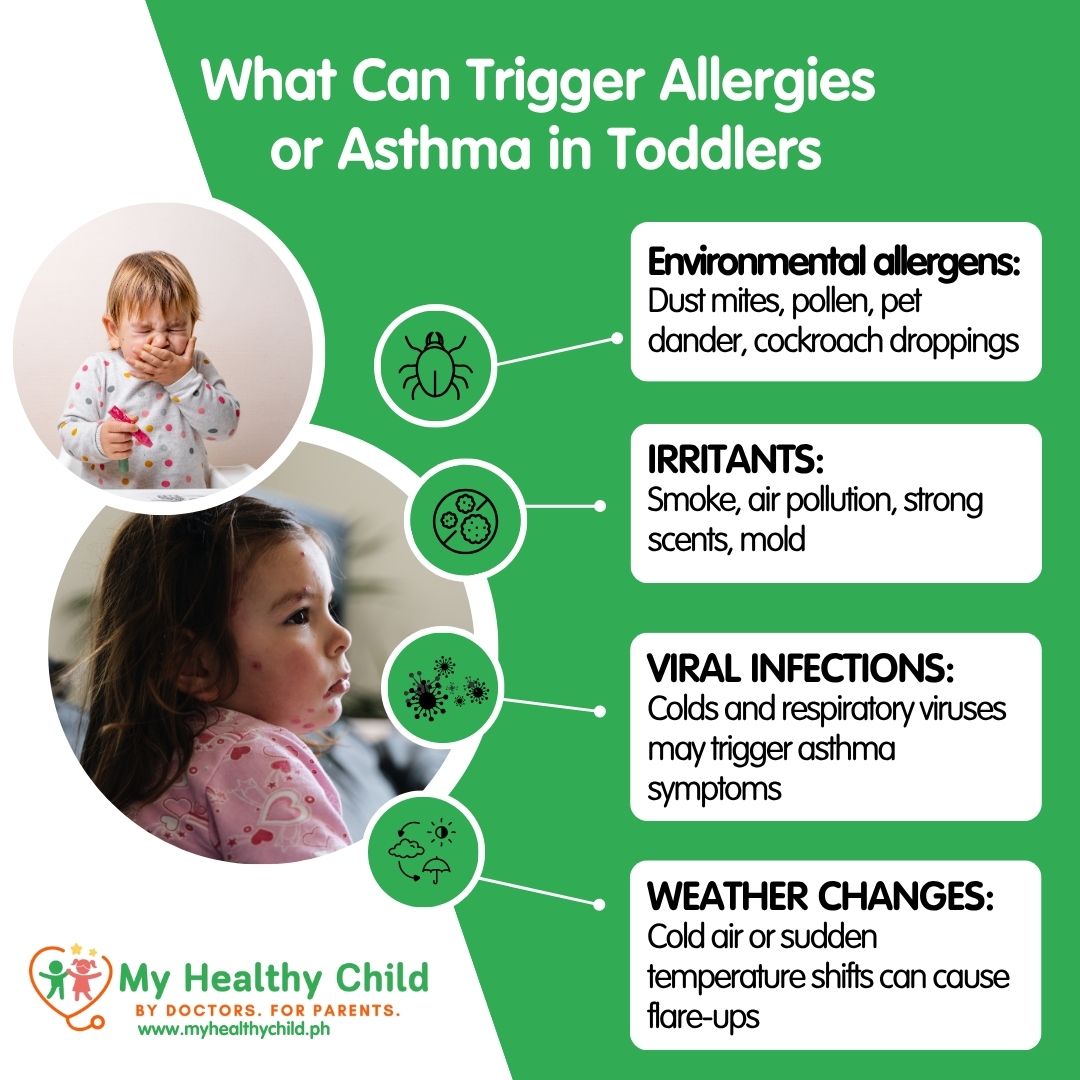
Common Triggers for Toddlers
- Environmental allergens: Dust mites, pollen, pet dander, cockroach droppings, mold
- Food allergens: Cow milk, egg, wheat, soy, peanut, tree nut, sesame, fish and shellfish may trigger severe food allergic reactions such as coughing, wheezing, shortness of breath and chest tightness
- Irritants: Cigarette smoke, pollution, strong scents
- Viruses: Respiratory viruses can cause wheezing
- Weather changes: Cold air or sudden shifts in temperature can provoke flare-ups
How Pediatricians Assess and Manage
- Detailed history: Doctors look at symptom frequency, timing, and family history (asthma, eczema, allergic rhinitis) and response to previous medications.
- Trial of treatment: Pediatricians may prescribe bronchodilators or allergy meds to assess response.
- Allergy testing: May be considered, especially if skin symptoms or food triggers are involved
- Asthma diagnosis is clinical: In infants and toddlers, no single test confirms it; diagnosis relies on recurring patterns and observed improvement with medication.
- Not all wheezing is asthma: Some toddlers outgrow early wheezing; others need longer-term management. Some are due to viruses; if unresponsive to standard regimens, other entities may need to be considered like congenital lesions, reflux.
What to Do Next: Guidance for Parents
- Track symptoms—write down when coughs happen, what triggers them, and if meds help
- Remove common irritants from your child’s environment (dust, smoke, scented sprays)
- Keep your child home when ill.
- Consult your pediatrician if your child has repeated coughs, noisy breathing, or poor sleep due to breathing trouble.
Note:
This article was medically reviewed and written in collaboration with doctors and medical professionals committed to providing pediatric health education.
References:
Centers for Disease Control and Prevention (CDC) – Early Childhood Development
American Academy of Pediatrics (AAP)
World Health Organization (WHO) – Early Childhood Development

Disclaimer:
The information in this article is intended for educational purposes only and does not substitute professional medical advice, diagnosis, or treatment. Always consult your physician, pediatrician, or qualified healthcare provider with any questions you may have regarding a medical condition or health objectives.