
How Do I Know If My Baby Is Latching Well?
Understand how breastfeeding works, what supports your milk supply, and when to ask for help

At a Glance
- A good latch feels comfortable and helps your baby feed effectively
- Look for flanged lips, deep latch, rhythmic swallowing
- Painful feeds, low diaper output, or poor weight gain may mean poor latch
Why Latch Matters
- Breast milk production: A proper latch stimulates oxytocin (letdown) and prolactin (milk supply).
- Breast health: Poor latch can lead to sore nipples, engorgement, or blocked ducts.
- Breast milk transfer: Without deep latching, your baby may not get enough milk—even if nursing or latching seems frequent.
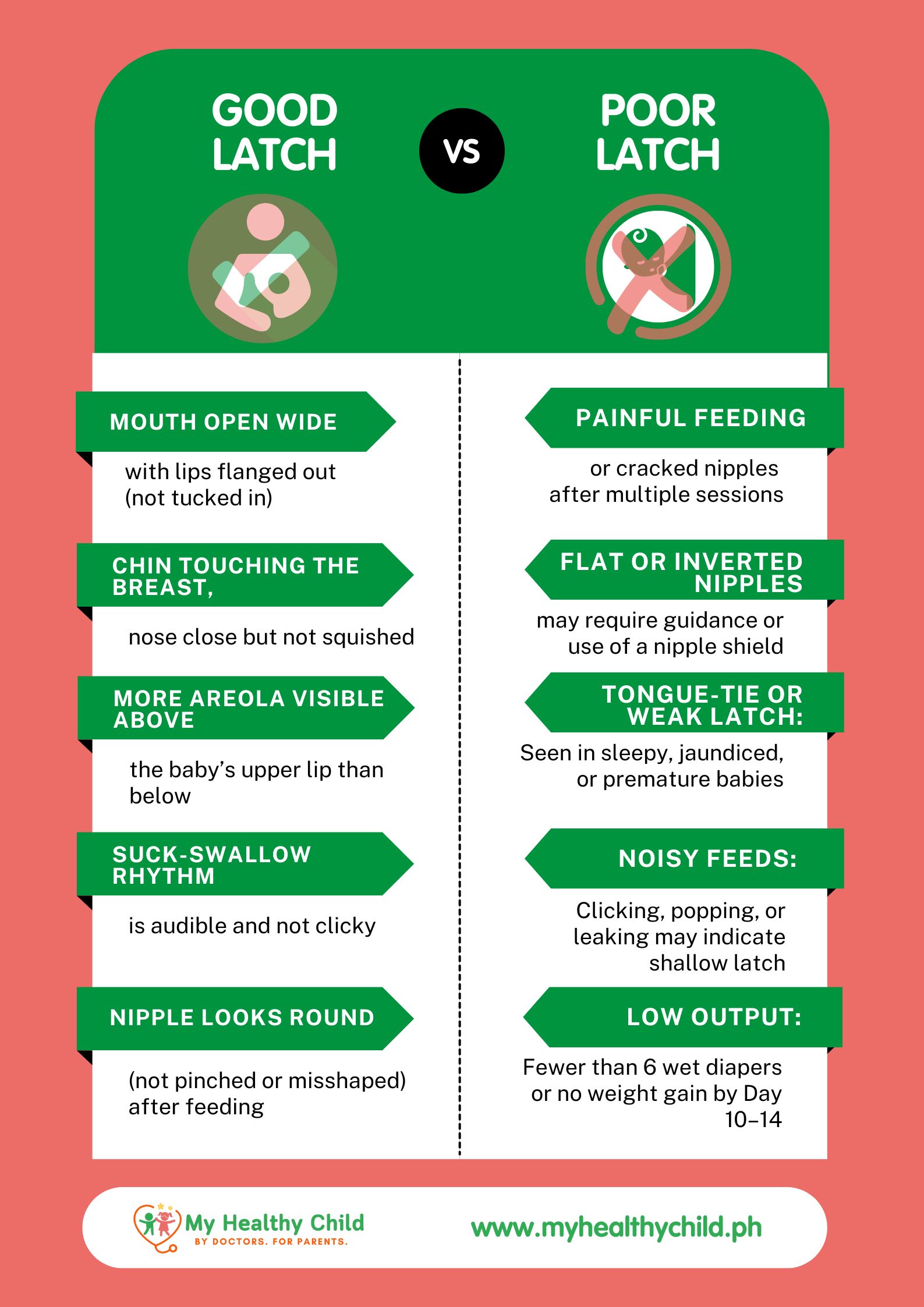
Signs of a Good Latch
- Mouth open wide with lips flanged out (not tucked in)
- Chin touching the breast, nose close but not squished
- More areola visible above the baby’s upper lip than below
- Suck-swallow rhythm is audible and not clicky
- Nipple looks round (not pinched or misshaped) after feeding
- Baby detaches naturally and appears content
When to Suspect a Poor Latch
- Painful feeding or cracked nipples after multiple sessions
- Flat or inverted nipples may require guidance or use of a nipple shield
- Tongue-tie or weak latch: Seen in sleepy, jaundiced, or premature babies
- Noisy feeds: Clicking, popping, or leaking may indicate shallow latch
- Low output: Fewer than 6 wet diapers or no weight gain by Day 10–14

What You Can Try
- Positioning matters: Align baby chest-to-chest, nose to nipple
- Cross-cradle or laid-back hold can support better latch mechanics
- Manual breast support may help baby latch deeply
- Express a little milk if breasts are too full and firm
What to Do Next: Guidance for Parents
- Watch for wide open mouth, chin contact, and rhythmic swallows
- If latching remains painful or ineffective, consult a lactation specialist
- Call your pediatrician if weight gain stalls, diaper output drops, or feeds stay stressful
Note:
This article was medically reviewed and written in collaboration with doctors and medical professionals committed to providing pediatric health education.
References:
American Academy of Pediatrics (AAP) – Newborn Health and Safety
Centers for Disease Control and Prevention (CDC) – Infant Care

Dean Angelo Dimaano, MD, DPPS, DPSNBM
Pediatrics and Neonatology
MJ Santos Hospital, Butuan City
MAB Rm 301
Mondays thru Saturdays
9:30am —onward
09951300090
Disclaimer:
The information in this article is intended for educational purposes only and does not substitute professional medical advice, diagnosis, or treatment. Always consult your physician, pediatrician, or qualified healthcare provider with any questions you may have regarding a medical condition or health objectives.