
How Do I Handle Tantrums Without Yelling or Giving In?
Use pediatric strategies to support emotional regulation, hold limits calmly, and help your child recover from big feelings

At a Glance
- Tantrums are developmentally normal between ages 1 and 4 as children learn to manage emotions
- Your calm response teaches emotional safety—not giving in, not punishing
“Limits and empathy can exist at the same time”
Why Tantrums Happen
- Brain still under construction: Toddlers rely on the emotional part of the brain (amygdala) but haven’t yet developed full control from the logical part (prefrontal cortex)
- Big emotions, few words: Frustration, hunger, tiredness, or transitions can overwhelm their coping skills
- Testing boundaries: Tantrums are also a way to explore independence and see how adults respond
Pediatric Strategies That Work
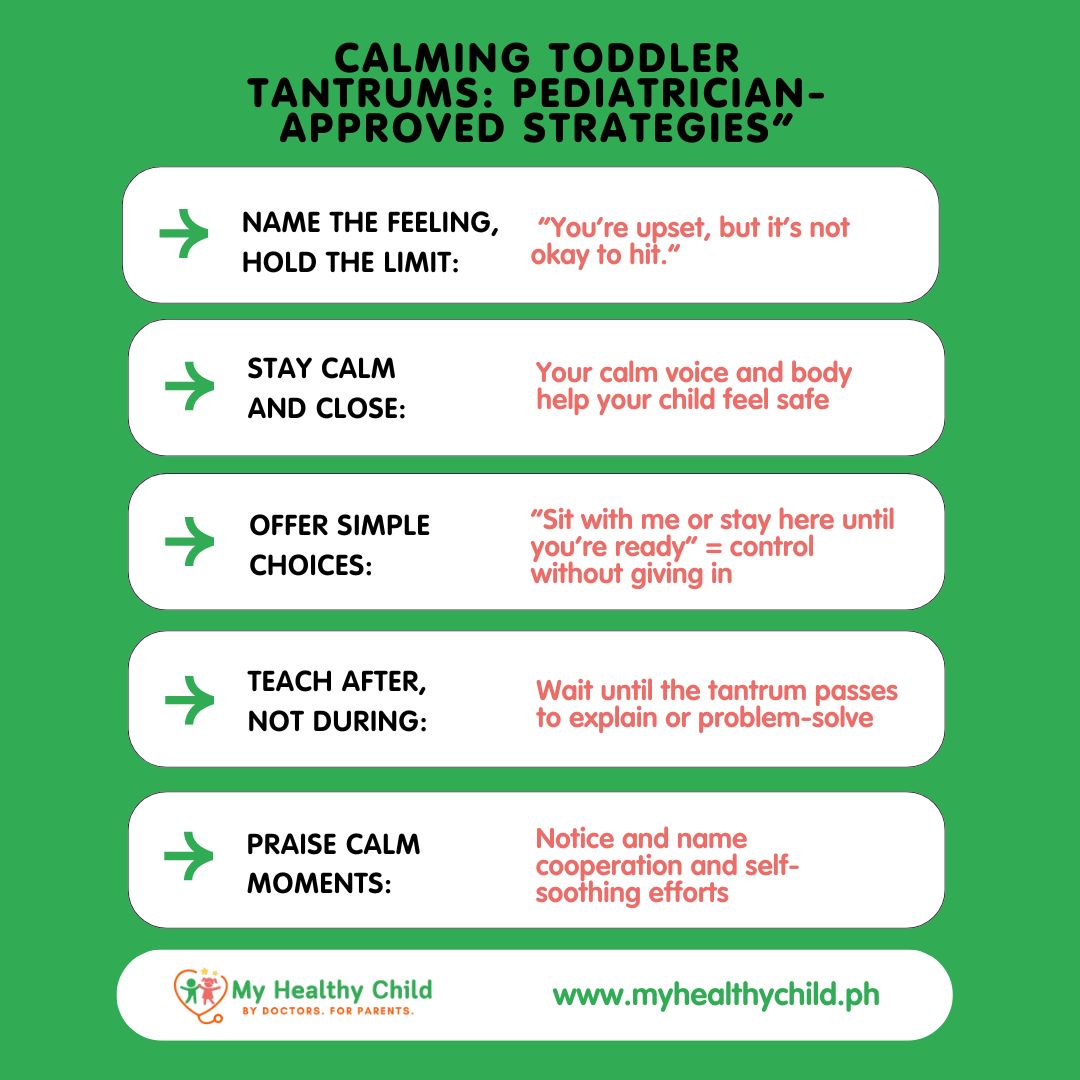
- Name the feeling, hold the limit: Say “You’re really upset, but it’s not okay to hit.” This helps your child feel seen while reinforcing rules
- Stay close, not reactive: Your calm body and voice help regulate your child’s nervous system
- Offer a simple choice: “Do you want to sit with me or stay here until you’re ready?” helps return control without giving in
- Wait to teach: Problem-solving and reflection work best after the tantrum passes—not during emotional flooding
- Catch the calm moments: Praise cooperation, listening, and attempts at calming down
What to Avoid
- Yelling or threatening: Escalates fear and may reinforce the behavior if it gets attention
- Giving in just to stop the tantrum: Teaches that screaming results in reward
- Shaming language: “Bad boy/girl” damages emotional security and self-image
When to Talk to Your Pediatrician
- Tantrums are very frequent (multiple times daily past age 4)
- Aggression is extreme or directed toward others persistently
- Child has speech delays or sensory issues that might worsen emotional outbursts
What to Do Next: Guidance for Parents
- Expect tantrums as part of brain development—not as bad behavior
- Use calm tone, short phrases, and physical presence to ground your child
- Set clear, loving limits that stay firm even during emotional storms
Note:
This article was medically reviewed and written in collaboration with doctors and medical professionals committed to providing pediatric health education.
References:
Centers for Disease Control and Prevention (CDC) – Early Childhood Development
American Academy of Pediatrics (AAP)
World Health Organization (WHO) – Early Childhood Development

ROXANNE PASCUAL, MD, FPPS
General Pediatrics
Diliman Doctors Hospital: Monday and Fri 1-3PM
Sat 1-3pm (BY APPT)
St Luke' Medical Center: Wednesdays by appointment
Ann Francis Clinic
T Th Sat 10am-1pm
Disclaimer:
The information in this article is intended for educational purposes only and does not substitute professional medical advice, diagnosis, or treatment. Always consult your physician, pediatrician, or qualified healthcare provider with any questions you may have regarding a medical condition or health objectives.