
How Do I Build a Strong Bond with My Baby?
Understand how touch, voice, and responsiveness shape secure attachment in your baby’s early months

At a Glance
- Bonding doesn’t require perfection—it happens through daily care, not grand gestures
- Babies learn safety and trust through eye contact, voice, and physical closeness
- Secure attachment forms when a parent consistently responds, not instantly reacts
What Bonding Really Means
- Attachment vs. love: Bonding is about your baby learning that the world is safe and people can be trusted
- Your baby’s brain: Newborns are wired to respond to human faces, voices, and touch—these stimulate early brain growth and emotional regulation
- Bonding is built, not automatic: Some parents feel instantly connected; others take days or weeks—both are normal
Everyday Actions That Strengthen Connection
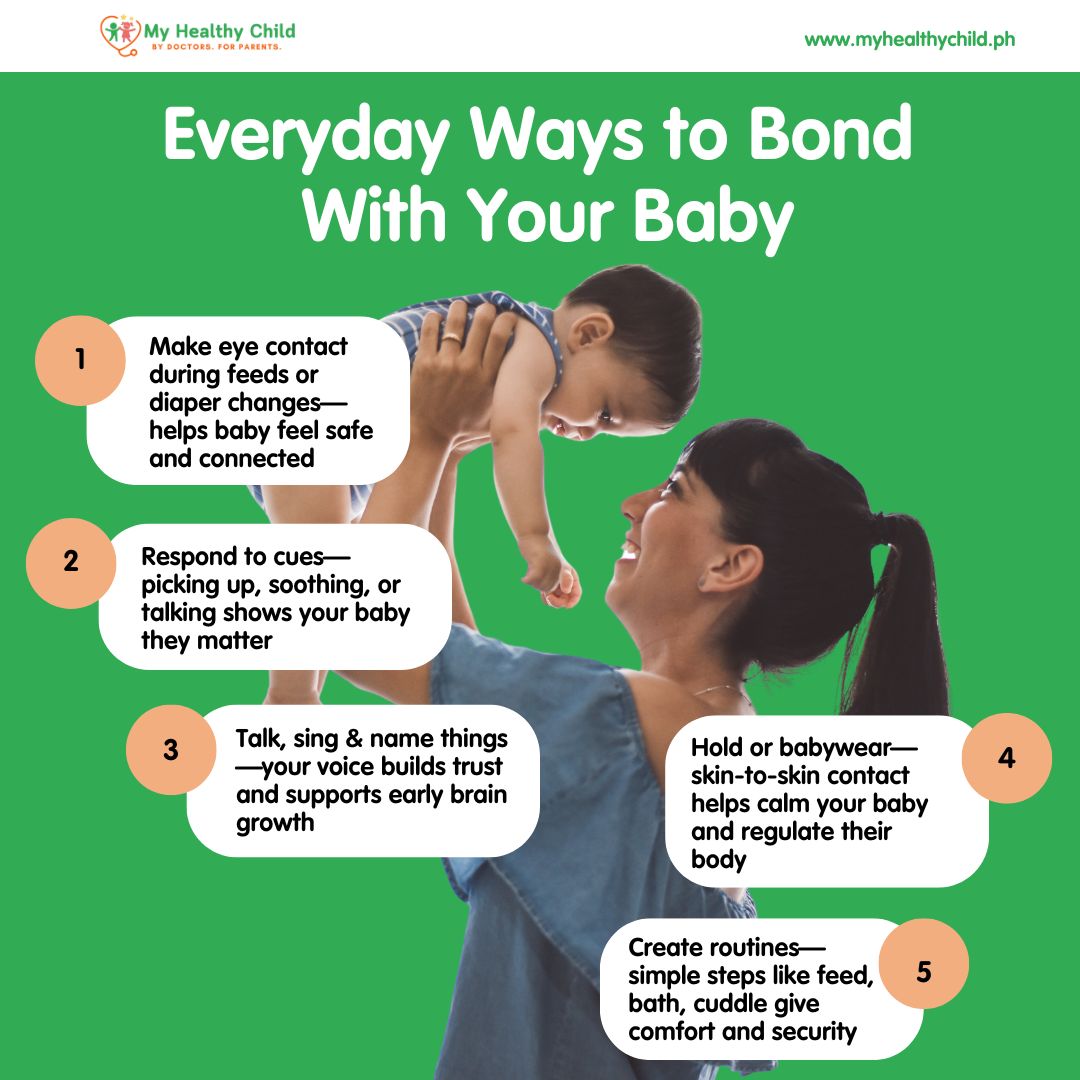
- Eye contact during feeds or diaper changes helps babies feel seen and safe
- Responding to cues: Picking up, soothing, or gently talking to your baby teaches them they matter
- Talking, singing, and naming: Even if your baby doesn’t understand words yet, your voice builds trust and language pathways
- Holding and babywearing: Skin-to-skin contact and physical closeness help regulate your baby’s temperature, heart rate, and stress hormones
- Routines: Simple patterns—bath, feed, cuddle—create predictability and emotional security
When Bonding Feels Hard
- Birth recovery or mental health: Postpartum mood changes, trauma, or exhaustion can delay bonding. This doesn’t make you a bad parent—seek support early
- Feeding difficulties: Struggles with latch or milk supply can cause frustration—ask for lactation or pediatric support
- Unsettled babies: Babies who cry more, feed often, or don’t sleep well may be harder to connect with emotionally—but consistency builds trust over time
- Missed early bonding moments: NICU stays or separations can be repaired—bonding is ongoing, not lost
What to Do Next: Guidance for Parents
- Make small moments count: talk, cuddle, hold your baby close
- Don’t expect instant connection—bonding builds through repetition, not perfection
- Reach out if you feel persistently detached, numb, or emotionally shut down
Note:
This article was medically reviewed and written in collaboration with doctors and medical professionals committed to providing pediatric health education.
References:
American Academy of Pediatrics (AAP) – Newborn Health and Safety
Centers for Disease Control and Prevention (CDC) – Infant Care

Dean Angelo Dimaano, MD, DPPS, DPSNBM
Pediatrics and Neonatology
MJ Santos Hospital, Butuan City
MAB Rm 301
Mondays thru Saturdays
9:30am —onward
09951300090
Disclaimer:
The information in this article is intended for educational purposes only and does not substitute professional medical advice, diagnosis, or treatment. Always consult your physician, pediatrician, or qualified healthcare provider with any questions you may have regarding a medical condition or health objectives.