
Does Autism Show Up Differently in Girls?
Why autism can look different in girls, what signs are often missed, and how to advocate for early support

At a Glance
- Girls often mask autism traits—making signs harder to spot.
- Language and behavior may appear typical, but social-emotional stress builds underneath.
- Early support matters, even if a formal diagnosis takes time.
Why Girls Often Go Undiagnosed
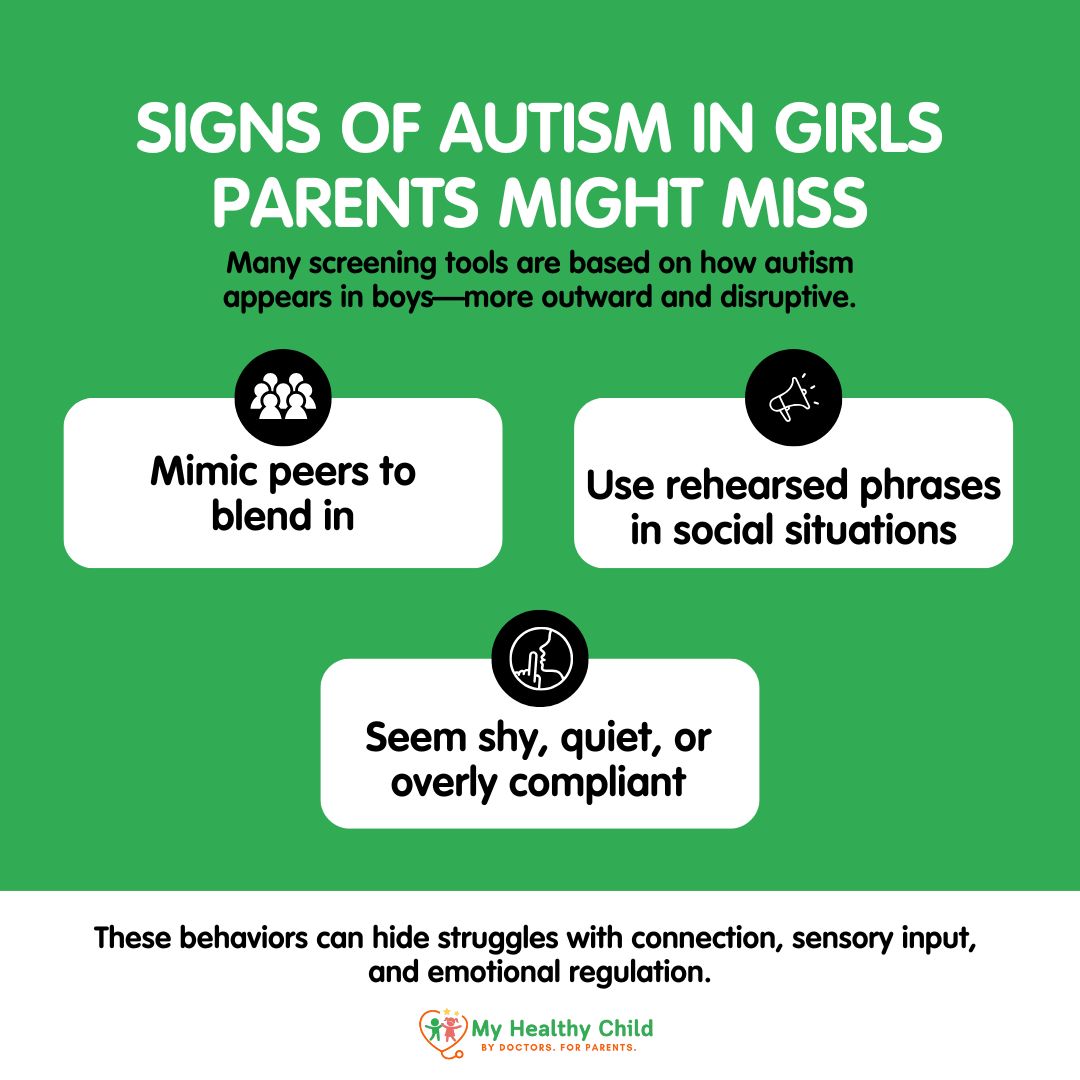
Many autism screening tools were developed based on how traits show up in boys—more obvious and externalized. Girls often:
- Mimic peer behavior
- Use rehearsed scripts or phrases in social settings
- Appear compliant or shy, not “disruptive”
These adaptations can mask difficulties in social connection, sensory regulation, and emotional resilience.
Traits That Look Different in Girls
Common signs of autism in girls include:
- Strong verbal skills, but difficulty with reciprocal conversation
- Deep interests that seem age-typical but are unusually intense
- Social exhaustion after school or group activities
- Perfectionism or anxiety that hides deeper regulation issues
- Masking behaviors: copying others to blend in, then melting down later at home
These patterns are often mistaken for anxiety, ADHD, or mood disorders—delaying proper support.
What Pediatricians Look For Now
Clinicians now know to ask deeper questions:
- Is your child drained after socializing?
- Does she use memorized lines or mimicry to connect?
- Are there sensory sensitivities or rigid routines beneath the surface?
Pediatricians combine parent reports, teacher feedback, and observation across settings. Tools like the ADOS may still miss subtle traits, so real-world behavior matters most.
What to Do Next: Guidance for Parents
- Share home behaviors clearly. What looks fine in public may be masking real effort or distress.
- Ask directly: “Could this be autism showing up differently in girls?”
- Start support early. If your child is overwhelmed or rigid, help now—not later—is protective.
Note:
This article was medically reviewed and written in collaboration with doctors and medical professionals committed to providing pediatric developmental health education.
References:
U.S. Centers for Disease Control and Prevention (CDC)
CHADD (Children and Adults with Attention-Deficit/Hyperactivity Disorder)

Francis Xavier M. Dimalanta, MD, FPPS, FPSDBP
Developmental and Behavioral Pediatrician
Fellow, Philippine Pediatric Society
Fellow, Philippine Society for Developmental and Behavioral Pediatrics
Head, Section of Developmental and Behavioral Pediatrics
Institute of Pediatrics and Child Health
St Luke’s Medical Center - Quezon City and Global City
Medical Director, A Child’s DREAM Foundation, Inc (est. 2003)
Disclaimer:
The information in this article is intended for educational purposes only and does not substitute professional medical advice, diagnosis, or treatment. Always consult your physician, pediatrician, or qualified healthcare provider with any questions you may have regarding a medical condition or health objectives.