
Dengue Rashes in Children: How to Identify and Manage Them
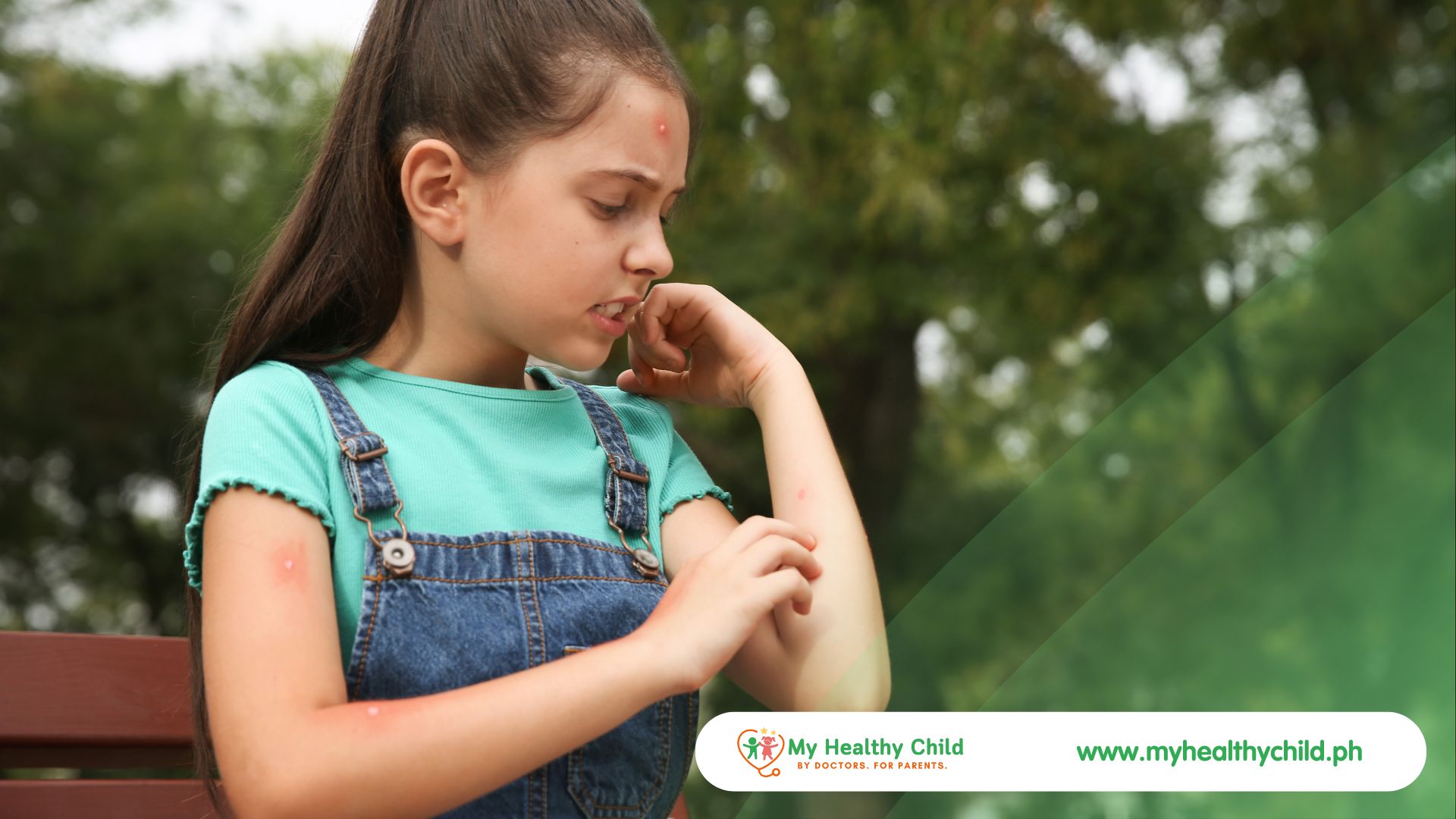
During the rainy season, parents across the Philippines brace for illnesses that often come with skin changes—from itchy viral rashes to mosquito-borne infections. Among the most serious causes of these rashes is dengue fever, and one of its hallmark symptoms is the appearance of dengue rashes in children.
Knowing how to spot and respond to these rashes can make a critical difference in your child’s care. But with so many skin-related illnesses during this season—including leptospirosis, hand-foot-and-mouth disease, and other kinds of virus (child’s health)—it can be difficult to tell them apart.
Let’s break down what dengue rashes look like, when to worry, and how to support your child through a safe and full recovery.
What Are Dengue Rashes?
Dengue rashes are caused by the dengue virus affecting blood vessels and immune response. They often appear between days 3 and 7 of illness, just as a child’s fever begins to subside and platelet counts are dropping.
There are two main types of dengue rashes:
- Early-phase rashes: These may resemble a measles-like rash—pink to red, flat or slightly raised patches that spread over the arms, legs, and trunk.
- Late-phase rashes (recovery rash): These appear as bright red, pinpoint dots (petechiae), especially on the lower limbs and inside the elbows or knees. These are signs of blood leakage under the skin due to a lowered platelet count.
Dengue rashes are not typically itchy in the beginning but can become uncomfortable as the body starts healing.
Where Do Dengue Rashes Usually Appear?
Dengue rashes are commonly seen on:
- Arms and legs
- Chest and back
- Abdomen
- Face and behind the ears
- Palms and soles in more severe cases
Unlike some kinds of virus (child’s health) that cause blistering or localized rash (e.g., chickenpox or HFMD), dengue rashes tend to be widespread and flush-like.
How to Tell Dengue Rashes from Other Viral Rashes
Feature | Dengue Rash | Other Viral Rashes |
Timing | Days 3–7 of fever | Often at fever onset |
Appearance | Red, blotchy, may look like sunburn or tiny red dots | May be itchy, bumpy, or blistering |
Location | Trunk, arms, legs, and face | Varies by virus |
Platelet Count | Often low | Usually normal |
Associated Symptoms | Fatigue, vomiting, muscle pain | May include cough, cold, sore throat |
If your child has a rash during the rainy season, it’s vital to monitor other symptoms like fever severity, signs of dehydration, and bleeding to determine if dengue or another illness like leptospirosis might be involved.
Why Dengue Rashes Are a Serious Sign
While dengue rashes may not seem severe on their own, they indicate that the virus is affecting your child’s blood vessels. This is usually a sign that the body is entering or is already in the critical phase of dengue, where platelet counts drop and bleeding risks increase.
Seek medical attention immediately if rashes are accompanied by:
- Severe abdominal pain
- Continuous vomiting
- Lethargy or restlessness
- Bleeding gums or nose
- Black or blood-streaked stool
Even if the rash appears mild, it is essential to get a complete blood count (CBC) test to check your child’s platelets and hematocrit.
Can Exercise Help During Recovery?
During the acute stage of dengue illness, children must avoid physical activity entirely. Any movement—especially vigorous exercise for kids—can increase the risk of internal bleeding when platelet levels are low.
However, once your pediatrician confirms that platelet levels are stable and recovery has begun, light exercise for kids like walking, stretching, or playing with supervision can gradually help rebuild strength and restore normal circulation.
Dengue and Leptospirosis: A Dual Threat in Rainy Season
In flood-prone areas, leptospirosis is another serious concern that often overlaps with dengue season. This bacterial infection is spread through contaminated water and can also present with fever, muscle pain, and rashes.
While dengue rashes are linked to platelet loss, leptospirosis rashes may involve red or purple patches due to blood vessel inflammation and organ involvement.
Key points to differentiate:
- Dengue: Transmitted via mosquitoes; rashes often linked to low platelets.
- Leptospirosis: Transmitted via floodwater; may involve conjunctivitis and liver/kidney symptoms.
Both require urgent medical evaluation during the rainy season, especially in areas with poor drainage and mosquito infestation.
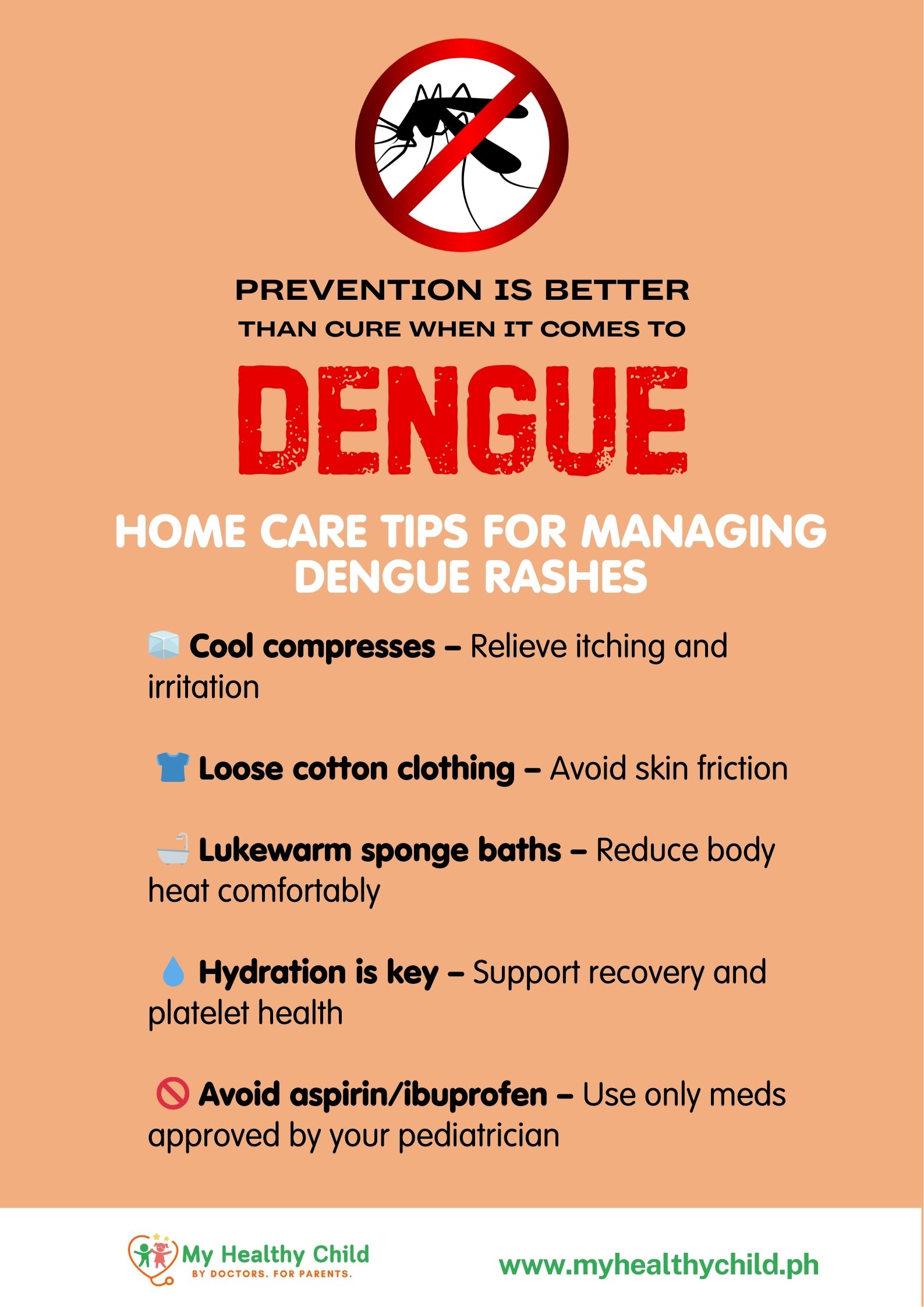
Home Care Tips for Managing Dengue Rashes
While waiting for medical results or during home recovery (if approved by your pediatrician), here are ways to ease discomfort:
- Cool compresses: Gently apply to affected areas to soothe skin.
- Loose cotton clothing: Prevents irritation from rubbing.
- Lukewarm sponge baths: Helps keep the body cool without causing chill.
- Proper hydration: Keeps the body’s systems working efficiently, especially as platelets recover.
- Avoid aspirin or ibuprofen: These can worsen bleeding risks—use only doctor-approved medications.
Focus on immune-boosting meals and rest. Let your child’s body do the hard work of fighting the virus while you provide gentle support.
When to Call the Doctor
Don’t delay medical help if:
- Rashes darken or spread rapidly
- Your child shows signs of bleeding (bruises, nosebleeds, or gum bleeding)
- There’s vomiting, fatigue, or confusion
- Dengue rashes appear after day 5 of fever
Your doctor may request daily CBC tests or hospital observation based on platelet trends.
Rashes Are Just the Surface—Stay Alert to What’s Beneath
Dengue rashes are one of many visible signs that your child’s body is going through a challenging battle. As a parent, understanding what’s normal—and what’s not—can guide better decisions and quicker care.
What looks like a common rash could be a clue to something more serious. Never ignore it, especially when it appears during the rainy season, or after playing in flooded areas where leptospirosis is also a risk.
For Every Rash, a Reason to Stay Informed
At MyHealthyChild, we believe that awareness is your first line of defense. Whether it’s decoding the meaning behind dengue rashes, knowing the difference between viruses, or supporting safe exercise for kids post-recovery—we’re here to make health less scary and more empowering for families like yours.
Knowledge turns panic into peace of mind. Let’s keep learning and protecting together.
Disclaimer:
The information in this article is intended for educational purposes only and does not substitute professional medical advice, diagnosis, or treatment. Always consult your physician, pediatrician, or qualified healthcare provider with any questions you may have regarding a medical condition or health objectives.