
Baby Safety Guide Part 2: 5 More Ways to Keep Your Little One Safer
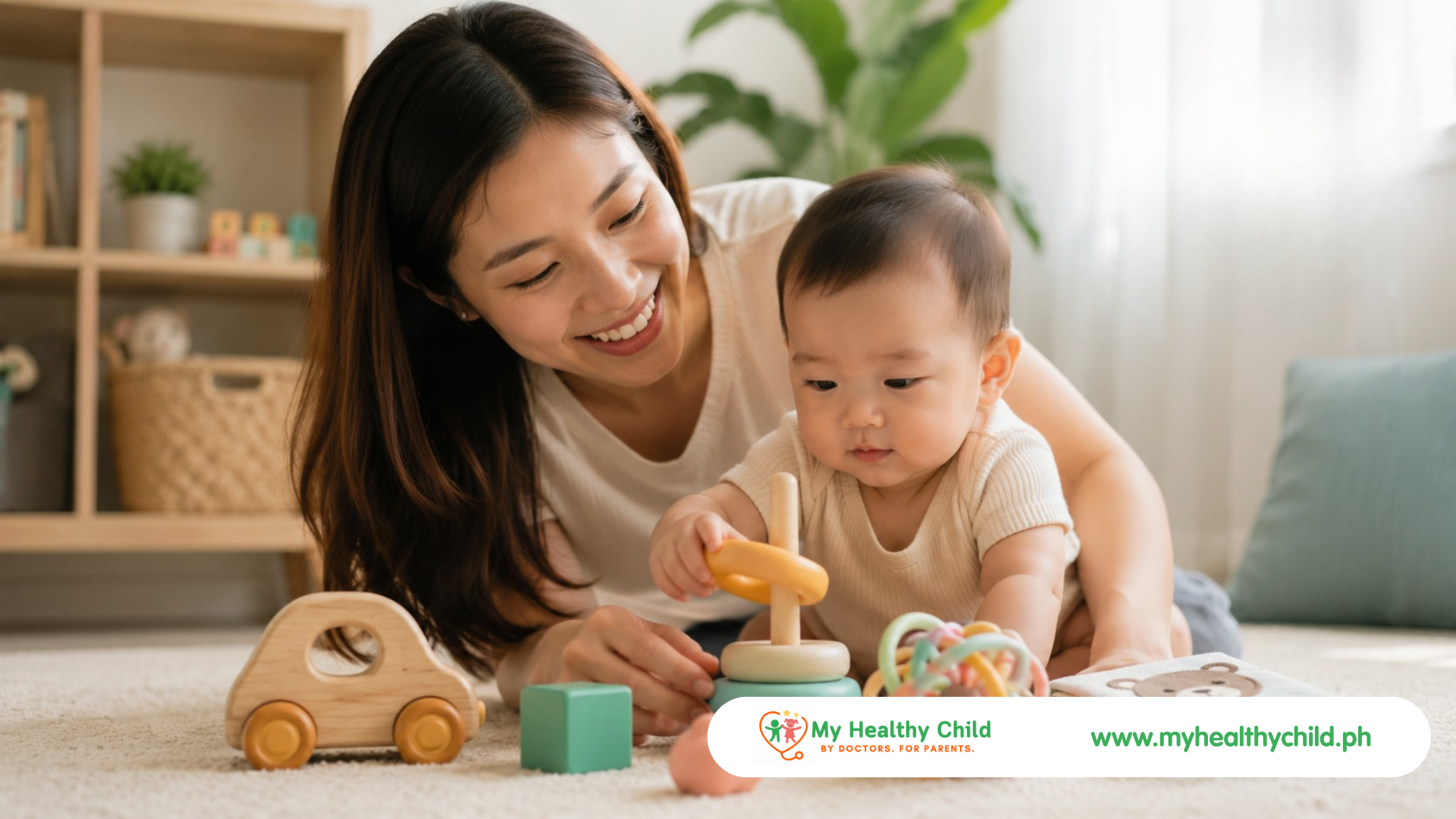
As babies grow, their world gets bigger.
They begin reaching farther, crawling faster, opening cabinets, pulling on cords and exploring places they couldn’t reach just a few weeks earlier.
That’s why baby safety isn’t something parents do just once. As your baby develops new skills, it’s important to look at their surroundings again and ask: What can they reach now?
In Part 1 of our Baby Safety Guide, we covered choking prevention, safe sleep, water safety, preventing falls and child passenger safety.
Now, Joy Sy, MD, DPPS shares more practical reminders to help make everyday life safer for your little one.
6. Safe Play: Look Beyond the Toy
Play is an important part of a baby’s development. It helps children explore, move, learn and discover how the world works.
But babies don’t know the difference between something designed for play and something that could hurt them.
A toy may look perfectly safe until a small piece becomes loose or breaks off.
Before and during playtime:
- Choose toys appropriate for your child’s age and developmental stage.
- Check toys regularly for broken, damaged or loose parts.
- Keep toys with small parts away from babies and young children who may put them in their mouths.
- Be especially careful with toys containing button batteries or high-powered magnets.
- Keep cords, plastic bags and other potential hazards away from the play area.
- Remove damaged toys until they can be safely repaired or discarded.
If there are older children in the family, remember that toys appropriate for an older sibling may contain small parts that are unsafe for a baby.
Simple reminder: Before putting your baby down to play, take a quick look at the floor and surrounding area. What can your baby reach that shouldn’t be there?
7. Poison Prevention: Dangerous Things Don’t Always Look Dangerous
Medicines, cleaning products and other household chemicals are part of everyday life.
To a curious baby or toddler, however, a colorful bottle or container can simply look like something interesting to touch, open or taste.
Make potentially harmful products harder to reach:
- Keep medicines, cleaning products and household chemicals locked, up high and out of sight.
- Return them to secure storage immediately after use.
- Keep products in their original containers whenever possible.
- Never transfer cleaning products or chemicals into drinking bottles, cups or food containers.
- Check whether plants within your child’s reach could be harmful if eaten.
Even containers with safety caps can still be opened by children. They should still be kept securely stored and out of reach.
If you think your child may have swallowed medicine, a household chemical or another potentially poisonous substance, seek professional medical advice immediately rather than waiting for symptoms to appear.
Do not make your child vomit unless a qualified healthcare professional specifically tells you to do so.
8. Electrical Safety: See Your Home From Your Baby’s Level
To an adult, an electrical outlet is simply part of the wall.
To a crawling baby, it is at eye level—and it may look very interesting.
The same is true of dangling electrical cords and plugs.
Reduce electrical hazards around your child:
- Protect unused electrical outlets appropriately.
- Keep electrical cords and plugs out of your baby’s reach.
- Replace damaged, frayed or exposed electrical wires.
- Keep electrical appliances away from water.
- Avoid overloading electrical outlets.
- Have damaged electrical fixtures properly repaired.
One of the simplest safety checks is also one of the most useful:
Get down to your baby’s level and look around.
You may suddenly notice outlets, cords and other hazards that are easy to overlook when you’re standing.
If your baby can reach something, assume that eventually they may try to touch, pull or explore it.
9. Bath Safety: “Just for a Second” Is Too Long
Bath time can be one of the most enjoyable parts of a baby’s day.
It can also become distracting.
The towel is across the room. Your phone rings. Someone comes to the door.
It’s easy to think, “I’ll only be gone for a second.”
But babies and young children should never be left alone in or near bath water, even briefly.
Before bath time:
- Gather the towel, soap, clean clothes and everything else you’ll need before placing your baby in the bath.
- Stay close and within arm’s reach throughout the bath.
- Check the water before putting your baby in.
- Keep electrical appliances away from the bath area.
- Empty bathtubs, buckets and basins immediately after use.
A bath seat or similar product does not replace close adult supervision.
If you need to leave the bathroom, take your baby with you.
Simple reminder: When your baby is around water, your attention is one of their most important protections.
10. Baby Safety Changes as Your Baby Grows
Perhaps the most important lesson from our Baby Safety Series is this:
A safe home today may need to change tomorrow.
Babies develop quickly.
A newborn who stays where you put them becomes a baby who rolls. Then crawls. Then pulls up. Then climbs.
Each new milestone can introduce new risks.
That’s why baby-proofing shouldn’t be something you do once and forget.
Every few weeks—and whenever your child develops a new skill—look around your home again.
Ask yourself:
- What can my child reach now?
- What can they put in their mouth?
- What can they pull down?
- What can they climb?
- What could tip over?
- Where can they access water?
- What can they open?
- What might they be able to do next?
You don’t need to stop your child from exploring.
The goal is to create an environment where they can explore, learn and grow with fewer preventable risks.
You Completed Our Baby Safety Series ❤️
From the first day of our series to the last, we’ve covered everyday situations that parents and caregivers encounter all the time.
In Part 1:
✓ Choking Prevention
✓ Safe Sleep
✓ Water Safety
✓ Preventing Falls
✓ Child Passenger Safety
In Part 2:
✓ Safe Play
✓ Poison Prevention
✓ Electrical Safety
✓ Bath Safety
✓ Keeping Safety Up to Date as Your Baby Grows
Baby safety isn’t about being afraid of everything that could happen.
It’s about noticing preventable risks and making practical changes before an accident happens.
And you don’t have to keep these reminders to yourself.
Share Parts 1 and 2 of the Baby Safety Guide with grandparents, yayas, relatives and anyone else who regularly cares for your child.
A safer environment for children is something families and caregivers can build together.
Follow MyHealthyChild for more practical, evidence-based guidance from doctors, for parents.
Reference:
Safe Kids Worldwide. (2025). Baby Safety Basics.

Disclaimer:
The information in this article is intended for educational purposes only and does not substitute professional medical advice, diagnosis, or treatment. Always consult your physician, pediatrician, or qualified healthcare provider with any questions you may have regarding a medical condition or health objectives.