
Understanding the Middle School Age: Physical, Mental, and Emotional Changes

Middle school age—typically covering children between 11 and 14 years old—is one of the most dramatic and unpredictable stages in childhood development. Falling right at the bridge between late childhood (ages 6 to 12 years) and adolescence, it’s a period filled with growth spurts, shifting emotions, changing social circles, and new mental challenges.
For many parents, it can feel like their child is transforming overnight. One moment they’re asking for bedtime stories, the next they’re shutting their door and asking for privacy. So, what’s really happening during this stage? And how can parents support their child’s mental health while keeping up with their rapidly evolving world?
Let’s break it down.
Physical Changes: The Start of Puberty
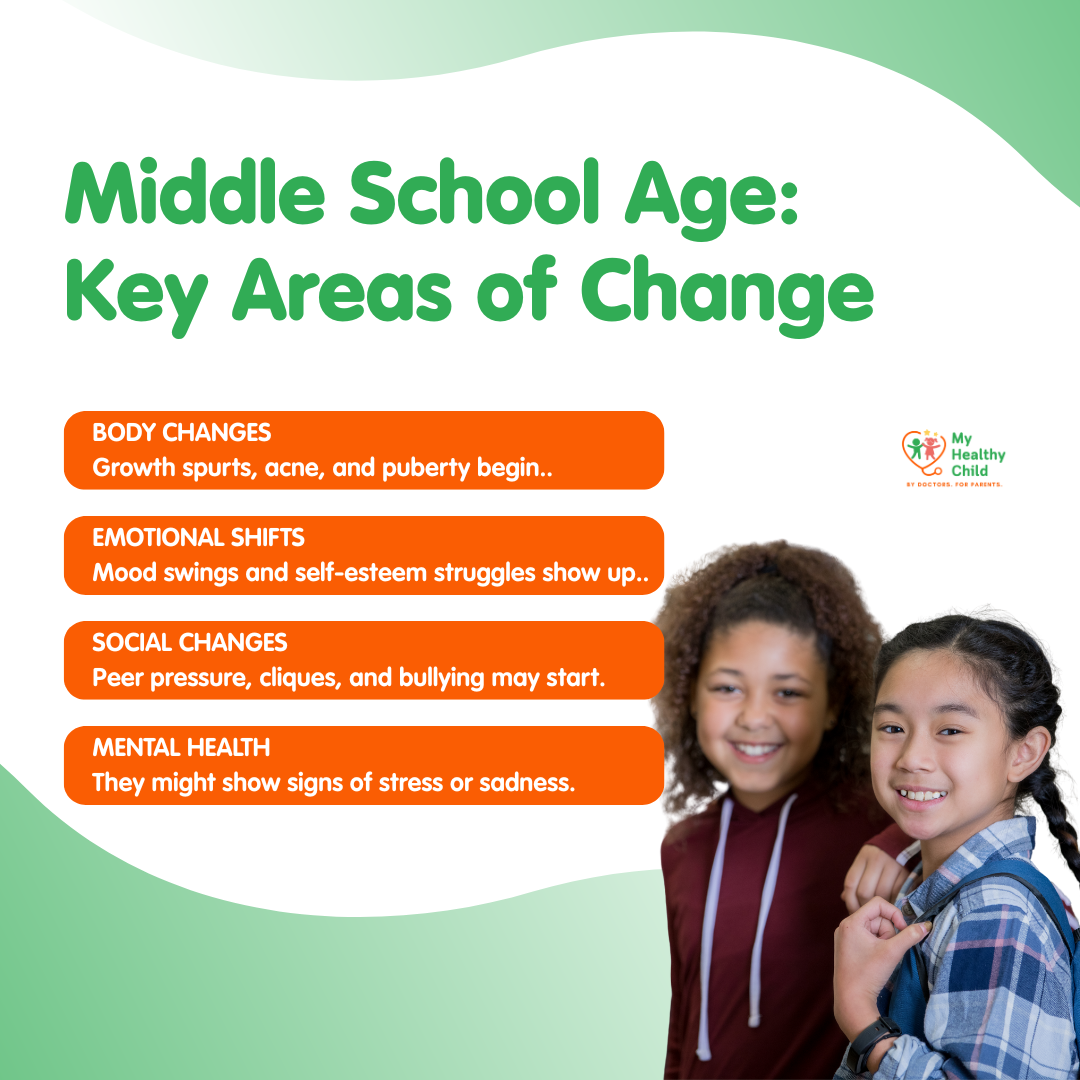
One of the most obvious shifts during middle school age is the start of puberty. While the timeline varies for every child, many begin experiencing physical changes between 9 to 14 years old—often earlier for girls and slightly later for boys.
Key physical developments include:
- Growth spurts in height and weight
- Development of body hair
- Voice changes (especially in boys)
- Breast development and menstruation (for girls)
- Acne or skin changes
These changes can bring up a lot of self-consciousness. Children in late childhood (6 to 12 years) who develop earlier or later than their peers might feel isolated or awkward. Parents can help by normalizing the process and avoiding comments that could trigger embarrassment.
Emotional Changes: Mood Swings and Growing Independence
If your child suddenly has big emotional reactions to small things, you’re not alone. Hormonal changes during middle school age can make kids feel overwhelmed, irritable, or anxious. This emotional turbulence is normal—but it’s also a crucial time to build emotional intelligence.
What you might notice:
- Increased sensitivity to criticism
- Need for more privacy and autonomy
- Confusion about identity or self-worth
- Shifts in motivation or interests
Encouraging open conversations without judgment can go a long way. Kids in this stage are often testing boundaries but still crave connection—even if they don’t always show it.
Social Changes: Friendships, Peer Pressure, and Fitting In
Friendships take center stage during the middle school age. Your child may start prioritizing peer approval over family time, experimenting with social roles, or experiencing peer pressure.
Here’s what’s common:
- Friendships may become deeper, but also more emotionally charged
- Cliques and social hierarchies may emerge
- Bullying (online or offline) can become a concern
- Pressure to conform to certain behaviors or appearances increases
The desire to fit in is strong, and social acceptance can greatly impact mental well-being. It’s not uncommon for issues like anxiety or teen depression to start surfacing in this window—especially when social stress combines with hormonal and academic pressure.
Mental Health Changes: A Growing Concern
The middle school age is a pivotal time for emotional regulation, self-esteem, and mental resilience. Unfortunately, it’s also when early signs of depression, anxiety, or stress may become noticeable.
Some red flags to watch for:
- Withdrawal from friends or activities they once enjoyed
- Changes in sleep or appetite
- Trouble concentrating in school
- Expressions of hopelessness or low self-worth
Understanding the reasons for depression in youth is essential. For some children, it’s rooted in academic struggles or learning differences. For others, it could stem from family dynamics, bullying, social comparison on social media, or feeling “different” from peers.
Depression doesn’t always look like sadness. In kids, it can show up as irritability, anger, or lack of motivation. That’s why it’s crucial to remain observant, listen closely, and seek help early if something feels off.
How to Support Your Child During the Middle School Years
Here are some practical ways to help your child through this stage of late childhood (6 to 12 years) and into early adolescence:
- Stay available and engaged – Even if they pull away, knowing you’re there matters.
- Be specific with praise – Focus on effort and resilience, not just results.
- Validate their feelings – Resist the urge to dismiss or minimize emotional reactions.
- Set boundaries with empathy – Kids feel safer when the rules are clear and fair.
- Watch for warning signs – Especially signs of teen depression or changes in behavior.
Middle school is often when kids stop talking unless they feel truly heard. Building trust now can set the tone for how they share during the tougher teenage years.
What This Age Really Needs
More than anything, kids in the middle school age need a space where they feel understood—not just managed. This stage isn’t just a “phase”—it’s a crucial chapter that shapes who they’re becoming.
So here’s what they truly need:
- Permission to change without fear of being “too much” or “too different”
- Support that’s steady even when their moods aren’t
- Space to grow, fail, and try again without judgment
- A strong safety net, so when the world feels overwhelming, they know exactly where home is
Middle school is messy, beautiful, and sometimes exhausting—for both children and their parents. But with the right awareness and care, this can also be one of the most meaningful stages in your relationship with your child.
Disclaimer:
The information in this article is intended for educational purposes only and does not substitute professional medical advice, diagnosis, or treatment. Always consult your physician, pediatrician, or qualified healthcare provider with any questions you may have regarding a medical condition or health objectives.