
Exercise for Kids: Keeping Children Active and Healthy Year-Round

In today’s fast-paced, screen-dominated world, one of the simplest yet most powerful tools to help children grow strong, stay healthy, and thrive is often overlooked: exercise for kids.
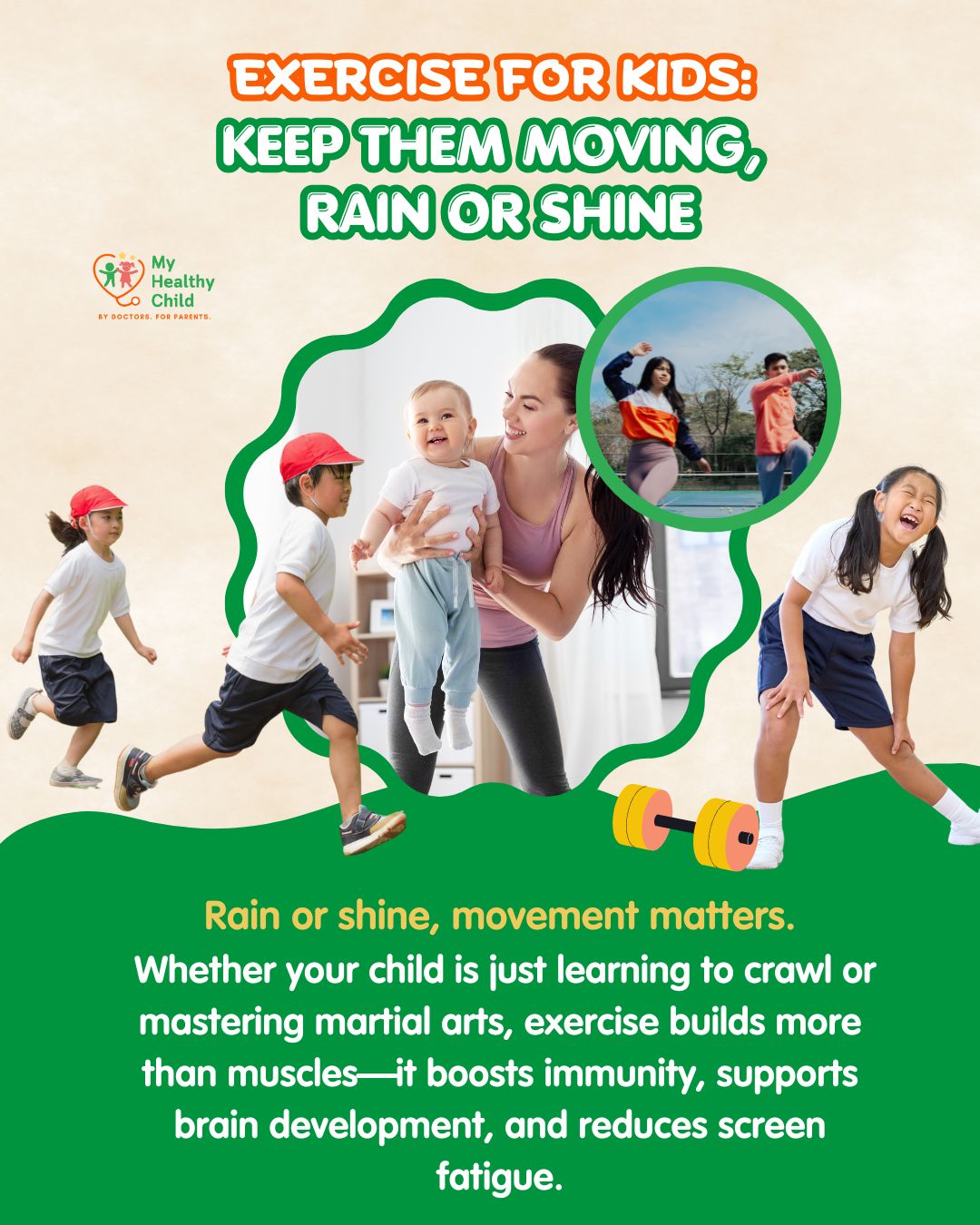
Physical activity doesn’t just build muscles—it strengthens immunity, improves focus, supports emotional health, and lays the groundwork for a lifetime of healthy habits. But how do we encourage regular movement when the weather, illnesses, or age-specific needs become barriers?
This article explores how to create safe, effective, and age-appropriate exercise for kids—from the infancy stage all the way to pre-adolescence—even when viruses like leptospirosis and others rise during the rainy season.
Why Exercise Matters at Every Age
Physical activity affects more than just a child’s body. It’s directly linked to brain development, emotional regulation, and even social growth.
Here’s how exercise for kids benefits them at different stages:
Age Group | Benefits of Exercise | Recommended Activities |
Infancy stage (0–12 months) | Develops motor skills, strengthens bones, improves sleep | Tummy time, assisted crawling, baby yoga |
Toddlers (1–3 years) | Enhances coordination, burns excess energy | Dance play, climbing toys, guided walks |
Preschoolers (3–5 years) | Supports balance and early learning | Obstacle courses, running games, basic sports |
School-age (6–12 years) | Builds muscle, improves mental focus, supports emotional well-being | Swimming, biking, team sports, martial arts |
Even in early life, movement matters. Something as simple as reaching, kicking, or rolling during the infancy stage prepares a child’s brain and body for future physical literacy.
Screen Time vs. Play Time
Today, children spend an average of 4 to 6 hours a day in front of screens. While not all screen time is harmful, lack of movement can contribute to:
- Weight gain
- Poor posture
- Delayed motor development
- Sleep disturbances
- Reduced immunity during viral outbreaks
Creating structured and free-play moments throughout the day where children can stretch, jump, dance, and explore can balance the digital load—and support both their physical and emotional growth.
Rainy Season Blues: Staying Active Indoors
The rainy season often brings more than just muddy shoes—it also signals a rise in indoor confinement and infections like leptospirosis, colds, and flu. Parents may hesitate to let children play outside due to concerns over flooding, illness, and unsafe environments.
But movement doesn’t have to stop just because it’s stormy.
Indoor-safe exercise for kids during the rainy season can include:
- Indoor obstacle courses using pillows, chairs, and blankets
- Interactive workout videos made just for kids
- Dance-offs or freeze dance games
- Animal walks (bear crawls, frog jumps, crab walks)
- Yoga for kids focusing on balance, breathing, and mindfulness
Just 30–60 minutes of activity each day can help keep children’s immunity high and their mood lifted, even when stuck indoors.
Boosting Immunity Through Movement
Exercise is a powerful immune system booster. It increases circulation, enhances lymphatic flow, and helps white blood cells move through the body more effectively.
This is particularly important during the rainy season, when exposure to kinds of virus (child’s health) like dengue, influenza, or leptospirosis becomes more common.
Here’s how exercise for kids helps prevent illness:
- Regulates inflammation by reducing stress hormones
- Improves sleep quality, which directly boosts immune response
- Encourages hydration, especially during and after physical play
- Strengthens respiratory health, helping fight off airborne viruses
A strong, active body is more prepared to face seasonal illnesses—and recovers faster when they do occur.
Safety Tips When Exercising During Virus Season
If your child is recovering from a recent illness or if viruses are circulating in your community, adjust physical activities accordingly:
- Avoid contact sports during active viral outbreaks or when recovering from illnesses like dengue
- Sanitize indoor spaces before and after play
- Hydrate frequently, especially during humid or stormy days
- Avoid flood-prone areas to reduce risk of exposure to what is leptospirosis
- Monitor fatigue—if your child seems unusually tired, skip intense workouts and opt for gentle movement instead
Always check with your child’s pediatrician before resuming exercise after illness.
Fun Ways to Make Exercise a Daily Habit
To make exercise for kids something they look forward to, think play—not pressure.
Try these tips:
- Make it a family affair—work out together and let them see you enjoying movement
- Gamify routines—use points, stickers, or small rewards to encourage consistency
- Incorporate interests—is your child into superheroes? Create a “hero training” session. Love animals? Try animal-inspired moves.
- Use music and storytelling—movement becomes fun when it’s tied to imagination
- Rotate activities—keep it fresh with themed days (e.g., “Martial Arts Monday” or “Flexibility Friday”)
The key is consistency, not intensity. Small efforts every day lead to big developmental gains.
MyHealthyChild Movement Mission
At MyHealthyChild, we champion the power of movement in childhood. From the tiniest wiggles in the infancy stage to the full-blown energy of pre-teens, we believe that the habit of physical activity starts early—and lasts a lifetime.
By encouraging daily exercise for kids, you’re not just preventing health problems. You’re building resilience, independence, and self-esteem.
And yes, even if it’s raining outside.
Let’s Move, Rain or Shine
No matter the season, no matter your child’s age—there is always a way to move. Exercise for kids is more than just burning calories or building muscles. It’s a path to wellness, joy, and better health outcomes, even during tough months filled with illness and worry.
So whether you’re rolling around on a yoga mat with your toddler, dancing with your 8-year-old in the living room, or playing flashlight tag on a rainy evening, remember: it all counts.
Keep it light, keep it fun—and keep your kids moving.
Disclaimer:
The information in this article is intended for educational purposes only and does not substitute professional medical advice, diagnosis, or treatment. Always consult your physician, pediatrician, or qualified healthcare provider with any questions you may have regarding a medical condition or health objectives.