
Why Is My Child Getting Sick So Often?
Understanding the Immune System, School Germs, and When to Worry

If you feel like your child is catching every cough, cold, and bug under the sun—you’re not alone. Many parents joke that their child has a “VIP pass” to the pediatrician’s clinic, especially during the school year. So what gives? Is it normal? Should you worry?
Let’s break it down in the simplest, smartest way possible—because your peace of mind matters as much as your child’s health.
Your Child’s Immune System: Still Under Construction
Here’s the truth: kids get sick a lot because they’re supposed to.
When babies are born, they carry some protection from mom (called passive immunity), but that fades after a few months. From there, their immune system has to learn on the job. Think of it like a muscle—it only gets stronger with practice.
Did you know?
A child can get 6 to 10 colds a year (or more if they’re in daycare or preschool). It’s normal.
Each runny nose, sore throat, or mild fever is actually a mini-training session for their immune system. While it may be exhausting for you (we see you wiping boogers at 2 a.m.), it’s building long-term resistance.
School = Germ Fest (and That’s Okay)
The moment your child enters school, daycare, or playgroups, it’s game on for their immune system. Imagine dozens of kids, all touching the same toys, tables, and snacks— sharing everything including germs.
But here’s the twist:
Getting sick often at a young age can actually lead to fewer illnesses later in life.
Think of early exposure like “immune boot camp.” Over time, their body learns to recognize and fight off bugs faster and smarter. This is why many pediatricians say that frequent minor illnesses in young kids are normal, expected, and even beneficial.
So What’s “Normal” and What’s Not?
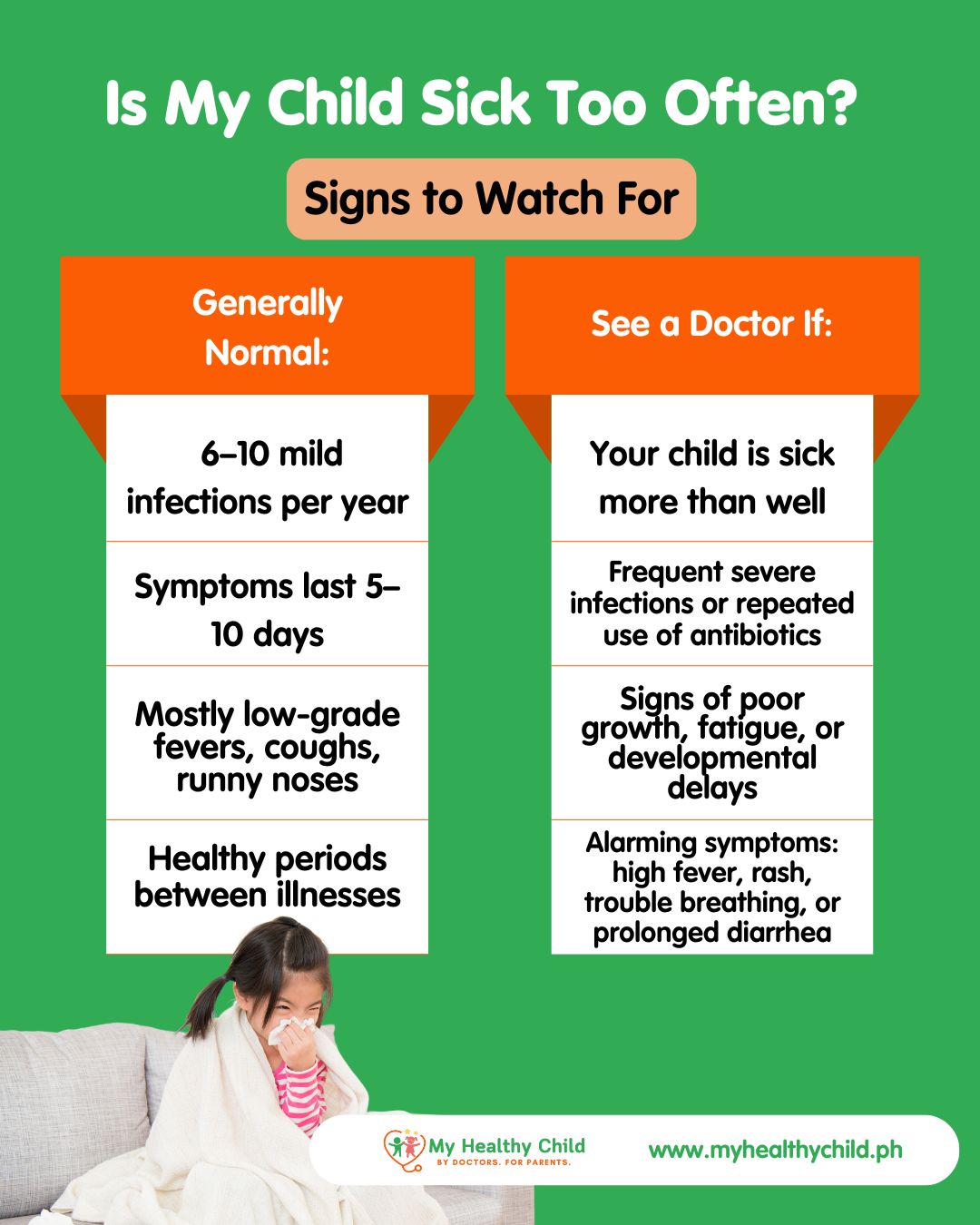
Let’s draw the line between what’s okay and what’s worth checking out: Generally Normal:
- 6–10 minor infections per year
- Symptoms lasting 5–10 days
- Mostly mild (runny nose, low-grade fever, occasional cough)
- Longer intervals of wellness between sicknesses
See a Doctor If:
- Your child seems sick more often than well (e.g., always sick with no recovery periods)
- Infections are severe, requiring hospitalization or antibiotics often
- There’s poor growth, fatigue, or developmental delays
- Symptoms like high fever, rash, difficulty breathing, or prolonged diarrhea
- Recurring ear infections, sinus infections, or pneumonia
Trust your gut. If something feels “off” or unusual, talk to your pediatrician. That’s what they’re there for.
How to Support Your Child’s Immunity (Without Overthinking It)
Let’s keep it simple and sustainable. No magic potions—just good ol’ science-backed habits:
Feed the Fighters:
- Balanced meals with fruits, veggies, protein, and healthy fats fuel their growing body and immune cells.
Prioritize Sleep:
- Kids need 10–12 hours of sleep a night (depending on age). It’s when their body repairs and recovers.
Teach Good Hygiene:
- Handwashing is a superpower. Make it fun with songs or rewards—especially after school and before eating.
Hydration Helps:
- Water keeps mucus membranes moist (gross but important!) and flushes out toxins.
Let Fevers Do Their Job:
- Low-grade fevers help fight infections. Don’t panic—just monitor. If they’re playful and hydrated, it’s usually okay.
- Outdoor time, fresh air, and physical activity all help regulate the immune system and mood.
When In Doubt, Call the Doc (But Don’t Panic)
It’s easy to spiral when your child is sick for the third time in a month—but chances are, it’s just their immune system doing its thing.
Still, you know your child best. If something feels unusual, trust your instincts. Pediatricians won’t judge—you’re not “overreacting,” you’re advocating.
In Summary:
Yes, it’s normal for kids to get sick often. Their immune system is learning, their environment is germ-filled, and their bodies are still adapting.
What’s important is that they bounce back, grow well, and get the care they need when it counts.
So breathe, stock up on tissues, and remember: you’re not failing.
You’re raising a future germ-fighting superhero.
Want more parent-friendly health tips? Follow MyHealthyChild for expert advice that makes sense, feels good, and helps you parent with confidence.
Note:
This article was medically reviewed and written in collaboration with doctors and medical professionals committed to providing pediatric health education.
References:

Disclaimer:
The information in this article is intended for educational purposes only and does not substitute professional medical advice, diagnosis, or treatment. Always consult your physician, pediatrician, or qualified healthcare provider with any questions you may have regarding a medical condition or health objectives.