
Could My Child’s High Energy Be ADHD?
When behavior crosses the line from active to overwhelming and what pediatric evaluation might reveal
At a Glance
- All kids move a lot—but ADHD affects focus, flexibility, and self-control.
- Watch for patterns that disrupt learning, routines, or relationships.
- Pediatricians look at behavior across settings—not just energy level.
What’s Normal, and What’s Not?
Toddlers and preschoolers are naturally impulsive. Climbing, shouting, and fidgeting are developmentally expected. But by age 4–5, most children:
- Respond to limits
- Pause before acting
- Begin to follow group routines
If your child isn’t showing those gains—and structure doesn’t help—there may be more going on.
What ADHD Looks Like in Young Children
ADHD isn’t just being “hyper.” It reflects delays in executive function—how the brain controls attention, impulses, and planning.
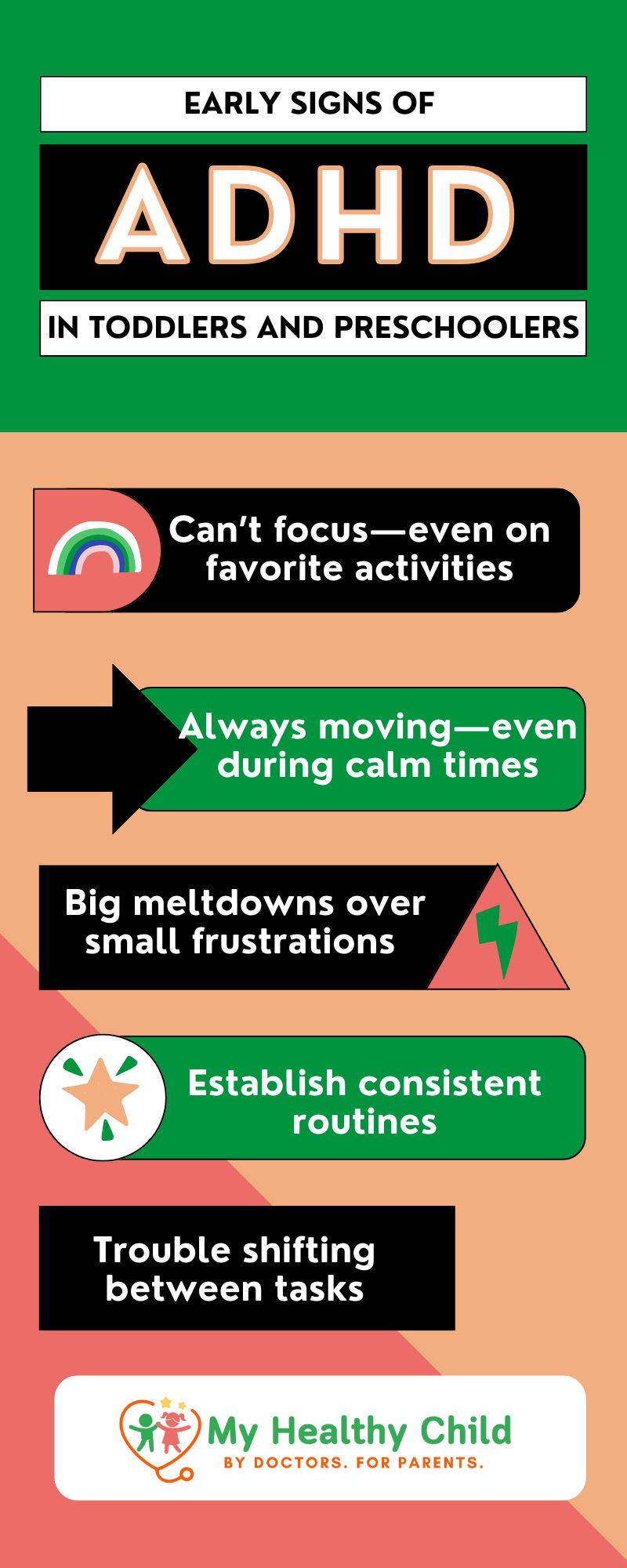
Signs include:
- Inability to focus even on preferred activities
- Constant motion, even during calm routines
- Meltdowns over minor frustrations
- Interrupting, grabbing, or bolting despite correction
- Difficulty shifting from one task to another
These behaviors must be persistent, disruptive, and seen in more than one setting (home, school, therapy).
What Else Could Be Going On?
Not all high-energy behavior means ADHD. Pediatricians also assess for:
- Sleep problems—which affect focus and mood
- Anxiety—which may show up as restlessness or avoidance
- Language delays—which can trigger frustration
- Sensory issues—which may lead to constant motion or regulation struggles
Validated tools like the Vanderbilt scale help identify patterns and rule out overlap.
What to Do Next: Guidance for Parents
- Track when and where challenges happen. Context helps your pediatrician assess what’s typical.
- Ask early—even without a diagnosis. Support doesn’t require a label.
- Explore behavior strategies. Parent coaching and structure often improve outcomes early on.
Note:
This article was medically reviewed and written in collaboration with doctors and medical professionals committed to providing pediatric developmental health education.
References:
U.S. Centers for Disease Control and Prevention (CDC)
CHADD (Children and Adults with Attention-Deficit/Hyperactivity Disorder)

Francis Xavier M. Dimalanta, MD, FPPS, FPSDBP
Developmental and Behavioral Pediatrician
Fellow, Philippine Pediatric Society
Fellow, Philippine Society for Developmental and Behavioral Pediatrics
Head, Section of Developmental and Behavioral Pediatrics
Institute of Pediatrics and Child Health
St Luke’s Medical Center - Quezon City and Global City
Medical Director, A Child’s DREAM Foundation, Inc (est. 2003)
Disclaimer:
The information in this article is intended for educational purposes only and does not substitute professional medical advice, diagnosis, or treatment. Always consult your physician, pediatrician, or qualified healthcare provider with any questions you may have regarding a medical condition or health objectives.