
Is This Just Toddler Behavior or Something More?
How pediatricians tell the difference between normal activity and early signs of ADHD or regulation difficulty

At a Glance
- All toddlers are busy—but some behaviors go beyond typical.
- ADHD signs include impulsivity, inattention, and intense emotions that don’t improve with structure.
- Pediatricians assess patterns over time—not just isolated actions.
What’s Normal Toddler Behavior?
Toddlers are wired to move, explore, and test limits. Brief attention spans and emotional outbursts are part of this stage. However, most children gradually improve in:
- Following simple directions
- Managing frustration
- Settling into routines
When these skills aren’t showing up—or are getting worse—pediatricians look deeper.
When ADHD or Regulation Issues May Be Emerging
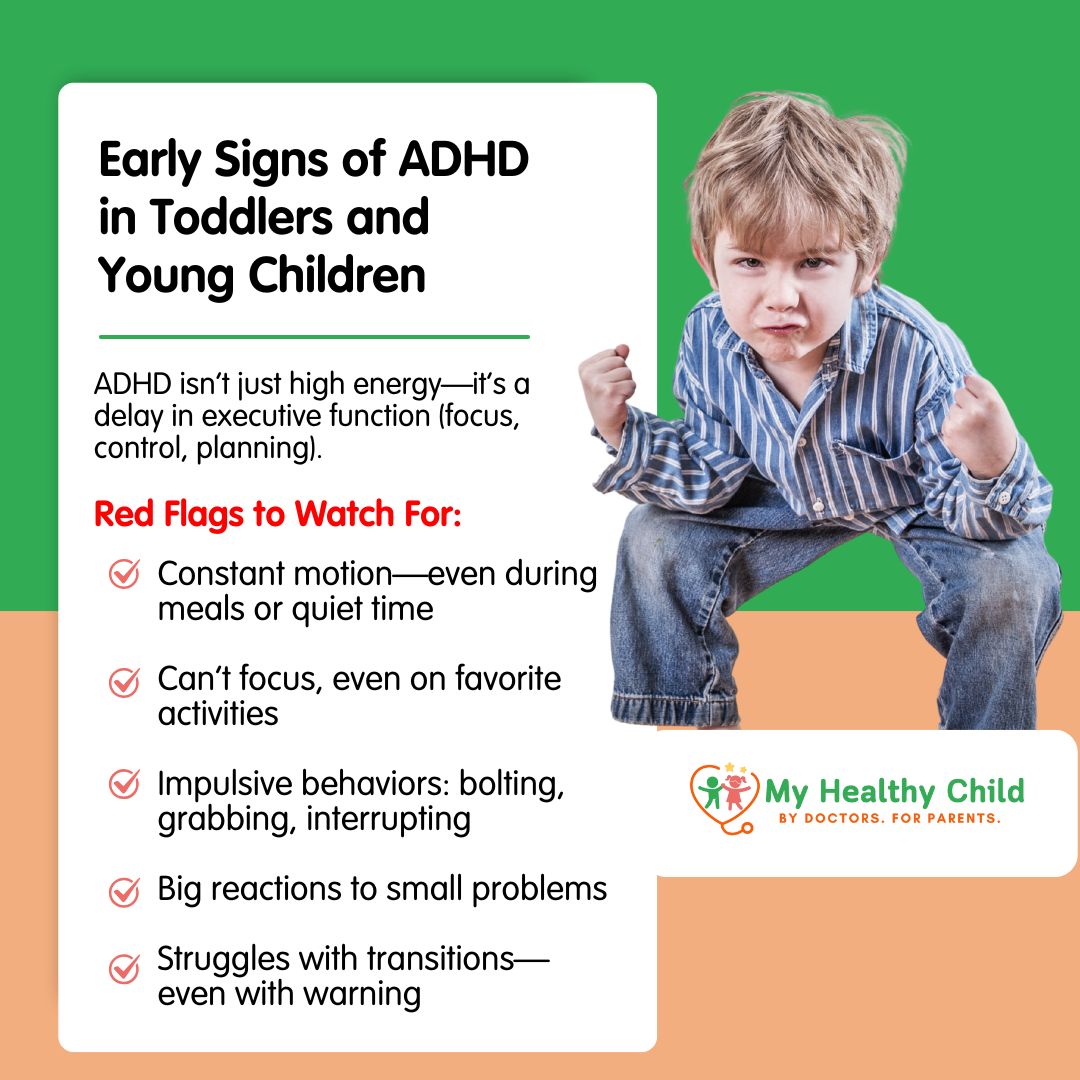
ADHD isn’t just “too much energy.” It’s a delay in executive function: the brain’s system for focus, control, and planning.
Red flags include:
- Constant motion, even during meals or quiet play
- Inability to focus on favorite activities
- Impulsive actions—like bolting, grabbing, or interrupting
- Strong reactions to small problems
- Trouble adjusting to transitions, even with warning
If these behaviors happen across settings (home, daycare, therapy), they may reflect something more than temperament.
How Pediatricians Make Sense of It
Before age 4, formal ADHD diagnosis is rare—but pattern tracking can start earlier.
Doctors may use:
- Vanderbilt or other behavioral scales
- Feedback from caregivers and teachers
- Observation across multiple visits
- Checks for other possible causes like hearing loss, anxiety, language delay, or sensory issues
Early signs don’t guarantee ADHD—but they do warrant early support.
What to Do Next: Guidance for Parents
- Write down when and where challenges happen. This helps your doctor see patterns.
- Ask: “Is this still typical—or is it worth checking further?”
- Seek support early. Coaching, structure, or therapy can help—before labels are even discussed.
Note:
This article was medically reviewed and written in collaboration with doctors and medical professionals committed to providing pediatric developmental health education.
References:
U.S. Centers for Disease Control and Prevention (CDC)
CHADD (Children and Adults with Attention-Deficit/Hyperactivity Disorder)

Francis Xavier M. Dimalanta, MD, FPPS, FPSDBP
Developmental and Behavioral Pediatrician
Fellow, Philippine Pediatric Society
Fellow, Philippine Society for Developmental and Behavioral Pediatrics
Head, Section of Developmental and Behavioral Pediatrics
Institute of Pediatrics and Child Health
St Luke’s Medical Center - Quezon City and Global City
Medical Director, A Child’s DREAM Foundation, Inc (est. 2003)
Disclaimer:
The information in this article is intended for educational purposes only and does not substitute professional medical advice, diagnosis, or treatment. Always consult your physician, pediatrician, or qualified healthcare provider with any questions you may have regarding a medical condition or health objectives.