
How Do I Help My Child Who’s Picky or Sensitive with Food?
Simple strategies to support feeding, reduce stress at meals, and improve nutrition for children with sensory or oral challenges

At a Glance
- Feeding issues are often sensory or motor-based—not just “picky eating.”
- Start from comfort foods, then expand gradually with trust and structure.
- Therapy helps when eating becomes distressing or growth is affected.
Why Eating Feels Hard for Some Children
Feeding involves more than hunger—it requires coordination, sensory tolerance, and emotional regulation. Children with autism, sensory processing differences, or oral motor delays often struggle with:
- Unpredictable textures, smells, or tastes
- Difficulty chewing, swallowing, or managing utensils
- Anxiety during meals due to pressure or overwhelm
Pediatricians monitor growth, nutrition gaps, and stress patterns around eating to decide when support is needed.
Start from Safety, Then Stretch Gently
Most children gravitate toward a few “safe” foods—usually consistent in texture and appearance. Begin there. Then try:
- Offering new brands or shapes of familiar items
- Placing new foods nearby without pressure to taste
- Encouraging play-based exploration: smelling, touching, or licking
This method, called food chaining, helps expand variety while protecting trust at the table.
Nutrients to Watch Closely
Restricted diets can cause subtle nutrition issues. Common concerns:
- Iron + Protein: Needed for energy, brain function, and growth
- Fiber: Essential for digestion and regularity
- Healthy Fats: Crucial for brain and nervous system development
Signs to flag with your pediatrician:
- Pale skin, low energy, or irritability
- Constipation or poor appetite
- Flat or declining weight curve
When to Consider Feeding Therapy
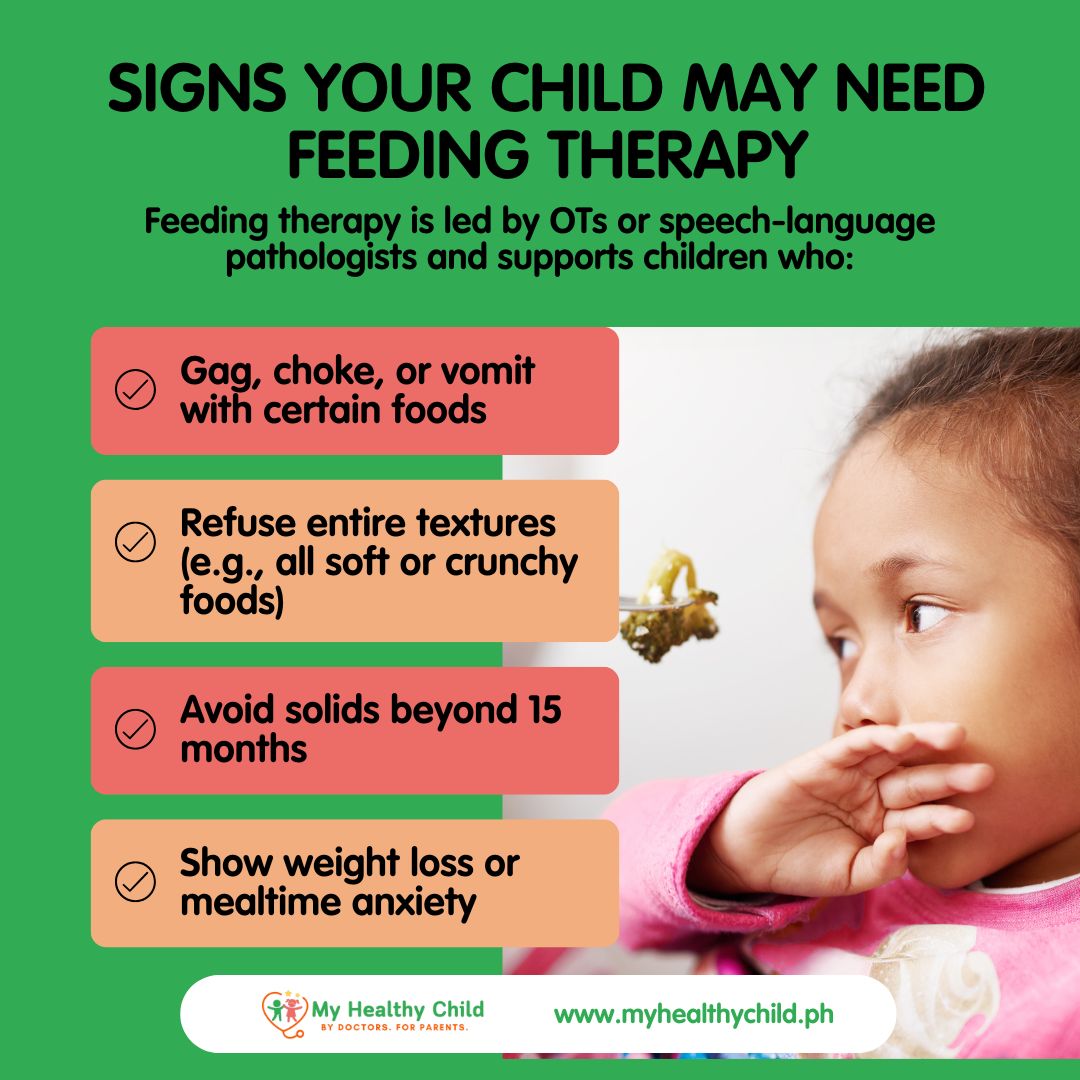
Feeding therapy is often led by trained OTs or speech-language pathologists. It’s time to seek help if your child:
- Gags, vomits, or chokes on certain foods
- Refuses entire textures (e.g., all soft foods)
- Avoids solids after 15 months
- Is losing weight or anxious at every mealtime
Therapists use child-led, non-force techniques to build skills and reduce fear around eating.
What to Do Next: Guidance for Parents
- Document patterns. Track what foods are accepted, avoided, or cause distress.
- Celebrate small steps. Smelling or touching a new food counts as progress.
- Ask early. Feeding therapy is most effective before habits harden.
Note:
This article was medically reviewed and written in collaboration with doctors and medical professionals committed to providing pediatric developmental health education.
References:
U.S. Centers for Disease Control and Prevention (CDC)
CHADD (Children and Adults with Attention-Deficit/Hyperactivity Disorder)

Francis Xavier M. Dimalanta, MD, FPPS, FPSDBP
Developmental and Behavioral Pediatrician
Fellow, Philippine Pediatric Society
Fellow, Philippine Society for Developmental and Behavioral Pediatrics
Head, Section of Developmental and Behavioral Pediatrics
Institute of Pediatrics and Child Health
St Luke’s Medical Center - Quezon City and Global City
Medical Director, A Child’s DREAM Foundation, Inc (est. 2003)
Disclaimer:
The information in this article is intended for educational purposes only and does not substitute professional medical advice, diagnosis, or treatment. Always consult your physician, pediatrician, or qualified healthcare provider with any questions you may have regarding a medical condition or health objectives.