
What’s the Right Kind of Exercise for My Toddler or Preschooler?
Know how movement builds strength, confidence, and brain growth, and how to avoid injuries or burnout in early sports
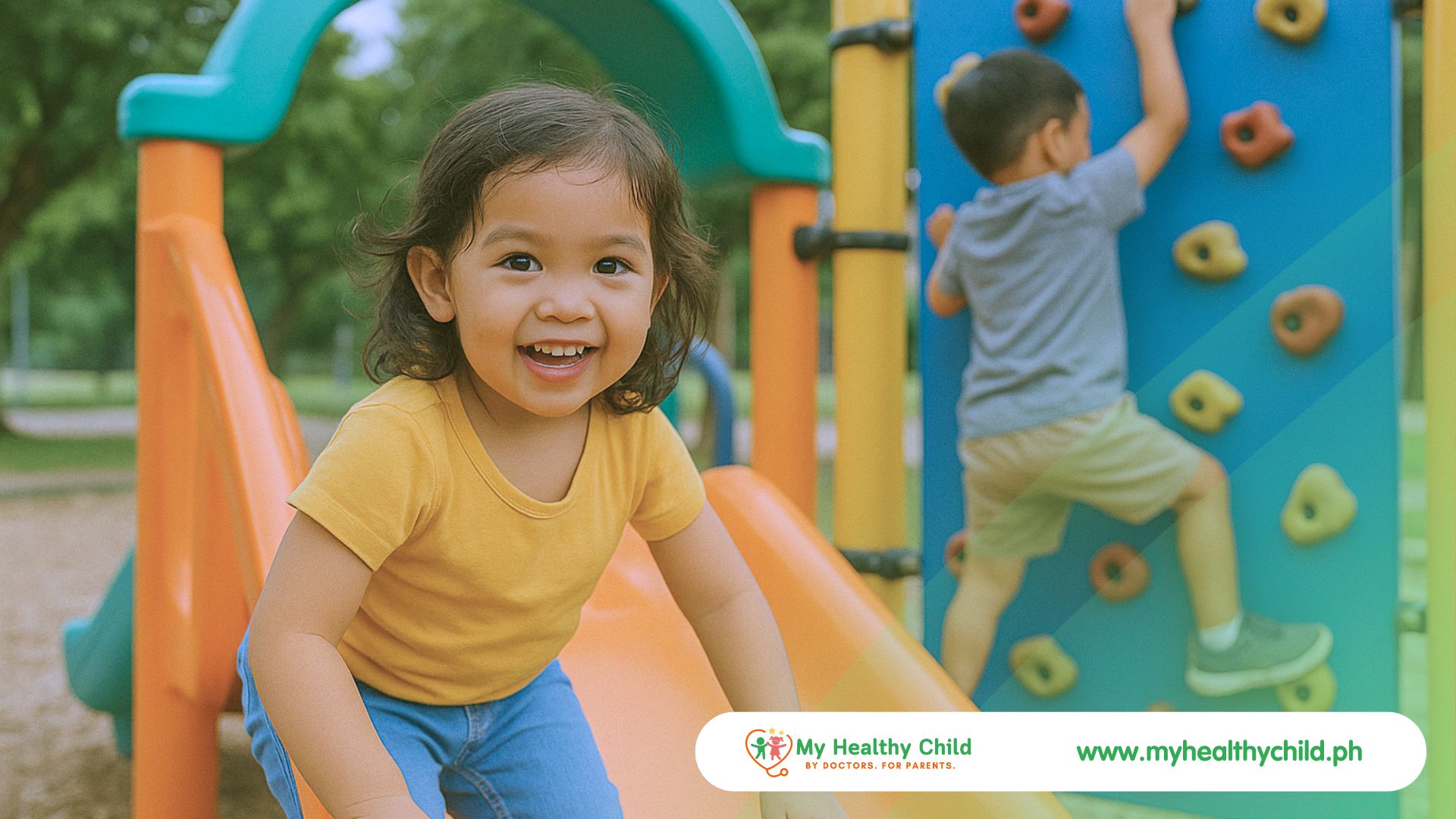
At a Glance
- Children ages 1 to 3 need at least 3 hours of active play each day
- Movement supports physical development, brain wiring, and emotional regulation
- At this age, exercise means play—not structured sports or repetition
What Counts as Healthy Movement
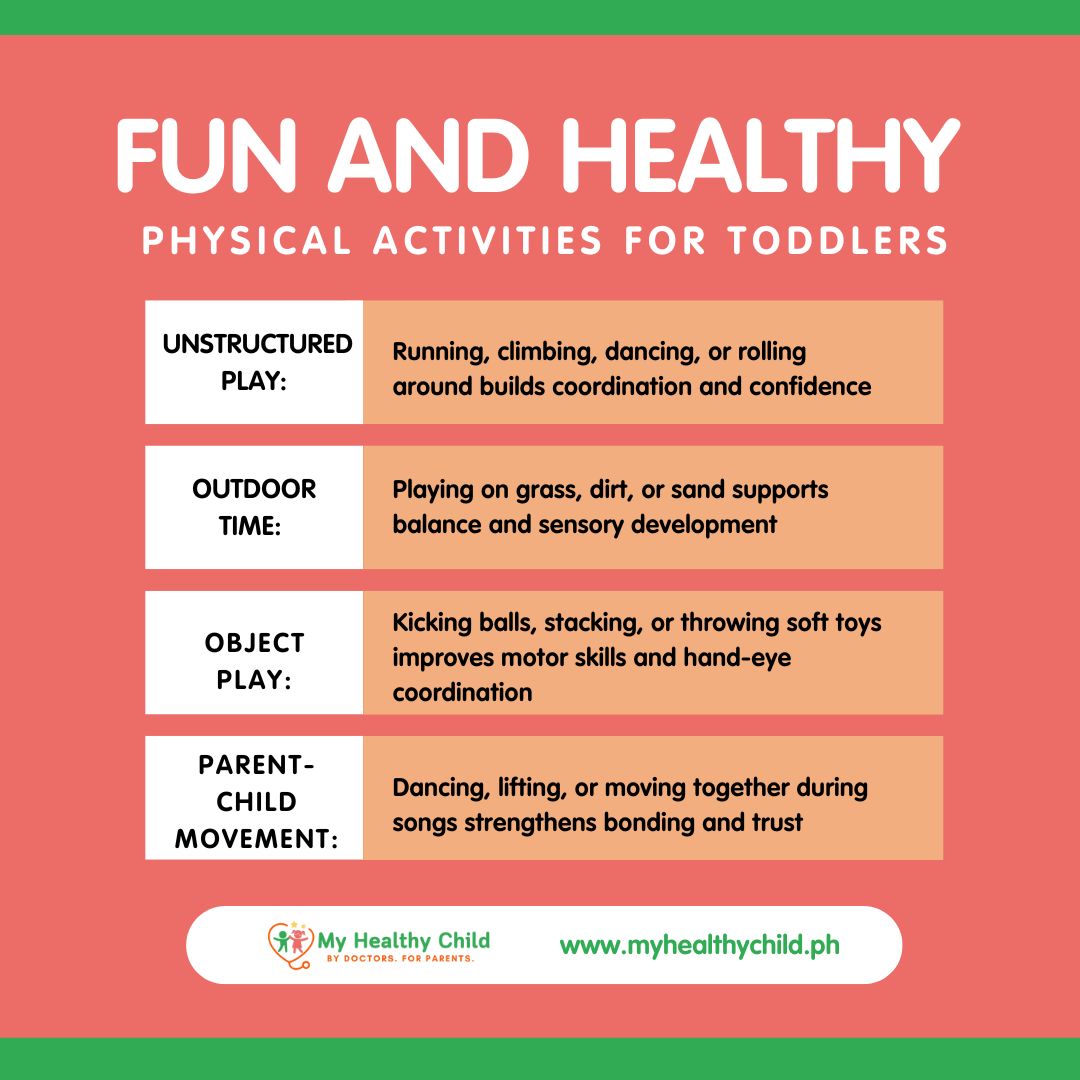
- Unstructured active play: Running, climbing, dancing, chasing bubbles, or rolling on the floor all help develop coordination and confidence
- Outdoor time: Playing on grass, dirt, or sand strengthens balance, motor planning, and sensory input
- Object play: Kicking balls, pushing carts, stacking, and throwing soft toys improve hand-eye coordination
- Parent-child movement: Dancing together, lifting, or moving during songs builds trust and attachment
Movement Milestones to Support
- Age 1–2: Walking, pulling to stand, climbing stairs with support, pushing toys, starting to kick or throw
- Age 2–3: Running steadily, climbing safely, jumping in place, pedaling tricycles, learning body awareness
- Progress over performance: Focus on how your child is moving, not how fast they master skills
What to Avoid
- Excessive use of gear: Bouncers, swings, and strollers restrict natural movement when overused
- Early sports pressure: Toddlers do not need organized sports. Structured classes (e.g., toddler gym, music + movement) should be fun and short
- Over-scheduling: Children need daily free play more than packed calendars
- Screens as substitutes: Even “educational” content displaces movement—limit total screen time to under 1 hour/day
What to Do Next: Guidance for Parents
- Prioritize daily play time in safe, open spaces—indoors or outdoors
- Join the fun: Active parents model healthy habits and make movement more enjoyable
- If your child seems delayed in movement milestones, talk to your pediatrician about possible evaluation or physical therapy
Note:
This article was medically reviewed and written in collaboration with doctors and medical professionals committed to providing pediatric health education.
References:
Centers for Disease Control and Prevention (CDC) – Early Childhood Development
American Academy of Pediatrics (AAP)
World Health Organization (WHO) – Early Childhood Development

Disclaimer:
The information in this article is intended for educational purposes only and does not substitute professional medical advice, diagnosis, or treatment. Always consult your physician, pediatrician, or qualified healthcare provider with any questions you may have regarding a medical condition or health objectives.