
What Should My Child Be Eating at This Age?
Get pediatric guidance on nutrition for ages 1 to 5, including balanced meals, milk limits, and nutrients that support brain and body growth

At a Glance
- By age 1, toddlers should transition to family foods with modifications for size, texture, and salt
- Growth slows after the first year, so appetite naturally decreases
- Balanced meals—not “perfect” meals—build healthy eating patterns long-term
Daily Nutrition Needs
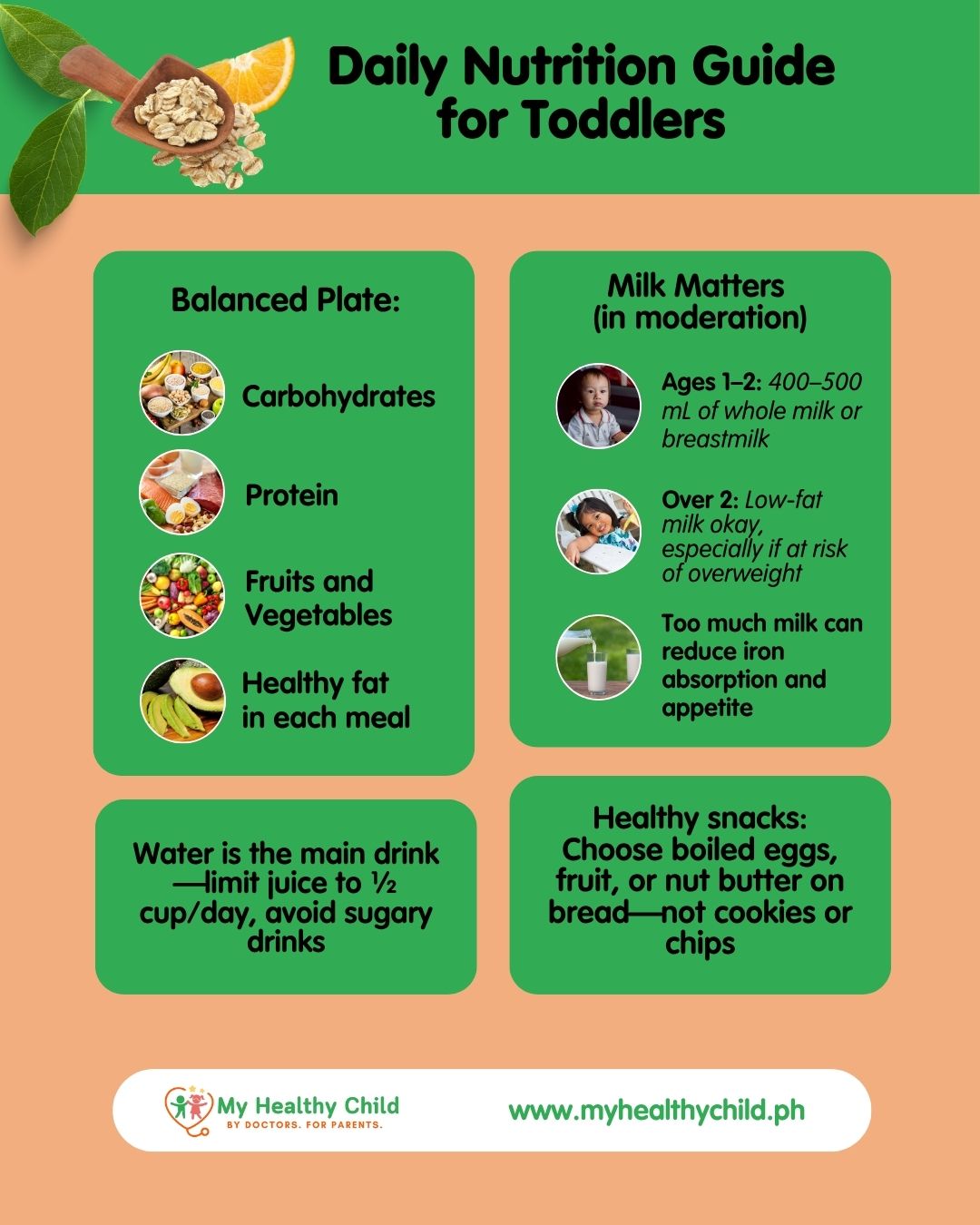
- Balanced plate: Each meal should include a carb (rice, bread, pasta), protein (meat, eggs, tofu), fruit or vegetable, and healthy fat (e.g., oil or avocado)
- Milk matters, but has a limit:
- 1–2 years: 400–500 mL of whole milk or breastmilk daily
- Over 2 years: Low-fat milk may be introduced, especially for children at risk of being overweight.
- Milk supplements can reduce iron absorption and appetite for solid food
- Water is now the main drink—avoid sugary drinks and excessive juice (limit to ½ cup/day if any)
- Snacks should be nutrient-dense: Think boiled egg, banana, bread with peanut butter—not cookies or chips
Key Nutrients to Watch
- Iron: Needed for brain development. Serve red meat, legumes, iron-fortified cereals, or liver once a week
- Calcium & Vitamin D: For bones and teeth. Found in milk, cheese, tofu, and sun exposure
- Healthy fats: Aid brain growth. Offer coconut oil, eggs, or oily fish (like bangus or sardines) regularly
- Fiber: For digestion and long-term heart health. Include fruit, veggies, and whole grains
What to Avoid
- Added sugars: Delay sweets to reduce future preference for sugar
- Choking hazards: Whole grapes, nuts, popcorn, chunks of meat—cut or mash food until child chews well
- Too much salt: Processed foods and added seasoning can overload immature kidneys
What to Do Next: Guidance for Parents
- Follow your child’s hunger and fullness cues—don’t force meals
- Aim for variety over perfection; toddlers may need 10–15 exposures to accept a new food
- Track growth at checkups, not at every meal—your pediatrician can flag true nutritional gaps
Note:
This article was medically reviewed and written in collaboration with doctors and medical professionals committed to providing pediatric health education.
References:
Centers for Disease Control and Prevention (CDC) – Early Childhood Development
American Academy of Pediatrics (AAP)
World Health Organization (WHO) – Early Childhood Development

RINA REYES, MD DPPS, FPCMNP
Pediatrics and Medical Nutrition
Disclaimer:
The information in this article is intended for educational purposes only and does not substitute professional medical advice, diagnosis, or treatment. Always consult your physician, pediatrician, or qualified healthcare provider with any questions you may have regarding a medical condition or health objectives.