
Why Won’t My Toddler Sleep Through the Night?
Understand how sleep changes between ages 1 and 5, what healthy sleep looks like, and how to build calm bedtime routines that work

At a Glance
- Toddlers often wake at night due to normal developmental stages—not sleep “problems”
- Sleep needs shift with age, but most kids under 3 still require 11–14 total hours daily
- Consistent bedtime routines—not forcing sleep—are key to better rest
What’s Normal for Toddler Sleep
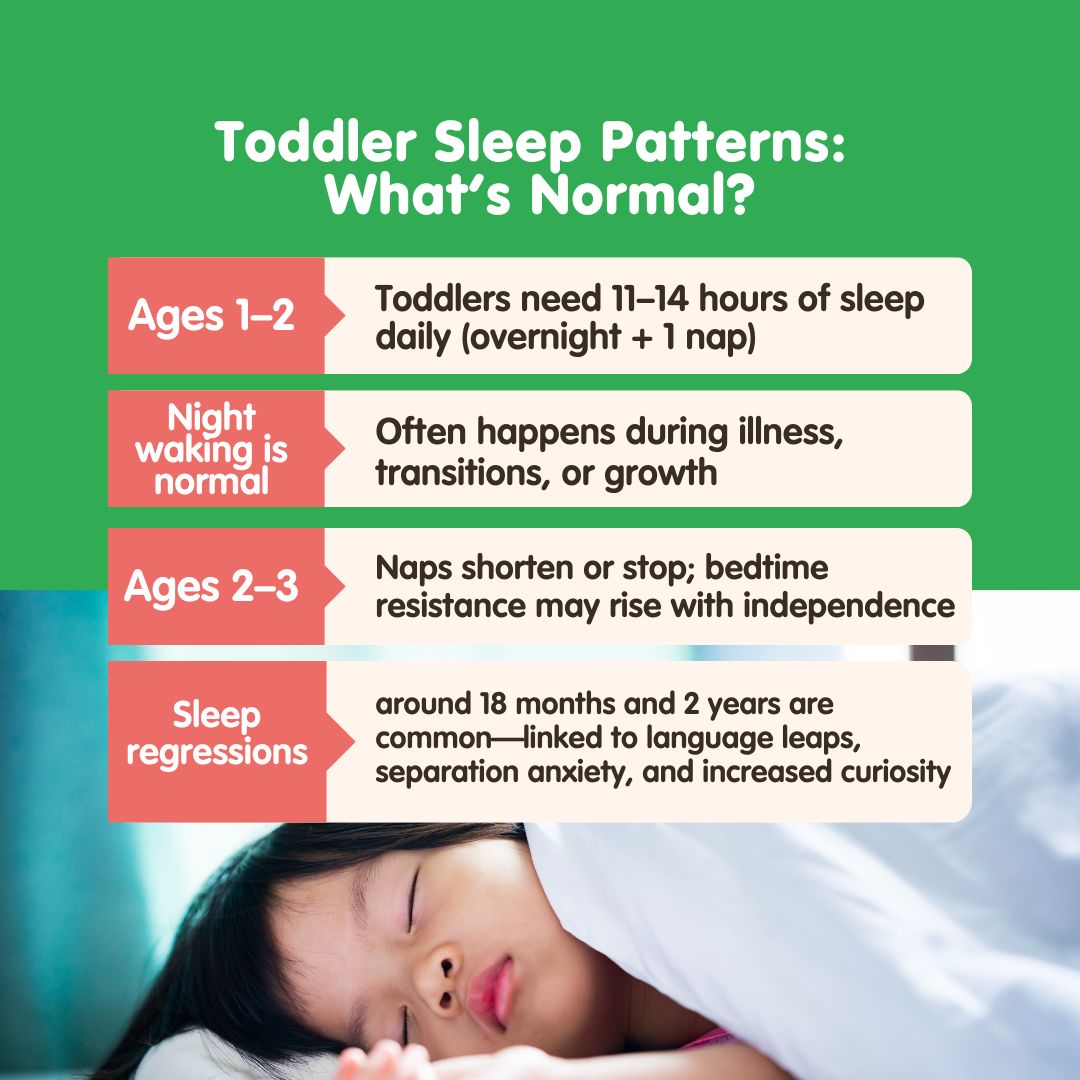
- 1 to 2 years: Most toddlers sleep 11–14 hours in 24 hours, often split into one nap and overnight sleep
- Night waking is common: Even good sleepers may wake briefly—especially during transitions, illness, or developmental leaps
- 2 to 3 years: Naps shorten or drop entirely; bedtime resistance can increase due to growing independence
- Sleep regressions: Temporary disruptions (often around 18 months and 2 years) are linked to language growth, separation anxiety, and increased awareness
What Disrupts Sleep in This Age Group
- Separation anxiety: Fear of being alone or needing reassurance at bedtime
- Overstimulation before bed: Screen time, active play, or late meals delay wind-down
- Inconsistent schedules: Irregular sleep/wake times confuse the body’s natural rhythm
- Sleep crutches: Rocking, feeding, or lying beside your child to fall asleep can make it harder for them to self-soothe after waking at night
- Underlying issues: Allergies, snoring, or eczema can interrupt quality sleep and should be discussed with your pediatrician
What Healthy Sleep Looks Like
- Predictable schedule: Toddlers thrive on routine—same bedtime and wake-up daily
- Wind-down routine: Bath, books, soft lighting, and calm voice cues the body for sleep
- Sleep environment: Cool, quiet, and dark with minimal distractions
- Sleep independence: Help your child fall asleep in their own bed, drowsy but awake, so they can return to sleep more easily when they wake up
What to Do Next: Guidance for Parents
- Limit electronics at night. Create a dark, quiet, and slightly cool room conducive for sleeping.
- Stick to a calm, repeatable bedtime routine even if your toddler resists at first
- Keep sleep and wake times consistent, including weekends
- Talk to your pediatrician if your toddler snores, wakes gasping, or shows signs of daytime sleepiness
Note:
This article was medically reviewed and written in collaboration with doctors and medical professionals committed to providing pediatric health education.
References:
Centers for Disease Control and Prevention (CDC) – Early Childhood Development
American Academy of Pediatrics (AAP)
World Health Organization (WHO) – Early Childhood Development

Disclaimer:
The information in this article is intended for educational purposes only and does not substitute professional medical advice, diagnosis, or treatment. Always consult your physician, pediatrician, or qualified healthcare provider with any questions you may have regarding a medical condition or health objectives.