
How Do I Survive the First Three Months with a New Baby?
A real-world, pediatrician-backed roadmap to those early weeks, anchored in calm, care, and small wins

At a Glance
- Expect frequent feeding, irregular sleep, and periods of intense crying—these are normal
- Monitor weight gain, diaper counts, and alertness to know your baby is thriving
- Your physical and emotional recovery is just as important as your baby’s
What to Expect from Your Baby
- Feeding: 8–12 feeds every 24 hours. Breastfed babies may nurse more often to establish milk supply.
- Weight and Output: Most babies lose weight at first but regain birth weight by Day 10–14. Aim for at least 6 wet diapers and 3–4 yellow stools daily by Day 5.
- Crying: Crying increases around Week 2, peaks at Week 6, and gradually eases by Week 12. This pattern is typical and not a sign of illness.
- Sleep: Total sleep is 14–17 hours per day, split into short stretches. Newborns spend about half of this time in light, active sleep.
What’s Happening with You
- Physical Recovery: Postpartum bleeding (lochia) can last 4–6 weeks. C-section or perineal (female external genitalia or the area between the vagina and anus) wounds need time to heal.
- Mood and Mental Health: Mood shifts are common in the first two weeks. If you feel persistently sad, anxious, or detached beyond that, consult your doctor—it may be postpartum depression or anxiety.
- Fatigue: Sleep deprivation is expected and affects everything from bonding to decision-making. Accept help, rest when possible, and drop pressure to “do more.”
- Healing, Not Productivity: Focus on physical recovery, bonding, and responsive care—not perfect routines or milestones.
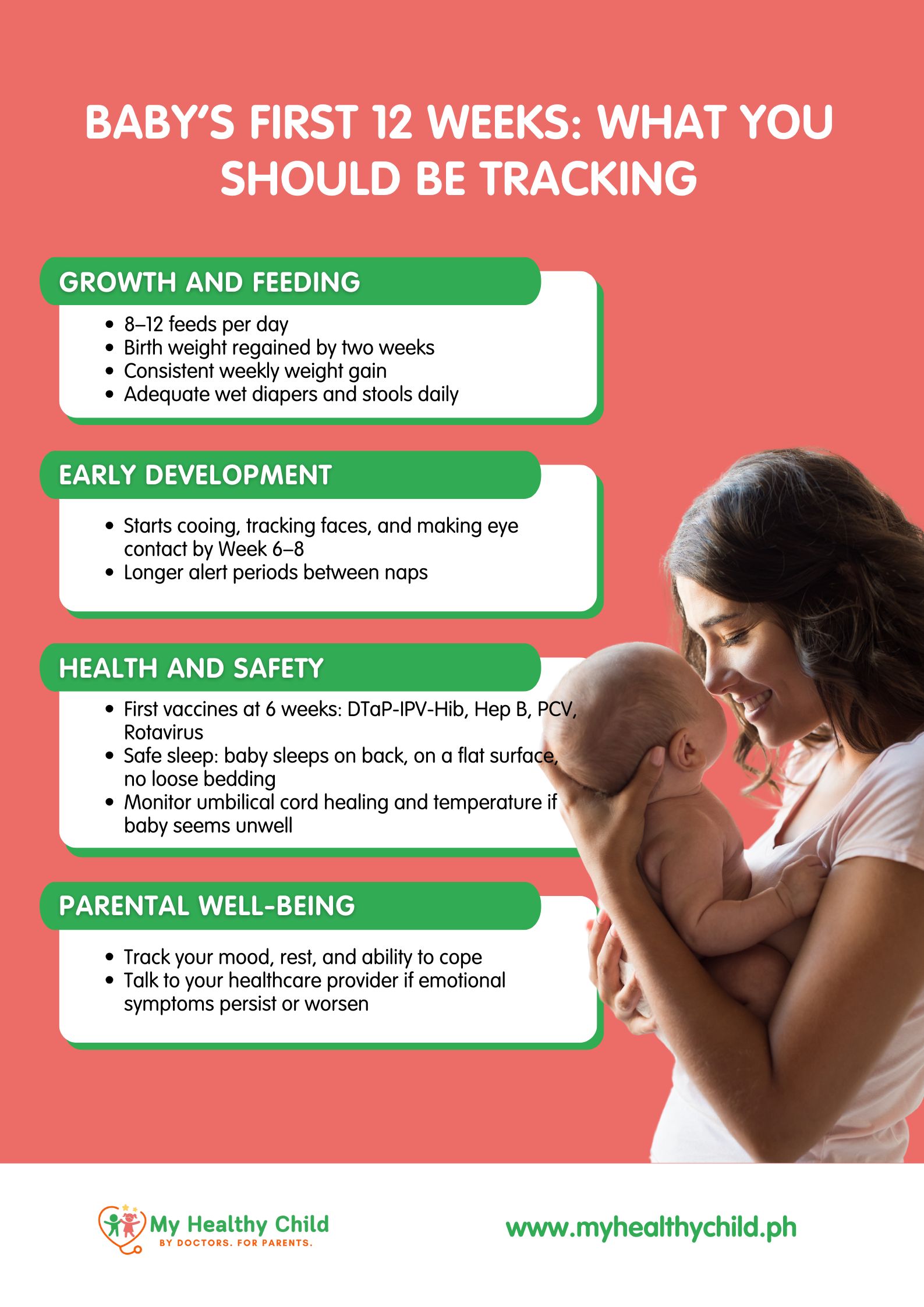
What to Track in the First 12 Weeks
Growth and Feeding
- 8–12 feeds per day
- Birth weight regained by two weeks
- Consistent weekly weight gain
- Adequate wet diapers and stools daily
Early Development
- Starts cooing, tracking faces, and making eye contact by Week 6–8
- Longer alert periods between naps
Health and Safety
- First vaccines at 6 weeks: DTaP-IPV-Hib, Hep B, PCV, Rotavirus
- Safe sleep: baby sleeps on back, on a flat surface, no loose bedding
- Monitor umbilical cord healing and temperature if baby seems unwell
Parental Well-being
- Track your mood, rest, and ability to cope
- Talk to your healthcare provider if emotional symptoms persist or worsen
What to Do Next: Guidance for Parents
- Prioritize rest, feeding, and connection—routine can come later
- Use growth and diaper output to gauge baby’s health
- Contact your doctor if feeding issues, low weight gain, or postpartum distress arise
Note:
This article was medically reviewed and written in collaboration with doctors and medical professionals committed to providing pediatric health education.
References:
American Academy of Pediatrics (AAP) – Newborn Health and Safety
Centers for Disease Control and Prevention (CDC) – Infant Care
World Health Organization (WHO) – Essential Newborn Care

Dean Angelo Dimaano, MD, DPPS, DPSNBM
Pediatrics and Neonatology
MJ Santos Hospital, Butuan City
MAB Rm 301
Mondays thru Saturdays
9:30am —onward
09951300090
Disclaimer:
The information in this article is intended for educational purposes only and does not substitute professional medical advice, diagnosis, or treatment. Always consult your physician, pediatrician, or qualified healthcare provider with any questions you may have regarding a medical condition or health objectives.