
Why Is My Baby’s Sleep So Unpredictable?
Understand newborn sleep patterns, what helps build routines, and why your baby’s rhythm matters

At a Glance
- Newborns sleep in short cycles—this is protective, not a problem
- Sleep matures gradually as brain and hormone patterns develop
- Routines help but won’t guarantee longer sleep in the early weeks
Why Newborn Sleep Feels Disorganized
- Immature circadian rhythm: The body’s internal clock starts developing at 6–12 weeks.
- Short sleep cycles: Babies sleep 14–17 hours total per day, in 30–120 minute chunks.
- Active sleep: Nearly 50% of newborn sleep is light (REM-like), making babies more wakeful.
- Frequent waking is protective: It helps babies feed often, stay hydrated, and reduce the risk of Sudden Infant Death Syndrome (SIDS).
Understanding Sleep Cues
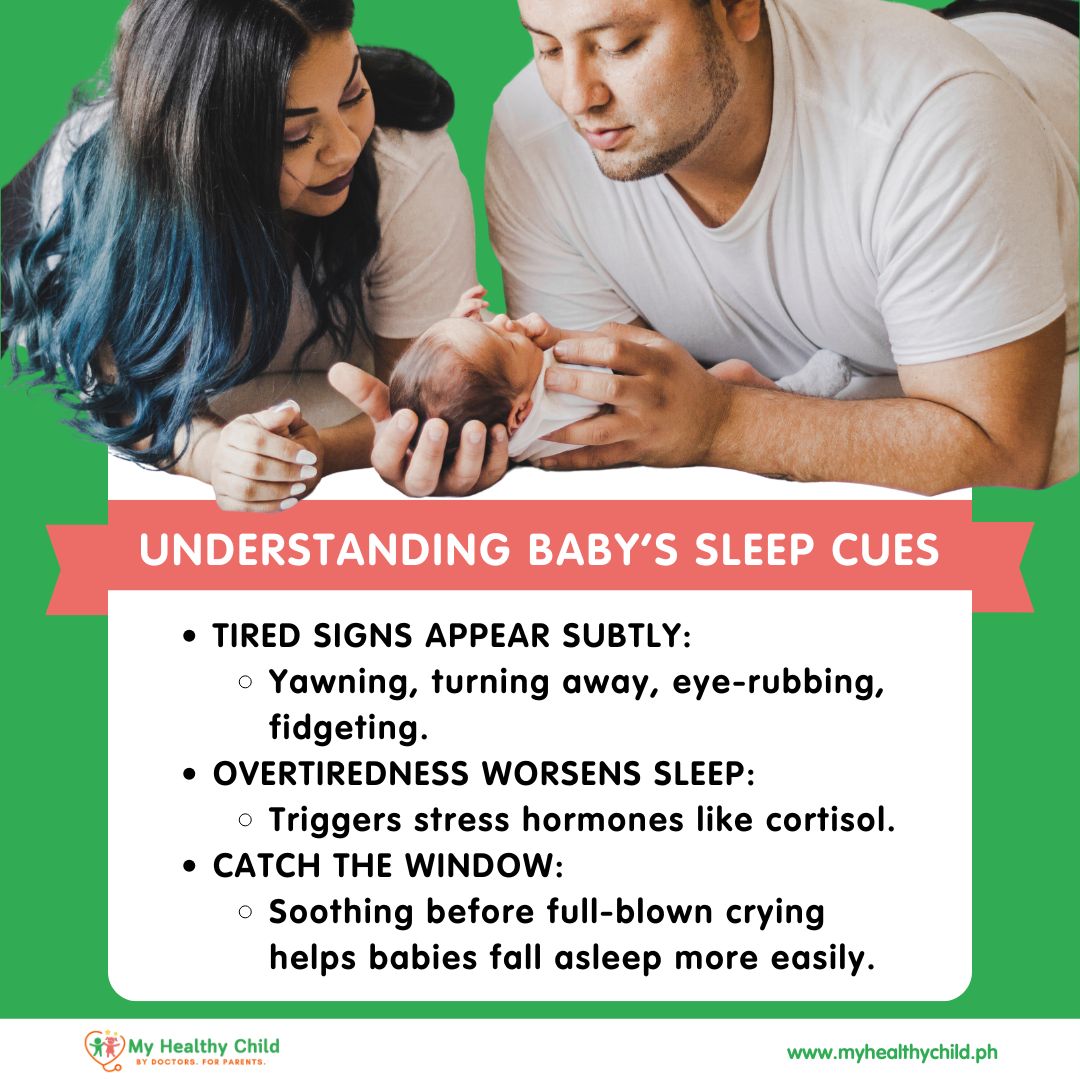
- Tired signs appear subtly: Yawning, turning away, eye-rubbing, fidgeting.
- Overtiredness worsens sleep: Triggers stress hormones like cortisol.
- Catch the window: Soothing before full-blown crying helps babies fall asleep more easily.
When Night Waking Is Normal
- Melatonin (sleep hormone) rises after 6–8 weeks, helping night sleep consolidate.
- Cortisol (wake hormone) stabilizes between 2–3 months.
- Night feeds matter: Hunger remains the top cause of waking until 3–6 months.
- SIDS prevention: Lighter sleep stages increase arousability—this is protective in early months.
How to Support Healthy Sleep Patterns
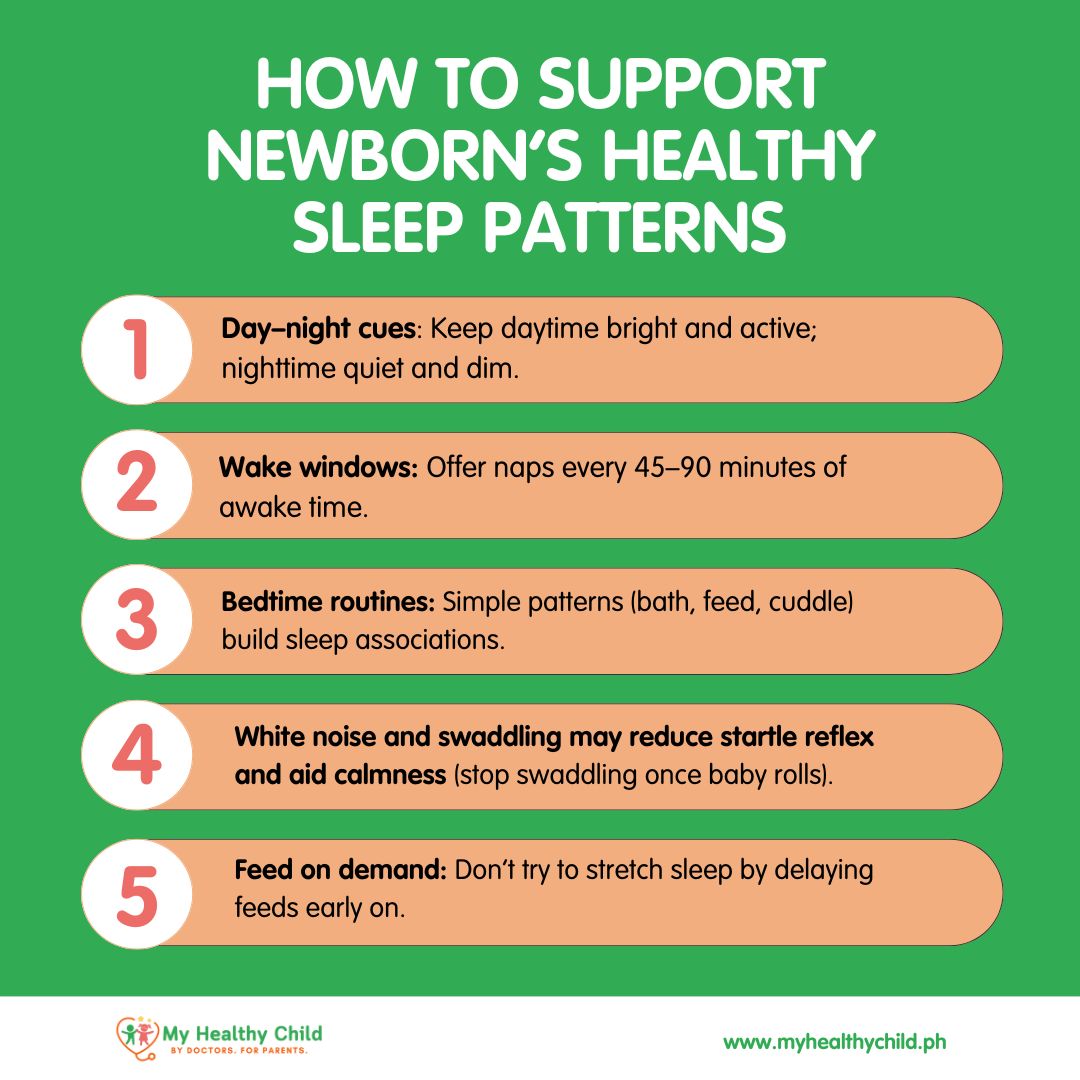
- Day–night cues: Keep daytime bright and active; nighttime quiet and dim.
- Wake windows: Offer naps every 45–90 minutes of awake time.
- Bedtime routines: Simple patterns (bath, feed, cuddle) build sleep associations.
- White noise and swaddling may reduce startle reflex and aid calmness (stop swaddling once baby rolls).
- Feed on demand: Don’t try to stretch sleep by delaying feeds early on.
What to Do Next: Guidance for Parents
- Respond early to tired cues—before your baby becomes overtired
- Keep nighttime calm and consistent, even if wakings are frequent
- Accept irregular sleep as part of healthy newborn development
Note:
This article was medically reviewed and written in collaboration with doctors and medical professionals committed to providing pediatric health education.
References:
American Academy of Pediatrics (AAP) – Newborn Health and Safety
Centers for Disease Control and Prevention (CDC) – Infant Care

Dean Angelo Dimaano, MD, DPPS, DPSNBM
Pediatrics and Neonatology
MJ Santos Hospital, Butuan City
MAB Rm 301
Mondays thru Saturdays
9:30am —onward
09951300090
Disclaimer:
The information in this article is intended for educational purposes only and does not substitute professional medical advice, diagnosis, or treatment. Always consult your physician, pediatrician, or qualified healthcare provider with any questions you may have regarding a medical condition or health objectives.